
The First Carlist War (1833–1839) – A …
Years: 1835 - 1835
June
The First Carlist War (1833–1839) – A Struggle Between Isabelline Liberalism and Carlist Traditionalism
The First Carlist War (1833–1839) was a brutal civil war in Spain, fought between supporters of Queen Isabella II and those of the Carlist pretender, Don Carlos, Count of Molina. It was not just a dynastic conflict but also a deeper ideological battle between:
- Urban liberalism vs. rural traditionalism
- The centralized liberal government vs. local fueros (regional autonomy)
- A secularizing, constitutional monarchy vs. a strongly Catholic, absolute monarchy
The war was particularly savage, fought between the poorly paid and equipped liberal army defending Isabella IIand the semi-guerrilla Carlist forces, who had strong local support in the Basque Country, Navarre, and northern Spain.
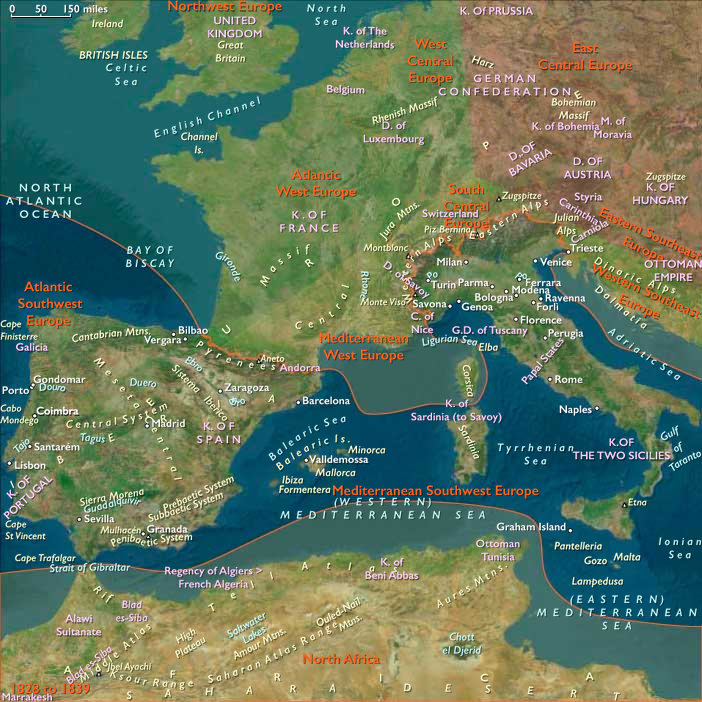
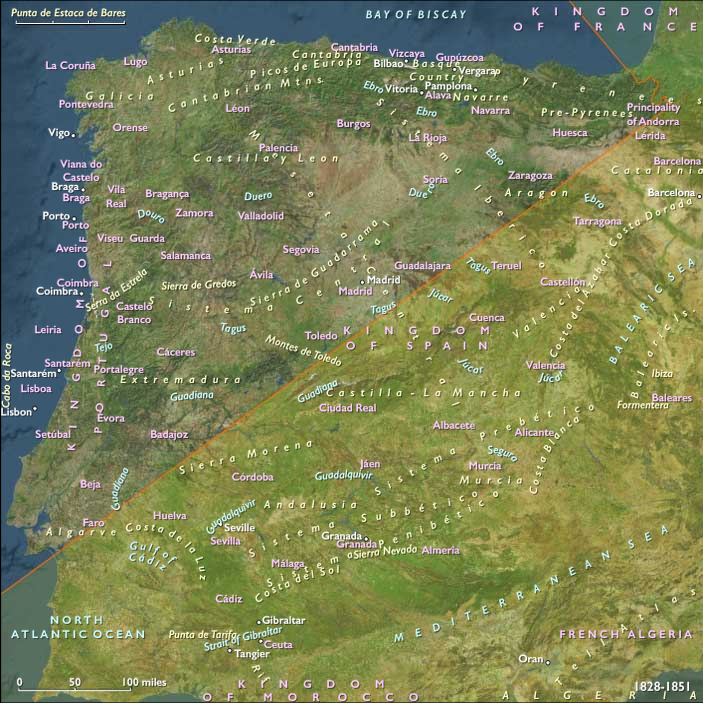
The Carlist Strongholds in the North
- The Carlist movement was strongest in the Basque provinces and Navarre, where local populations resisted liberal centralization and fought to defend the fueros (regional rights and privileges).
- The Carlists also promoted an ultra-conservative, Catholic monarchy, rejecting the liberal secularization policies of Madrid.
- However, despite their strongholds in the north, the Carlists failed to capture a major city, which prevented them from gaining wider recognition as a legitimate government.
The Death of Tomás de Zumalacárregui (June 1835) – A Turning Point
- Tomás Zumalacárregui y de Imaz, the great Carlist military leader, was a brilliant guerrilla commander, who had turned the Carlist forces into a formidable army.
- In June 1835, he led a campaign to capture Bilbao, hoping to secure a major urban center for the Carlist cause.
- However, he was mortally wounded during the siege, depriving the Carlists of their most capable strategist.
- His death weakened Carlist prospects, as subsequent leaders struggled to match his tactical genius.
Strategic Consequences – Carlist Stalemate
- After Zumalacárregui’s death, the Carlists failed to take any major cities, leaving their forces isolated in the north.
- The liberal government, despite its weaknesses, maintained control over Spain’s major cities and economic centers.
- The war dragged on in brutal guerrilla fighting, with no decisive victory for either side, leading to years of attrition.
Conclusion – A Prolonged and Bloody War
The First Carlist War was one of the most bitterly fought conflicts of 19th-century Spain, reflecting deep divisions within Spanish society. While the Carlists had strong support in rural areas, their failure to capture a major city prevented them from establishing a viable government. The death of Zumalacárregui in June 1835 marked a turning point, weakening the Carlist cause and leading to a long, grinding war of attrition that would last until 1839.
Locations
People
Groups
Topics
Commodoties
Subjects
Regions
Subregions
Years: 1835 - 1835
June
Locations
People
Groups
Topics
Commodoties
Subjects
Regions
Subregions