
Alaungpaya, the future king of a Burma …
Years: 1751 - 1751
Alaungpaya, the future king of a Burma united for the third time, was born Aung Zeya ("Victorious Victory") at Moksobo, a village of a few hundred households in the Mu River Valley about sixty miles northwest of Ava on August 24, 1714 to Min Nyo San and his wife Saw Nyein Oo.
He was the second son of a lineage of gentry families that had administered the Mu Valley for generations.
His father was a hereditary chief of Moksobo and his uncle, Kyawswa Htin, better known as Sitha Mingyi, was the lord of the Mu Valley District.
Alaungpaya sclaim descent from kings Narapati I and Thihathura and ultimately the Pagan royal line.
He comes from a large family, and is related by blood and by marriage to many others among the gentry throughout the valley.
In 1730, Alaungpaya married his first cousin Yun San, daughter of chief of a neighboring village, Siboktara.
They have six sons and three surviving daughters; a fourth daughter died young.
Aung Zeya had grown up during a period in which the authority of the Taungoo Dynasty was in rapid decline.
The "palace kings" at Ava had been unable to defend against the Manipuri raids that had been ransacking increasingly deeper parts of Upper Burma since 1724.
Ava had failed to recover southern Lanna (Chiang Mai), which had revolted in 1727, and in the 1730s did nothing to prevent the annexation of the northern Shan States by the Qing dynasty.
The Mu Valley is directly on the path of Manipuri raids year after year.
Although Burma is far larger than Manipur, Ava had been unable to defeat the raids or organize a punitive expedition to Manipur itself.
The people watched helplessly as the raiders torched villages, ransacked pagodas, and carried away captives.
Aung Zeya assumed his father's responsibilities as chief of his village in his early twenties. A tall man for the times, at five-feet eleven inches [one point eight meters] as described by an English envoy), Aung Zeya was a leader among the gentry in organizing the defenses of the valley.
The declining regime at Ava was wary of any potential rivals.
Taungoo Yaza, commander-in-chief of the army of Ava in 1736, summoned Aung Zeya to Ava to determine whether the village headman was a potential threat to the regime.
Satisfied that the twenty-two-year-old had no designs on the throne, Taungoo Yaza on behalf of the king bestowed on Aung Zeya the title Bala Nanda Kyaw.
Aung Zeya became deputy to his uncle the lord of Mu Valley, and the administrative officer kyegaing, responsible for tax collection and for the preservation of order.
The authority of Ava continued to decline in the following years.
The Mon of Lower Burma had broken away in 1740 and founded the Restored Hanthawaddy Kingdom with the capital at Bago.
Ava's feeble attempts to recover the south had failed to make a dent.
Low-grade warfare between Ava and Bago had continued until late in 1751, when Bago launched its final assault, invading Upper Burma in full force.
Locations
People
Groups
- Mon people
- Bamar or Burmans
- Mon Kingdoms
- Shan people
- Myanmar (Burma), (Toungoo dynasty) Kingdom of
- Shan States
- Ava, Toungoo dynastic state of
- Chinese Empire, Qing (Manchu) Dynasty
- East India Company, British (United Company of Merchants of England Trading to the East Indies)
- French Company of the Indies
- Manipur, Kingdom of
- Hanthawaddy Kingdom, Restored, or Pegu (Bago), (restored) Mon Kingdom of
- Myanmar (Burma), (Alaungpaya, or Konbaung dynasty) Kingdom of
Topics
Commodoties
Subjects
Regions
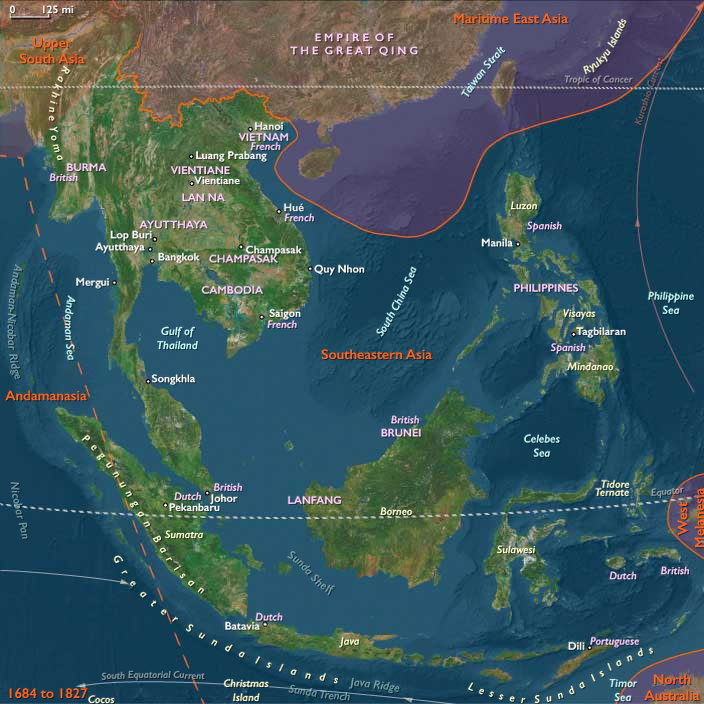
Subregions
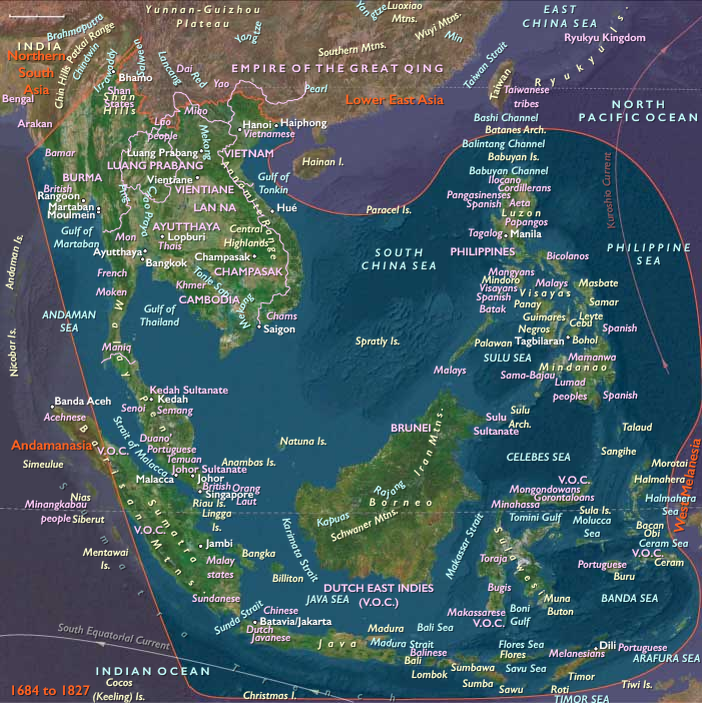
Related Events
Showing 10 events out of 26947 total
Years: 1751 - 1751
Locations
People
Groups
- Mon people
- Bamar or Burmans
- Mon Kingdoms
- Shan people
- Myanmar (Burma), (Toungoo dynasty) Kingdom of
- Shan States
- Ava, Toungoo dynastic state of
- Chinese Empire, Qing (Manchu) Dynasty
- East India Company, British (United Company of Merchants of England Trading to the East Indies)
- French Company of the Indies
- Manipur, Kingdom of
- Hanthawaddy Kingdom, Restored, or Pegu (Bago), (restored) Mon Kingdom of
- Myanmar (Burma), (Alaungpaya, or Konbaung dynasty) Kingdom of
Topics
Commodoties
Subjects
Regions
Subregions