
The Dutch having inflicted considerable damage on …
Years: 1666 - 1666
August
The Dutch having inflicted considerable damage on the British fleet in the Four Days Battle, de Witt orders de Ruyter to carry out a plan that has been prepared for over a year: to land in the Medway to destroy the British fleet while it is being repaired in the Chatham dockyards.
For this purpose, ten fluyt ships (an inexpensive Dutch type of sailing vessel originally designed as a dedicated cargo vessel) and one that can be built in large numbers carry twenty-seven hundred man of the newly created Dutch Marine Corps, one of the first in history to be specialized in amphibious landings.
Also, de Ruyter is to combine his fleet with the French one.
The French, however, don't show up and bad weather prevents the landing.
De Ruyter has to limit his actions to a blockade of the Thames.
He observes on the 1st of August that the British fleet is leaving port—earlier than expected.
Next, a storm drives the Dutch fleet back to the Flemish coast.
De Ruyter on July 3 again crosses the North Sea, leaving behind the troop ships.
The St. James Day Battle (also known as the St. James' Day Fight, the Battle of the North Foreland and the Battle of Orfordness) takes place on July 25, 1666—St. James' day in the Julian calendar currently in use in England (August 4, 1666 in the Gregorian calendar).
The English fleet is commanded jointly by Rupert and Monck; the fleet of the United Provinces is commanded by de Ruyter.
The battle is known in The Netherlands as the Two Days' Battle.
The battle is a clear English victory, though the separate clash of the two rears is a victory for Tromp.
Dutch casualties are enormous, estimated immediately after the battle at about five thousand men, compared with three hundred British killed; later, more precise information will show that only about twelve hundred of these have been killed or seriously wounded.
However, the Dutch only lose two ships: de Ruyter had been successful at saving almost the complete van, only Sneek and Tholen have struck their flag, and they can quickly repair the damage.
The twin disasters of the Great Plague of London and the Great Fire of London, however, combined with his financial mismanagement, have left Charles II without the funds to continue the war.
In fact, he had had only enough reserves for this one last battle.
Locations
People
Groups
- Netherlands, United Provinces of the (Dutch Republic)
- France, (Bourbon) Kingdom of
- England, (Stewart, Restored) Kingdom of
Topics
Subjects
Regions
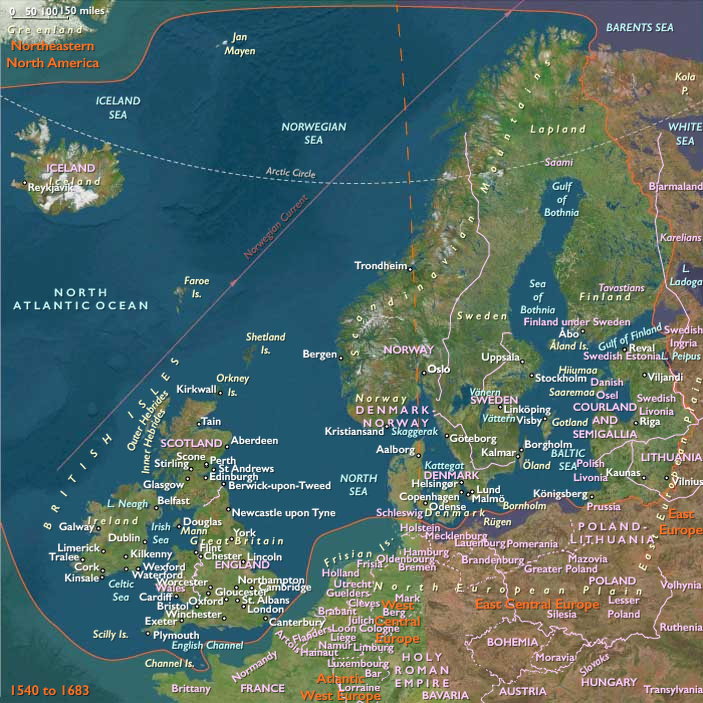
Subregions
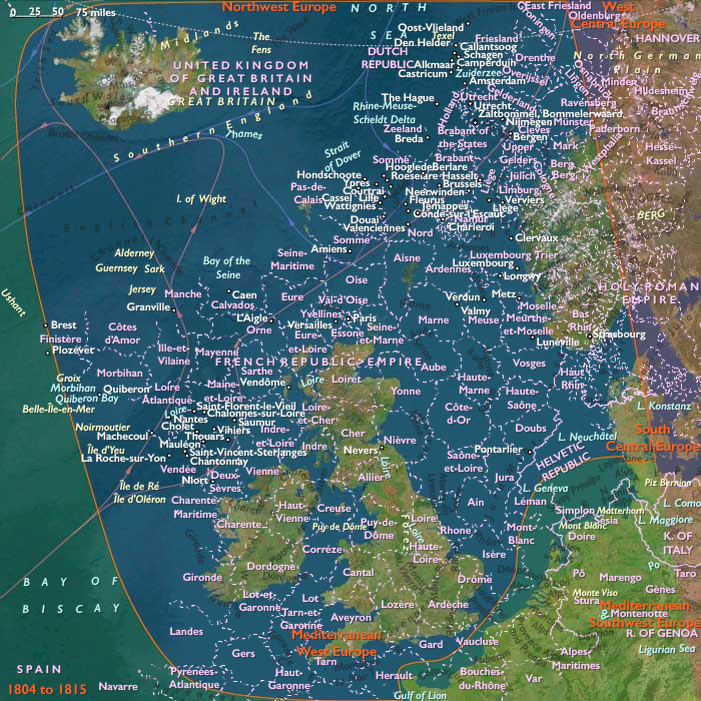
Years: 1666 - 1666
August
Locations
People
Groups
- Netherlands, United Provinces of the (Dutch Republic)
- France, (Bourbon) Kingdom of
- England, (Stewart, Restored) Kingdom of
Topics
Subjects
Regions
Subregions