
he Anglo-Norman Succession Crisis and William Rufus’ …
Years: 1099 - 1099
he Anglo-Norman Succession Crisis and William Rufus’ Wars in Normandy and Maine (1088–1099)
The division of William the Conqueror’s lands between his sons William Rufus (England) and Robert Curthose (Normandy) created a dilemma for the Anglo-Norman nobility, many of whom held land on both sides of the English Channel. With the two brothers as natural rivals, these nobles feared being forced to choose between them, potentially losing favor, lands, or influence in one realm or the other.
The solution, as many saw it, was to reunite England and Normandy under a single ruler, a goal that would drive rebellions, wars, and shifting alliances throughout the late 11th and early 12th centuries.
The 1088 Rebellion: A Noble Uprising in Favor of Robert Curthose
- In 1088, Bishop Odo of Bayeux, the powerful half-brother of William the Conqueror, led a noble rebellion against William Rufus in favor of Robert Curthose.
- Many Anglo-Norman nobles, preferring a weaker ruler in Robert, sought to unite England and Normandy under his rule.
- However, Robert failed to appear in England to lead the revolt, causing wavering support among the rebels.
- William Rufus secured victory by offering silver and promises of better governance, winning over key English nobles and knights.
- With the rebellion crushed, William solidified his control over England, strengthening his ability to challenge Robert in Normandy.
The 1091 Invasion of Normandy and Treaty with Robert
- With England secure, William Rufus invaded Normandy in 1091, decisively defeating Robert’s forces.
- Robert was forced to cede territory to William, further weakening his control over the duchy.
- Despite this, the two brothers reconciled, agreeing to support each other in reclaiming lost territories—especially Maine, which had fallen out of Norman hands.
- The plan to recover Maine was ultimately abandoned, but William continued his aggressive defense of Normandy and his French interests.
The 1099 War for Maine and William Rufus’ Final Campaign
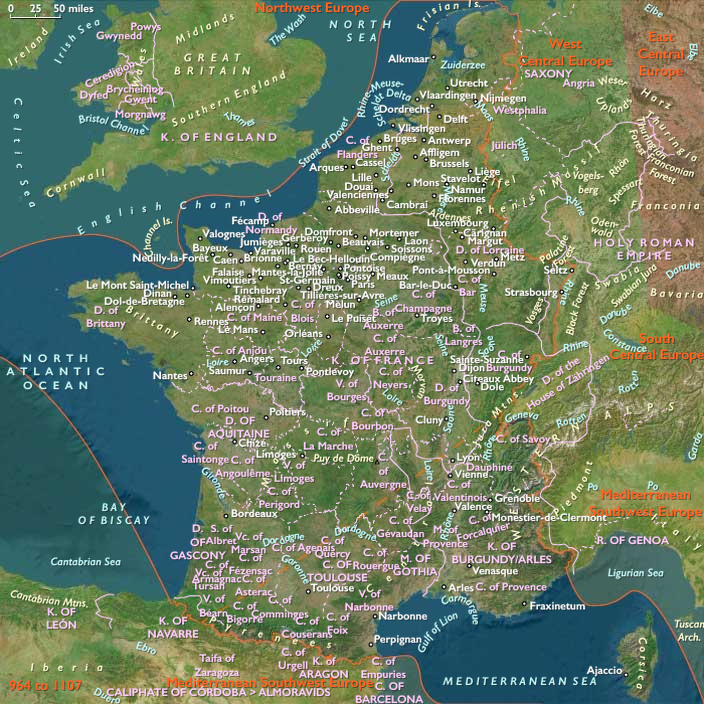
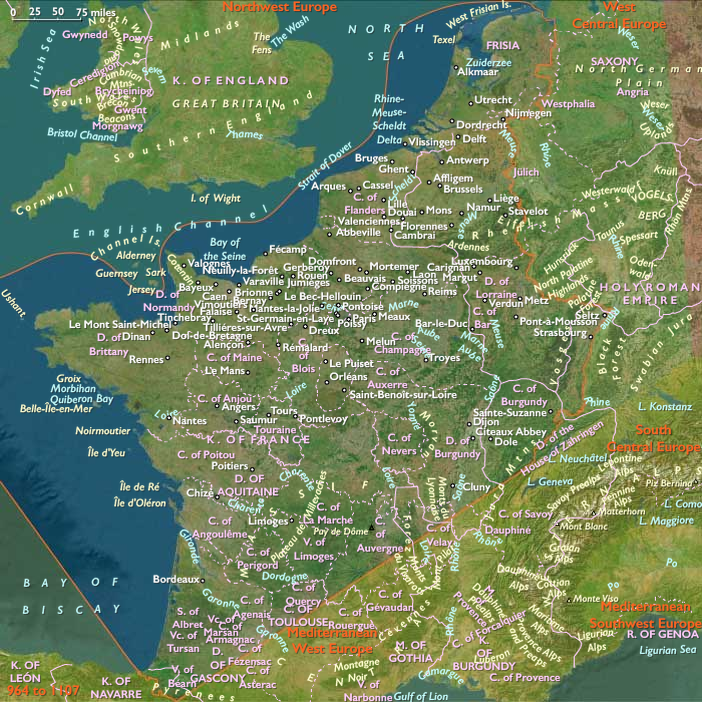
- In 1099, Elias de la Flèche, Count of Maine, sought to retake Le Mans, a vital city lost to Norman rule.
- William Rufus, determined to defend his possessions, responded with fierce military action, reaffirming Norman control in the region.
- His relentless campaigning demonstrated his commitment to maintaining dominance over Normandy and Maine, even as his reign approached its final year.
Legacy and Consequences
- The conflict between William Rufus and Robert Curthose foreshadowed later struggles for control over England and Normandy, particularly after William’s death in 1100.
- The unresolved division of William the Conqueror’s lands ensured continued wars and rivalries, culminating in Henry I’s eventual seizure of Normandy in 1106.
- William’s military campaigns in Normandy and Maine reinforced the importance of the Anglo-Norman realm, influencing continental politics for decades to come.
Though William Rufus never succeeded in fully uniting England and Normandy, his aggressive campaigns, political maneuvering, and relentless defense of Norman lands made him one of the most formidable rulers of his time.
Locations
People
Groups
Commodoties
Subjects
Regions
Subregions
Related Events
Showing 10 events out of 50098 total
Years: 1099 - 1099
Locations
People
Groups
Commodoties
Subjects
Regions
Subregions