
The disturbances and disorders in Spain following …
Years: 752 - 752
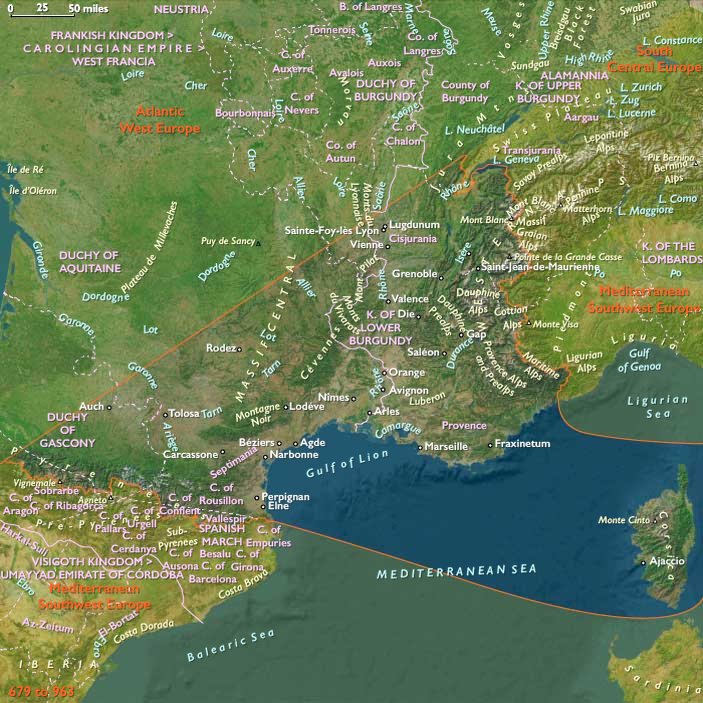
The disturbances and disorders in Spain following the Berber Revolt also allow the Franks to invade the strategic strip of Septimania in 752, hoping to deprive Andalusians of their easy launching pad for raids into Francia.
Pepin heads south in a military expedition down the Rhone valley in 752 and, after securing the allegiance of Count Ansemund, receives the submission of eastern Septimania (i.e.
Nîmes, …
Locations
People
Groups
- Franks
- Goths (East Germanic tribe)
- Septimania
- al-Andalus (Andalusia), Muslim-ruled
- Francia (Carolingians)
Topics
Commodoties
Subjects
Regions

Subregions
Related Events
Showing 10 events out of 55263 total
Years: 752 - 752
Locations
People
Groups
- Franks
- Goths (East Germanic tribe)
- Septimania
- al-Andalus (Andalusia), Muslim-ruled
- Francia (Carolingians)
Topics
Commodoties
Subjects
Regions
Subregions