
Western Southeast Europe (909 BCE – …
Years: 909BCE - 819
Western Southeast Europe (909 BCE – 819 CE) Early Iron & Antiquity — Greek Colonies, Illyrian Kingdoms, Rome, and Migrations
Geographic and Environmental Context
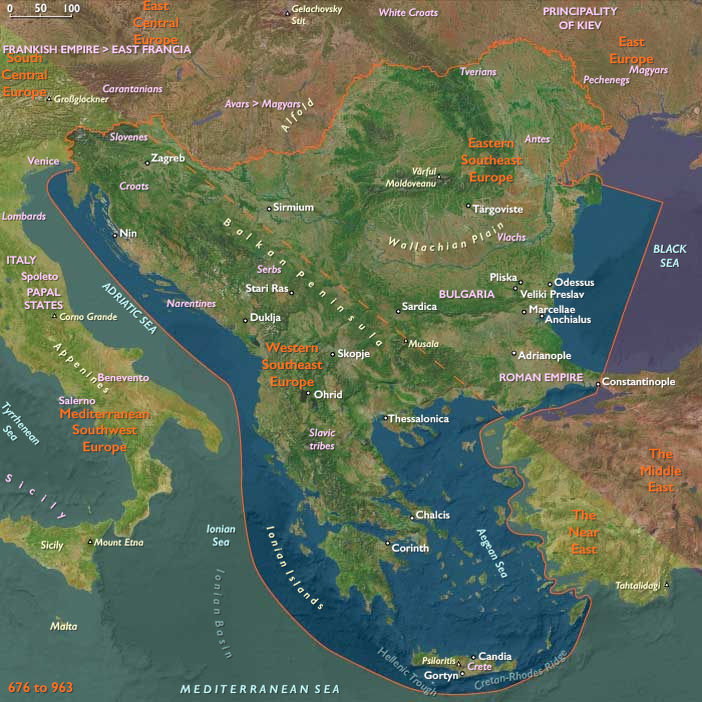
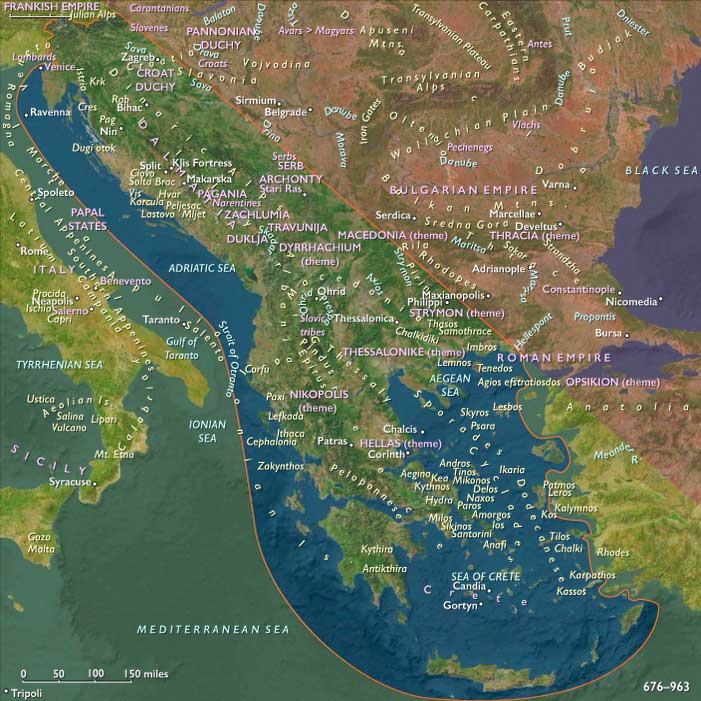
Western Southeast Europe includes Greece (outside Thrace), Albania, Montenegro, North Macedonia, Kosovo, most of Bosnia, southwestern Serbia, most of Croatia, and Slovenia.-
Anchors: Epidamnos/Dyrrhachium (Durrës), Apollonia (Albania), Issa (Vis), Pharos (Hvar), Narona (Neretva), Salona (Split), Scodra (Shkodër) and Skodra Lake, Skupi (Skopje), Siscia (Sisak), Aquileia approaches in the northwest.
Climate & Environmental Shifts
-
Generally temperate; agricultural basins productive; Adriatic storms structured sailing seasons.
Societies & Political Developments
-
Greek colonies (6th–4th c. BCE) dotted the Adriatic; Illyrian tribes formed kingdoms (e.g., Ardiaei).
-
Rome subdued Illyria (3rd–2nd c. BCE); established Dalmatia, Pannonia, Macedonia provinces; roads (Via Egnatia west end) and cities (Salona, Scodra, Narona).
-
Late Antiquity: Goths, Huns, Avars, and Slavs crossed; Slavic settlement (6th–7th c.) reshaped the interior; Byzantium held coastal nodes; early Croatian and Serbian polities emerged in the 7th–9th c.; Avar Khaganate waned.
Economy & Trade
-
Coastal wine–oil–fish-sauce industries (amphorae); inland grain and livestock; timber and salt.
-
Adriatic coasting linked Italy–Balkans; Sava–Drava and Vardar–Morava carried inland traffic.
Technology & Material Culture
-
Iron tools/weapons; Roman masonry, baths, amphitheaters; hillforts continued in uplands; early medieval timber churches and forts appeared.
Belief & Symbolism
-
Greek and Roman cults; Thracian/Illyrian deities; Christianity spread by late Roman era; Slavic paganism persisted into 8th–9th c.
Environmental Adaptation & Resilience
-
Agro-pastoral + maritime economies hedged risk; fortified coastal towns and hillforts provided continuity through migrations.
Legacy & Transition
By 819 CE, Western Southeast Europe was a layered frontier: Byzantine–Roman urbanism along the Adriatic, Slavic interior communities, and early Croatian/Serbian formations — a base for the medieval developments to come.
Groups
- Roman Empire: Constantinian dynasty (Nicomedia)
- Roman Empire: Constantinian dynasty (Constantinople)
- Roman Empire: Valentinian dynasty (Rome)
- Roman Empire: Theodosian dynasty (Constantinople)
- Christianity, Chalcedonian
- Roman Empire, Eastern: Leonid dynasty
- Roman Empire, Eastern: Justinian dynasty
- Roman Empire, Eastern: Non-dynastic
- Roman Empire, Eastern: Heraclian dynasty
- Roman Empire, Eastern: Non-dynastic
- Roman Empire, Eastern: Heraclian dynasty
- Roman Empire, Eastern: Non-dynastic
- Roman Empire, Eastern: Isaurian dynasty
- Roman Empire, Eastern: Non-dynastic
Commodoties
- Domestic animals
- Oils, gums, resins, and waxes
- Grains and produce
- Textiles
- Strategic metals
- Beer, wine, and spirits
- Manufactured goods
- Aroma compounds
Subjects
Regions
Subregions
Years: 909BCE - 819
Groups
- Roman Empire: Constantinian dynasty (Nicomedia)
- Roman Empire: Constantinian dynasty (Constantinople)
- Roman Empire: Valentinian dynasty (Rome)
- Roman Empire: Theodosian dynasty (Constantinople)
- Christianity, Chalcedonian
- Roman Empire, Eastern: Leonid dynasty
- Roman Empire, Eastern: Justinian dynasty
- Roman Empire, Eastern: Non-dynastic
- Roman Empire, Eastern: Heraclian dynasty
- Roman Empire, Eastern: Non-dynastic
- Roman Empire, Eastern: Heraclian dynasty
- Roman Empire, Eastern: Non-dynastic
- Roman Empire, Eastern: Isaurian dynasty
- Roman Empire, Eastern: Non-dynastic
Commodoties
- Domestic animals
- Oils, gums, resins, and waxes
- Grains and produce
- Textiles
- Strategic metals
- Beer, wine, and spirits
- Manufactured goods
- Aroma compounds
Subjects
Regions
Subregions