
The discovery of the Mayan city the …
Years: 1516 - 1527
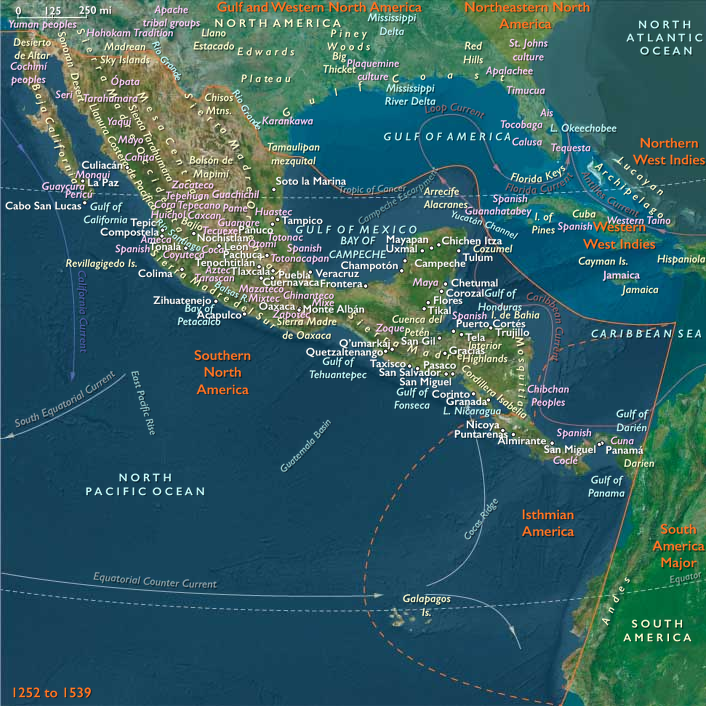
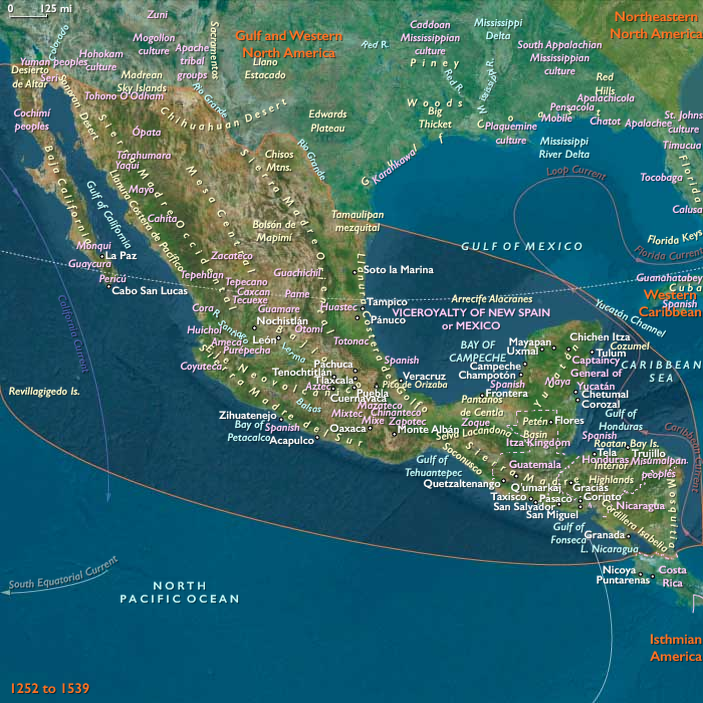
The discovery of the Mayan city the conquistadors call El Gran Cairo, in March 1517, is a crucial moment in the Spanish perception of the natives of the Americas: until then, nothing had resembled the stories of Marco Polo, or the promises of Columbus, which had prophesied Cathay, or even the Garden of Paradise, just past every cape or river.
Even more than the later encounters with the Aztec and Inca cultures, El Gran Cairo resembles the conquistadors' dreams.
When the news arrives in Cuba, the Spaniards create fantasies about the origin of the people they had encountered, whom they refer to as "the Gentiles" or imagine to be "the Jews exiled from Jerusalem by Titus and Vespasian".
All of this encourages two further expeditions: the first in 1518 under the command of Juan de Grijalva, and the second in 1519 under the command of Hernán Cortés, which lead to the Spanish exploration, military invasion, and ultimately settlement and colonization known as the Spanish conquest of the Aztec Empire and subsequent Spanish colonization in present-day Mexico.
Hernández does not live to see the continuation of his work; he dies in 1517, the year of his expedition, as the result of the injuries and the extreme thirst suffered during the voyage and disappointed in the knowledge that Diego Velázquez, governor of Cuba, had given precedence to his relative Juna de Grijalva as the captain of the next expedition to Yucatán.
People
Groups
- Maya peoples
- Aztec Triple Alliance
- Santo Domingo, Captaincy General of
- Spain, Habsburg Kingdom of
- Cuba (Spanish Colony)
Topics
- Age of Discovery
- Colonization of the Americas, Spanish
- Yucatán, Spanish Conquest of
- Aztec Empire, Spanish conquest of the
Commodoties
Subjects
Regions
Subregions
Related Events
Showing 10 events out of 39076 total
Years: 1516 - 1527
People
Groups
- Maya peoples
- Aztec Triple Alliance
- Santo Domingo, Captaincy General of
- Spain, Habsburg Kingdom of
- Cuba (Spanish Colony)
Topics
- Age of Discovery
- Colonization of the Americas, Spanish
- Yucatán, Spanish Conquest of
- Aztec Empire, Spanish conquest of the
Commodoties
Subjects
Regions
Subregions