
The "Australian compact", based around centralized industrial …
Years: 1884 - 1884
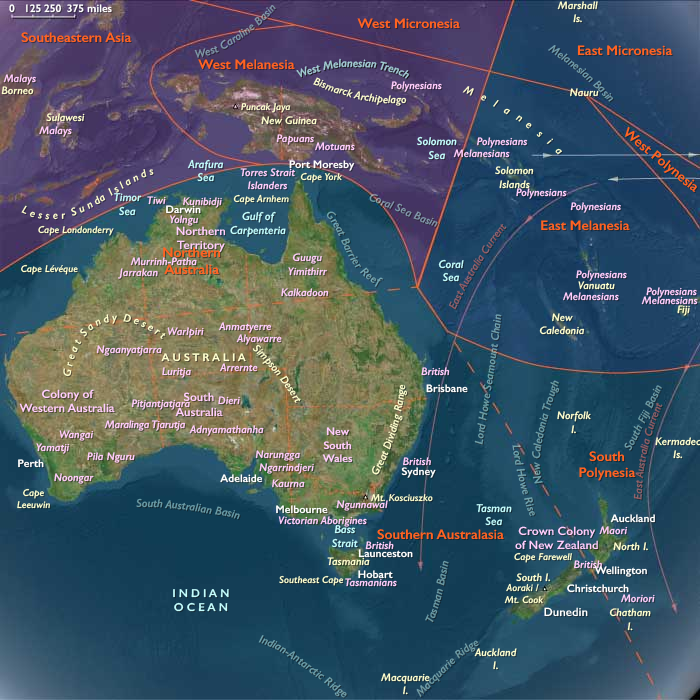
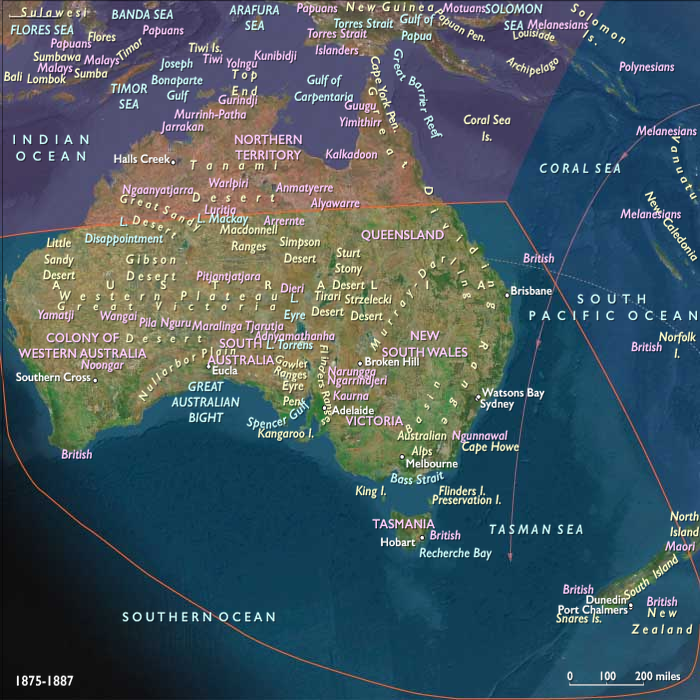
The "Australian compact", based around centralized industrial arbitration, a degree of government assistance particularly for primary industries, and White Australia, is to continue for many years before gradually dissolving in the second half of the twentieth century.
The discovery of gold in Australia in 1851 had led to an influx of immigrants from all around the world.
The rapid economic expansion that had followed the gold rushes has produced a period of prosperity which has lasted forty years, culminating in the great Land Boom of the 1880s.
Melbourne in particular has grown rapidly, becoming Australia's largest city and for a while the second-largest city in the British Empire: its grand Victorian buildings are a lasting reminder of the period.
During the 1880s, trade unions develop among shearers, miners, and stevedores (wharf workers), but soon spread to cover almost all blue-collar jobs.
Shortages of labor lead to high wages for a prosperous skilled working class, whose unions demand and get an eight-hour day and other benefits unheard of in Europe.
Australia gains a reputation as "the working man's paradise."
Some employers try to undercut the unions by importing Chinese labor, producing a reaction which leads to all the colonies restricting Chinese and other Asian immigration.
This is the foundation of the White Australia Policy.
Locations
Groups
Topics
Commodoties
Subjects
Regions
Subregions
Related Events
Showing 10 events out of 11131 total
Years: 1884 - 1884
Locations
Groups
Topics
Commodoties
Subjects
Regions
Subregions