
The exploitation of the Caribbean landscape dates …
Years: 1684 - 1827
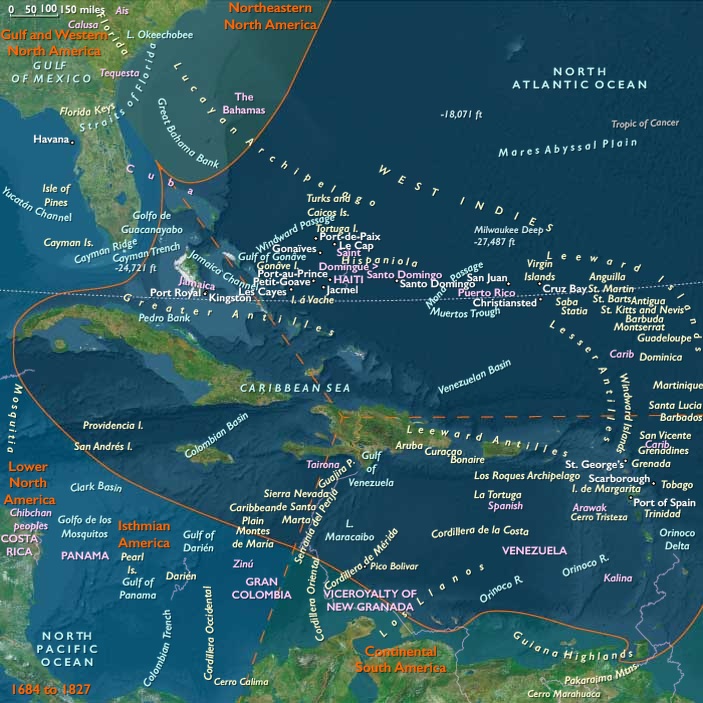
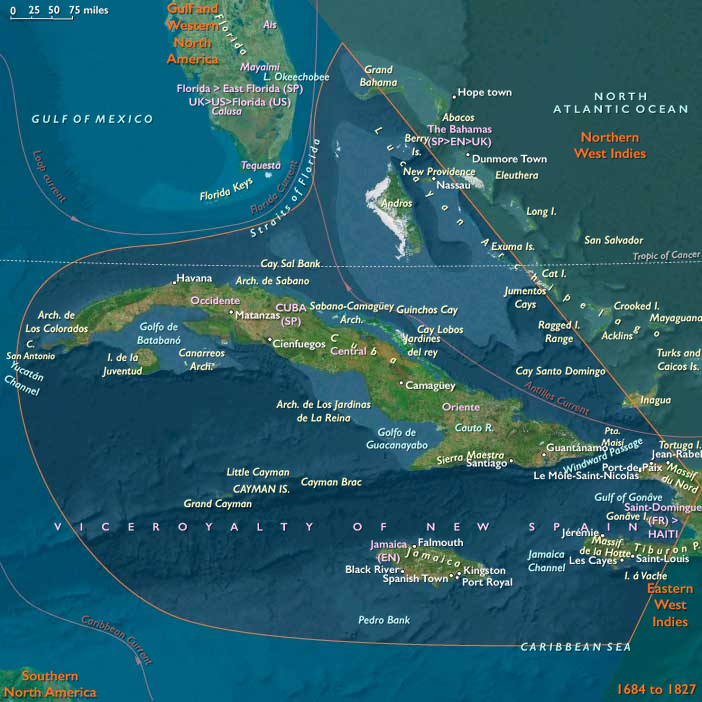
The exploitation of the Caribbean landscape dates to the Spanish conquistadors starting in the 1490s, who had forced indigenous peoples held by Spanish settlers in encomienda to mine for gold.
The more significant development came when Christopher Columbus wrote back to Spain that the islands were made for sugar development.
The history of Caribbean agricultural dependency is closely linked with European colonialism. which alters the financial potential of the region by introducing a plantation system.
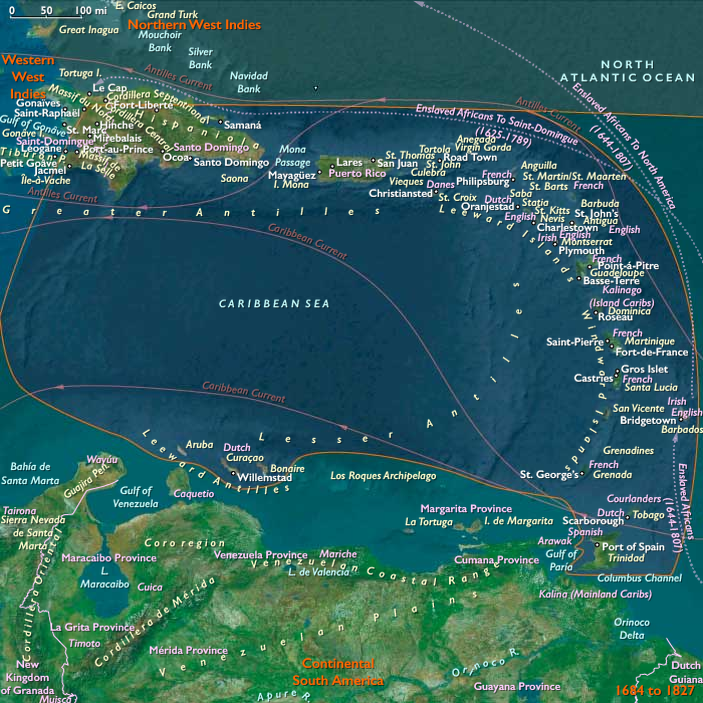
Much like the Spanish exploited indigenous labor to mine gold, the seventeenth century had brought a new series of oppressors in the form of the Dutch, the English, and the French.
By the middle of the eighteenth century sugar is Britain's largest import, which makes the Caribbean colonies that much more important.
Sugar, a luxury in Europe prior to the eighteenth century, becomes widely popular in the eighteenth century, then graduates to becoming a necessity in the nineteenth century
This evolution of taste and demand for sugar as an essential food ingredient unleashes major economic and social changes.
Caribbean islands with plentiful sunshine, abundant rainfalls and no extended frosts are well suited for sugarcane agriculture and sugar factories.
The more significant development came when Christopher Columbus wrote back to Spain that the islands were made for sugar development.
The history of Caribbean agricultural dependency is closely linked with European colonialism. which alters the financial potential of the region by introducing a plantation system.
Much like the Spanish exploited indigenous labor to mine gold, the seventeenth century had brought a new series of oppressors in the form of the Dutch, the English, and the French.
By the middle of the eighteenth century sugar is Britain's largest import, which makes the Caribbean colonies that much more important.
Sugar, a luxury in Europe prior to the eighteenth century, becomes widely popular in the eighteenth century, then graduates to becoming a necessity in the nineteenth century
This evolution of taste and demand for sugar as an essential food ingredient unleashes major economic and social changes.
Caribbean islands with plentiful sunshine, abundant rainfalls and no extended frosts are well suited for sugarcane agriculture and sugar factories.
Groups
- Santo Domingo, Captaincy General of
- Puerto Rico (Spanish Colony)
- Cuba (Spanish Colony)
- St. Christophe (French Colony)
- Barbados (English colony)
- Montserrat (English Colony)
- Antigua (English colony)
- Martinique, (French colony)
- Portugal, Bragança Kingdom of
- Grenada (French colony)
- Anguilla (British colony)
- Virgin Islands, British (Overseas Territory of the United Kingdom)
- Guadeloupe, (French colony)
- Barbuda (English colony)
- Santo Domingo (Spanish Colony)
- Dominica (French colony)
- Virgin Islands (Royal Danish Colony)
- Guadeloupe, (English colony)
- Martinique, (English colony)
- Grenada (British colony)
- Dominica (British colony)
- Martinique, (French colony)
- Guadeloupe, (French colony)
- St. John's Island (British colony)
- Montserrat (French Colony)
- Montserrat (English Colony)
- Martinique, (English colony)
- Santo Domingo (French Colony)
- Britain (United Kingdom of Great Britain and Ireland)
- Martinique, (French colony)
- Martinique, (English colony)
- Santo Domingo, Captaincy General of
- Guadeloupe, (English colony)
- Guadeloupe, (Swedish colony)
- Spain, Bourbon Kingdom (first restoration) of
- Martinique, (French colony)
- France, constitutional monarchy of
- Guadeloupe, (French colony)
- Netherlands, Kingdom of The United
- Santo Domingo (Haitian-occupied)
Topics
- Colonization of the Americas, Portuguese
- Colonization of the Americas, Spanish
- Colonization of the Americas, French
- Colonization of the Americas, English
- Colonization of the Americas, Danish
- Colonization of the Americas, British
Commodoties
Subjects
Regions
Subregions
Related Events
Showing 10 events out of 30218 total
Years: 1684 - 1827
Groups
- Santo Domingo, Captaincy General of
- Puerto Rico (Spanish Colony)
- Cuba (Spanish Colony)
- St. Christophe (French Colony)
- Barbados (English colony)
- Montserrat (English Colony)
- Antigua (English colony)
- Martinique, (French colony)
- Portugal, Bragança Kingdom of
- Grenada (French colony)
- Anguilla (British colony)
- Virgin Islands, British (Overseas Territory of the United Kingdom)
- Guadeloupe, (French colony)
- Barbuda (English colony)
- Santo Domingo (Spanish Colony)
- Dominica (French colony)
- Virgin Islands (Royal Danish Colony)
- Guadeloupe, (English colony)
- Martinique, (English colony)
- Grenada (British colony)
- Dominica (British colony)
- Martinique, (French colony)
- Guadeloupe, (French colony)
- St. John's Island (British colony)
- Montserrat (French Colony)
- Montserrat (English Colony)
- Martinique, (English colony)
- Santo Domingo (French Colony)
- Britain (United Kingdom of Great Britain and Ireland)
- Martinique, (French colony)
- Martinique, (English colony)
- Santo Domingo, Captaincy General of
- Guadeloupe, (English colony)
- Guadeloupe, (Swedish colony)
- Spain, Bourbon Kingdom (first restoration) of
- Martinique, (French colony)
- France, constitutional monarchy of
- Guadeloupe, (French colony)
- Netherlands, Kingdom of The United
- Santo Domingo (Haitian-occupied)
Topics
- Colonization of the Americas, Portuguese
- Colonization of the Americas, Spanish
- Colonization of the Americas, French
- Colonization of the Americas, English
- Colonization of the Americas, Danish
- Colonization of the Americas, British
Commodoties
Subjects
Regions
Subregions