
Abolitionists in the Americas and in Europe …
Years: 1684 - 1827
Abolitionists in the Americas and in Europe become vocal opponents of the slave trade throughout the nineteenth century.
The importation of slaves to the colonies is often outlawed years before the end of the institution of slavery itself.
It is well into the nineteenth century before many slaves in the Caribbean will be legally free.
The trade in slaves is abolished in the British Empire through the Abolition of the Slave Trade Act in 1807.
Men, women and children who are already enslaved in the British Empire will remain slaves, however, until Britain passes the Slavery Abolition Act in 1833.
When the Slavery Abolition Act comes into force in 1834, roughly seven hundred thousand slaves in the British West Indies will immediately become free; other enslaved workers will be freed several years later after a period of forced apprenticeship.
Slavery is abolished in the Dutch Empire in 1814.
Spain abolishes slavery in its empire in 1811, with the exceptions of Cuba, Puerto Rico, and Santo Domingo; Spain ends the slave trade to these colonies in 1817, after being paid ₤400,000 by Britain.
Slavery itself will not be abolished in Cuba until 1886.
France will abolish slavery in its colonies in 1848.
The importation of slaves to the colonies is often outlawed years before the end of the institution of slavery itself.
It is well into the nineteenth century before many slaves in the Caribbean will be legally free.
The trade in slaves is abolished in the British Empire through the Abolition of the Slave Trade Act in 1807.
Men, women and children who are already enslaved in the British Empire will remain slaves, however, until Britain passes the Slavery Abolition Act in 1833.
When the Slavery Abolition Act comes into force in 1834, roughly seven hundred thousand slaves in the British West Indies will immediately become free; other enslaved workers will be freed several years later after a period of forced apprenticeship.
Slavery is abolished in the Dutch Empire in 1814.
Spain abolishes slavery in its empire in 1811, with the exceptions of Cuba, Puerto Rico, and Santo Domingo; Spain ends the slave trade to these colonies in 1817, after being paid ₤400,000 by Britain.
Slavery itself will not be abolished in Cuba until 1886.
France will abolish slavery in its colonies in 1848.
Groups
- Santo Domingo, Captaincy General of
- Puerto Rico (Spanish Colony)
- Cuba (Spanish Colony)
- St. Christophe (French Colony)
- Barbados (English colony)
- Montserrat (English Colony)
- Antigua (English colony)
- Martinique, (French colony)
- Portugal, Bragança Kingdom of
- Grenada (French colony)
- Anguilla (British colony)
- Virgin Islands, British (Overseas Territory of the United Kingdom)
- Guadeloupe, (French colony)
- Barbuda (English colony)
- Santo Domingo (Spanish Colony)
- Dominica (French colony)
- Virgin Islands (Royal Danish Colony)
- Guadeloupe, (English colony)
- Martinique, (English colony)
- Grenada (British colony)
- Dominica (British colony)
- Martinique, (French colony)
- Guadeloupe, (French colony)
- St. John's Island (British colony)
- Montserrat (French Colony)
- Montserrat (English Colony)
- Martinique, (English colony)
- Santo Domingo (French Colony)
- Britain (United Kingdom of Great Britain and Ireland)
- Martinique, (French colony)
- Martinique, (English colony)
- Santo Domingo, Captaincy General of
- Guadeloupe, (English colony)
- Guadeloupe, (Swedish colony)
- Spain, Bourbon Kingdom (first restoration) of
- Martinique, (French colony)
- France, constitutional monarchy of
- Guadeloupe, (French colony)
- Netherlands, Kingdom of The United
- Santo Domingo (Haitian-occupied)
Topics
- Colonization of the Americas, Portuguese
- Colonization of the Americas, Spanish
- Colonization of the Americas, French
- Colonization of the Americas, English
- Colonization of the Americas, Danish
- Colonization of the Americas, British
Commodoties
Subjects
Regions
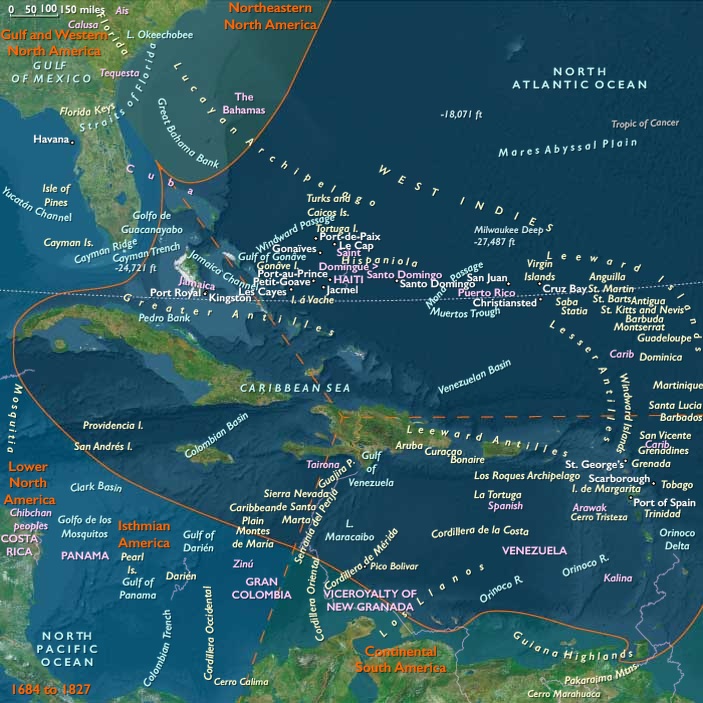
Subregions
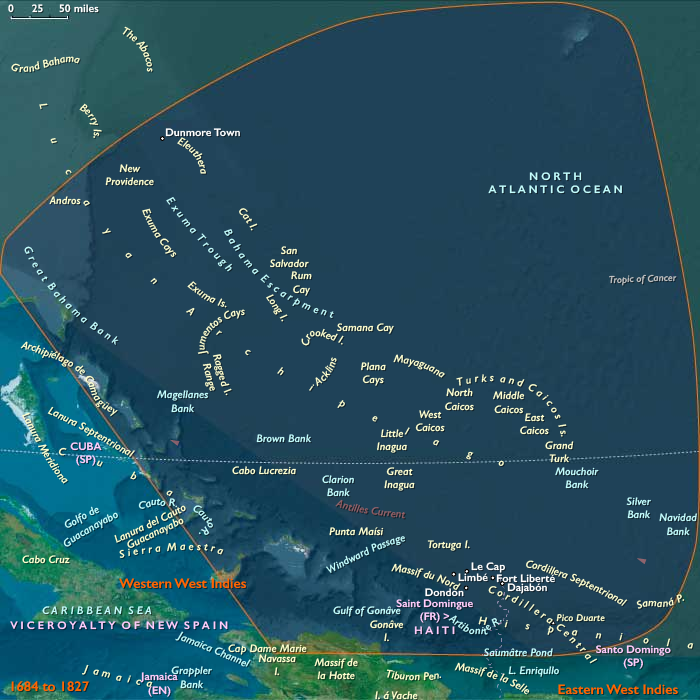
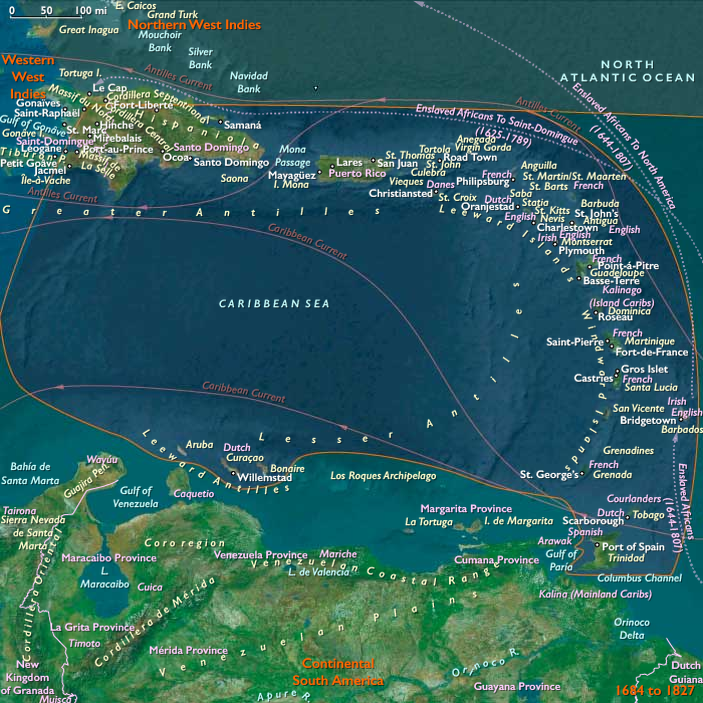
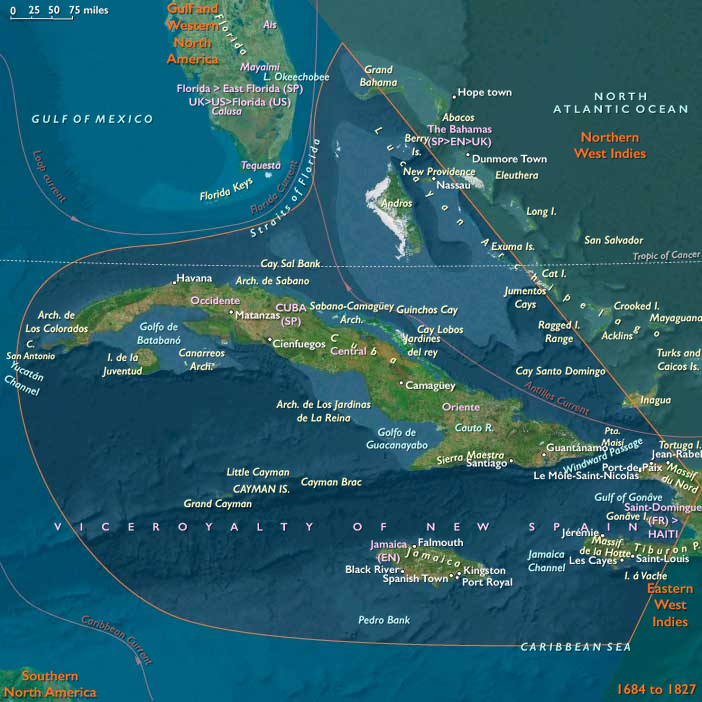
Related Events
Showing 10 events out of 30218 total
Years: 1684 - 1827
Groups
- Santo Domingo, Captaincy General of
- Puerto Rico (Spanish Colony)
- Cuba (Spanish Colony)
- St. Christophe (French Colony)
- Barbados (English colony)
- Montserrat (English Colony)
- Antigua (English colony)
- Martinique, (French colony)
- Portugal, Bragança Kingdom of
- Grenada (French colony)
- Anguilla (British colony)
- Virgin Islands, British (Overseas Territory of the United Kingdom)
- Guadeloupe, (French colony)
- Barbuda (English colony)
- Santo Domingo (Spanish Colony)
- Dominica (French colony)
- Virgin Islands (Royal Danish Colony)
- Guadeloupe, (English colony)
- Martinique, (English colony)
- Grenada (British colony)
- Dominica (British colony)
- Martinique, (French colony)
- Guadeloupe, (French colony)
- St. John's Island (British colony)
- Montserrat (French Colony)
- Montserrat (English Colony)
- Martinique, (English colony)
- Santo Domingo (French Colony)
- Britain (United Kingdom of Great Britain and Ireland)
- Martinique, (French colony)
- Martinique, (English colony)
- Santo Domingo, Captaincy General of
- Guadeloupe, (English colony)
- Guadeloupe, (Swedish colony)
- Spain, Bourbon Kingdom (first restoration) of
- Martinique, (French colony)
- France, constitutional monarchy of
- Guadeloupe, (French colony)
- Netherlands, Kingdom of The United
- Santo Domingo (Haitian-occupied)
Topics
- Colonization of the Americas, Portuguese
- Colonization of the Americas, Spanish
- Colonization of the Americas, French
- Colonization of the Americas, English
- Colonization of the Americas, Danish
- Colonization of the Americas, British
Commodoties
Subjects
Regions
Subregions