
The despots of Morea, Demetrios Palaiologos and …
Years: 1454 - 1454
The despots of Morea, Demetrios Palaiologos and Thomas Palaiologos, brothers of the last emperor, had failed to send him any aid, as Morea was reeling from a recent Ottoman attack.
Their own incompetence at rule leads to an Albanian-Greek revolt against them, when they invite in Ottoman troops to help them put down the revolt.
At this time, a number of leading Moreote Greeks and Albanians make private peace with Mehmed.
Locations
People
Groups
- Albanians
- Venice, (Most Serene) Republic of
- Athens, Duchy of
- Archipelago, Duchy of the (Duchy of Náxos)
- Morea, Despotate of
- Epirus, Despotate of
- Greece, Ottoman
- Ottoman Empire
- Greeks (Modern)
Topics
Commodoties
Subjects
Regions
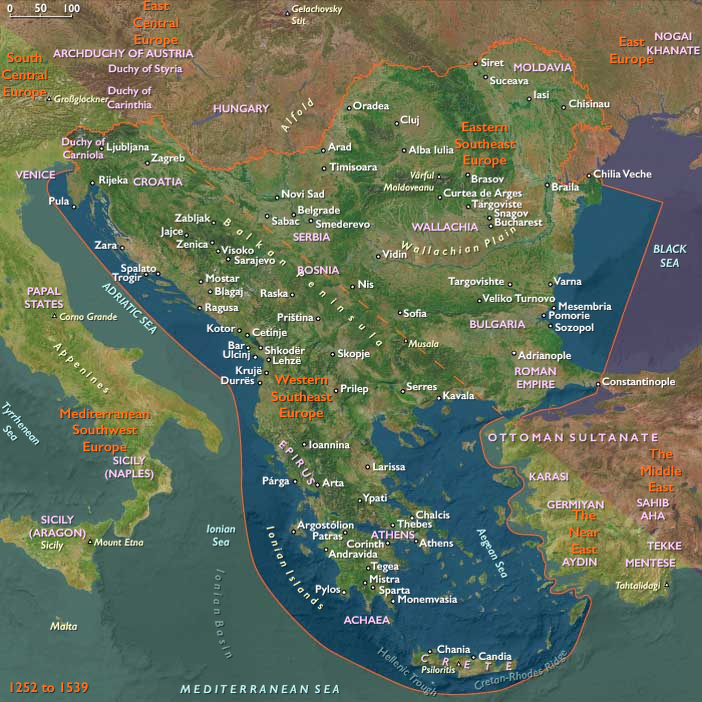
Subregions
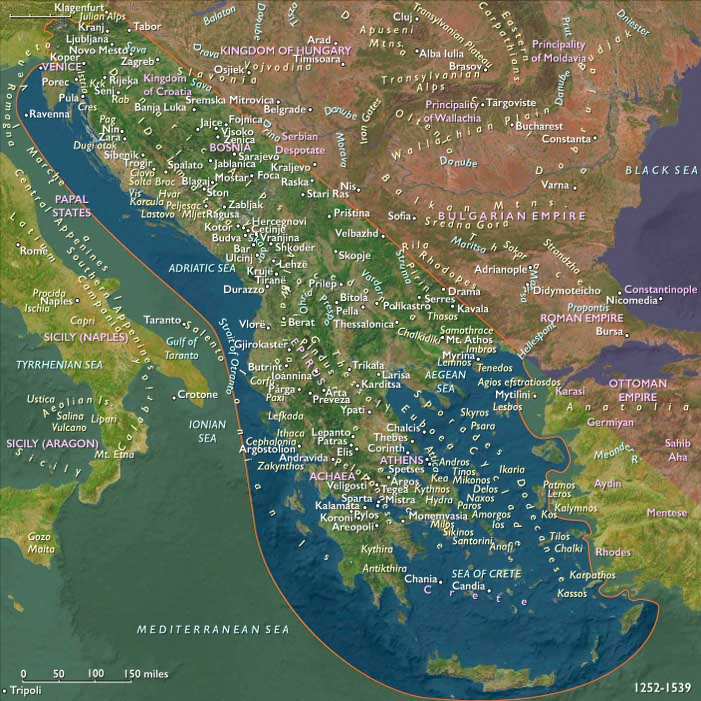
Related Events
Showing 10 events out of 41462 total
Years: 1454 - 1454
Locations
People
Groups
- Albanians
- Venice, (Most Serene) Republic of
- Athens, Duchy of
- Archipelago, Duchy of the (Duchy of Náxos)
- Morea, Despotate of
- Epirus, Despotate of
- Greece, Ottoman
- Ottoman Empire
- Greeks (Modern)
Topics
Commodoties
Subjects
Regions
Subregions