
The death in 1280 of Waleran IV, …
Years: 1288 - 1288
The death in 1280 of Waleran IV, Duke of Limburg, who had no sons, and the death in 1283 of his only daughter, Ermengarde of Limburg, who had no children, had been the cause of the War of the Limburg Succession.
Ermergarde had married Reginald I of Guelders, who now claims the Duchy of Limburg.
However, Waleran's nephew Adolf VIII of Berg, son of his elder brother Adolf VII of Berg, also claims the Duchy.
Unable to assert his claims, he had sold them in 1283 to the mighty John I, Duke of Brabant.
Several smaller confrontations have occurred from 1283 to 1288 between both sides, none of them decisive.
Most of the other local powers have meanwhile chosen sides.
Siegfried II of Westerburg, the Archbishop of Cologne and ruler of the Electorate of Cologne, traditional enemy of the Duke of Brabant, has forged an alliance with Reginald I, joined by Henry VI, Count of Luxembourg, and his brother Waleran I of Luxembourg, Lord of Ligny, as well as by Adolf of Nassau (later to be King of Germany).
On the other side, the Counts of Mark have taken the chance to affirm their independence from the Archbishop of Cologne and together with the Counts of Loon, Tecklenburg, and Waldeck allied with Brabant and Berg.
The citizens of the City of Cologne, eager to emancipate themselves from the Archbishop's rule, have also joined this alliance.
John I of Brabant defeats the duchy of Guelders in one of the largest battles in Europe of the Middle Ages, thus winning possession of the duchy of Limburg.
The number of deaths at the battle of Worringen is estimated at eleven hundred on the Guelders side and forty on the Brabant side.
The blood toll on the house of Luxembourg is particularly high: most of the male relatives of the later German emperor Henry VII perish here.
Archbishop Siegfried will be imprisoned for over a year at Schloss Burg, before he pays a ransom and agrees to Count Adolf's demands.
Worringen Castle and several other fortresses of the bishop are demolished.
Reinoud of Guelders is released after he renounces all claims to the Duchy of Limburg.
The Battle of Worringen means a rise in the power of Brabant, Berg and Mark, while the City of Cologne gains its independence from the Archbishopric and finally in 1475 the status of an Imperial city.
The Duchy of Limburg will be added to the Duchy of Brabant in 1289, an arrangement approved by King Rudolph and again by his former opponent Adolf of Nassau, after his election in 1292 King of the Romans.
In Luxembourg, Henry VI is followed by his nine-year-old son Henry VII, who in 1292 will settle the conflict with Brabant by marrying John's daughter Margaret.
Locations
People
- Adolf
- Adolf VIII of Berg
- Henry VI of Luxembourg
- John I of Brabant
- Reginald I of Guelders
- Siegfried II of Westerburg
- Waleran I of Luxembourg
- Walram
Groups
- Cologne, Electorate of
- Luxembourg, County of
- Loon, County of
- Tecklenburg, County of
- Christians, Roman Catholic
- Limburg, Duchy of
- Guelders, Duchy of
- Berg, County of
- Waldeck, County of
- Brabant, Duchy of
- Mark, County of
- Holy Roman Empire
- Nassau-Dillenburg, County of
- Cologne, Electorate of
Topics
Commodoties
Subjects
Regions
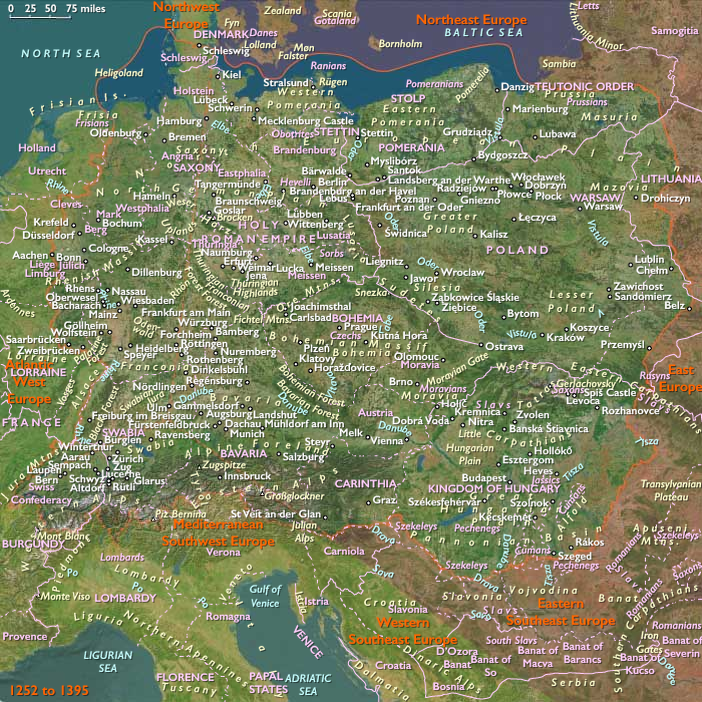
Subregions
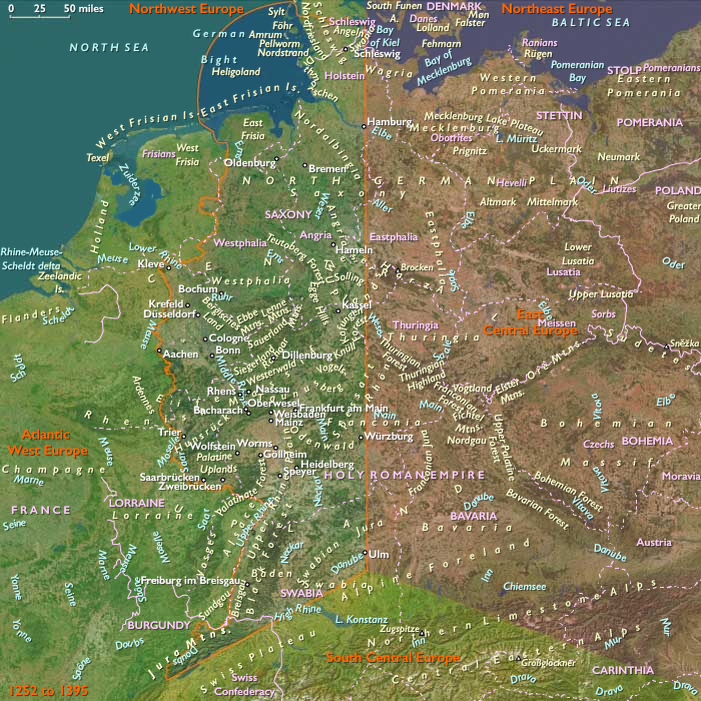
Related Events
Showing 10 events out of 45370 total
Years: 1288 - 1288
Locations
People
- Adolf
- Adolf VIII of Berg
- Henry VI of Luxembourg
- John I of Brabant
- Reginald I of Guelders
- Siegfried II of Westerburg
- Waleran I of Luxembourg
- Walram
Groups
- Cologne, Electorate of
- Luxembourg, County of
- Loon, County of
- Tecklenburg, County of
- Christians, Roman Catholic
- Limburg, Duchy of
- Guelders, Duchy of
- Berg, County of
- Waldeck, County of
- Brabant, Duchy of
- Mark, County of
- Holy Roman Empire
- Nassau-Dillenburg, County of
- Cologne, Electorate of
Topics
Commodoties
Subjects
Regions
Subregions