
The Treaty of Ensisheim and French Withdrawal …
Years: 1445 - 1445
October
The Treaty of Ensisheim and French Withdrawal from Alsace (1445)
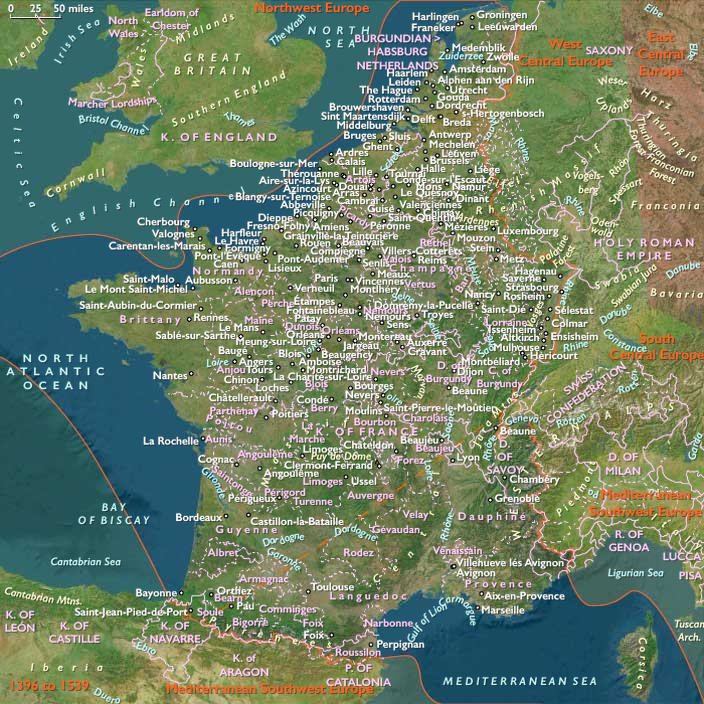
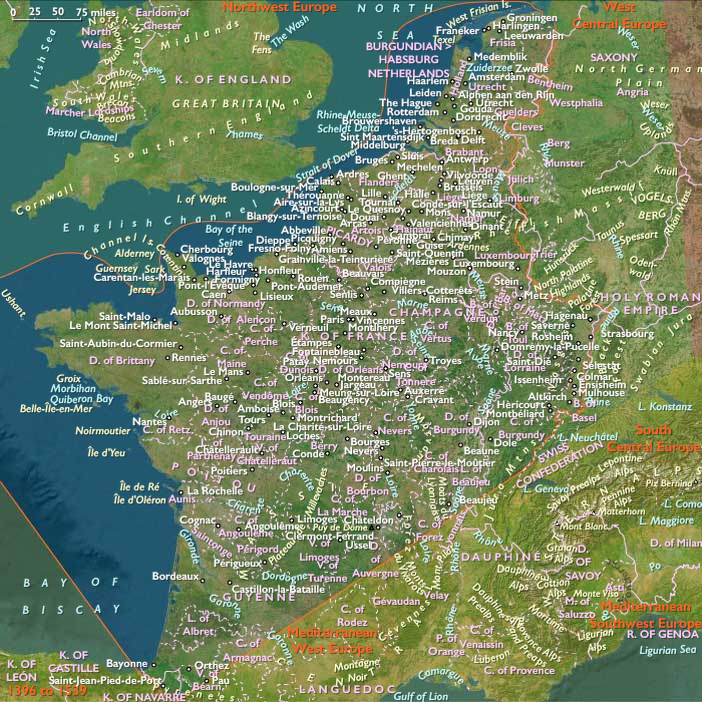
On October 28, 1444, the Dauphin Louis (later King Louis XI of France) formally concluded peace with the Swiss Confederacy and the city of Basel through the Treaty of Ensisheim. This agreement marked the end of French military intervention in Alsace, initiated primarily as a strategic measure to occupy restless Armagnac mercenaries who posed a risk of internal unrest within France.
Following this agreement, French forces withdrew entirely from Alsace by the spring of 1445. The intervention itself had not been undertaken based on a formal diplomatic arrangement with the Holy Roman Emperor, nor was it clearly aligned with the Swiss-Imperial conflict known as the Old Zürich War. As a result, historians debate whether the French incursion and subsequent withdrawal had a decisive impact on the war’s overall outcome. Rather, the campaign appears to have been motivated largely by internal French considerations—specifically, the necessity of diverting and pacifying Armagnac forces, which were destabilizing the kingdom.
The Treaty of Ensisheim thus highlights a complex moment in mid-15th-century diplomacy, underscoring the intricate interplay of internal and external factors influencing French foreign policy. While it resolved immediate tensions between France, Basel, and the Swiss Confederacy, its broader implications for the Old Zürich War remain uncertain. Nonetheless, the French withdrawal allowed Alsace and the surrounding regions a respite from foreign intervention, temporarily stabilizing political conditions in the region.
Locations
People
Groups
- Basel, Prince-Bishopric of
- Austria, Archduchy of
- Swiss Confederacy, Old (Swiss Confederation)
- Schwyz, Imperial (Free) City of
- France, (Valois) Kingdom of
- Zürich, Imperial (Free) City of
- Zürich, Swiss Canton of
- Glarus, Swiss Canton of
- St. Gallen (Saint Gall), Imperial free city
- Holy Roman Empire
Topics
Commodoties
Subjects
Regions
Subregions
Years: 1445 - 1445
October
Locations
People
Groups
- Basel, Prince-Bishopric of
- Austria, Archduchy of
- Swiss Confederacy, Old (Swiss Confederation)
- Schwyz, Imperial (Free) City of
- France, (Valois) Kingdom of
- Zürich, Imperial (Free) City of
- Zürich, Swiss Canton of
- Glarus, Swiss Canton of
- St. Gallen (Saint Gall), Imperial free city
- Holy Roman Empire
Topics
Commodoties
Subjects
Regions
Subregions