The 1120s see the establishment of the …
Years: 1120 - 1131
The 1120s see the establishment of the mercantile empires of Venice, Genoa, and Pisa, whose navies will aid the crusaders in capturing the coastal towns bypassed by the First Crusade, thereby expanding and consolidating the European position in Palestine.
The Venetian Crusade of 1122–24, launched by the Republic of Venice, succeeds in capturing Tyre: an important victory at the start of a period during which the Kingdom of Jerusalem will expand to its greatest extent under King Baldwin II; the Venetians gain valuable trading concessions in Tyre.
The Venetians, through raids on imperial territory both on the way to the Holy Land and on the return journey, force the East Romans to confirm and extend Venice's trading privileges with the empire.
People
Groups
- Venice, Duchy of
- Pisa, (first) Republic of
- Genoa, (Most Serene) Republic of
- Christians, Roman Catholic
- Christians, Eastern Orthodox
- Roman Empire, Eastern: Komnenos dynasty, restored
- Jerusalem, Latin Kingdom of
- Palestine, Frankish (Outremer)
- Italians (Latins)
Topics
Subjects
Regions
Subregions
Related Events
Filter results
Showing 10 events out of 49346 total
The Jurchens of North China had rebelled in 1115 against their overlords, the Khitan Liao dynasty (907–1125), and declared the formation of the Jin Dynasty.
Allying with the Song dynasty against their common enemy the Liao, the Jin promise to return to the Song the territories in northern China that had fallen under Liao control since 938.
The Jurchens' quick defeat of the Liao combined with Song military failures make the Jin reluctant to cede these territories.
After a series of failed negotiations that embitter both sides, the Jurchens attack the Song in November 1125, dispatching one army towards Taiyuan and the other towards Kaifeng, the Song capital.
The Song general stationed in Taiyuan, surprised by the news of an invasion, retreats from the city, which is besieged and later captured.
As the second Jin army approaches the capital, Emperor Huizong of Song abdicates and flees south.
A new emperor, Qinzong, is enthroned.
The Jurchens begin a siege against Kaifeng in 1126, but Qinzong negotiates for their retreat from the capital after he agrees to pay a large annual indemnity.
Qinzong reneges on the deal and orders Song forces to defend the prefectures instead of fortifying the capital.
The Jin resume their war against the Song and again besiege Kaifeng in 1127.
The Chinese emperor is captured in an event known as the Jingkang Incident, the capital is looted, and the Song dynasty loses northern China to the Jin.
Remnants of the Song retreat to southern China and, after brief stays in several temporary capitals, eventually relocate to Hangzhou.
The retreat of the Song court marks the end of the Northern Song era and the beginning of the Southern Song.
Vladimir Monomakh dies in Kiev in 1125, having helped to establish Russian literature.
His son Yuri succeeds him as Grand Prince of Kiev.
Northeast Europe (1120–1131 CE): Strengthening Monarchies and Early Crusades
Introduction
Between 1120 and 1131 CE, Northeast Europe witnessed continued efforts toward political centralization, emerging patterns of regional power, and increasingly organized missionary activity. This period saw both internal consolidation and external expansion efforts, notably through early crusading activities targeting the pagan populations around the Baltic.
Consolidation of Royal Authority
In Denmark, King Niels (r. 1104–1134) continued his efforts to reinforce central authority despite ongoing resistance from regional noble factions. His reign featured enhanced administrative structures and strengthened alliances, which bolstered his position and laid a foundation for increased royal influence.
In Sweden, the ongoing struggle between competing dynastic factions—particularly between the Sverker and Erik dynasties—shaped internal politics. King Inge the Younger (r. 1110–1125) faced internal dissent but managed to retain authority, allowing for a degree of stability that facilitated early expansion and missionary activities eastward.
Early Crusading and Missionary Efforts
During this era, increased missionary zeal motivated Danish and Swedish rulers to undertake early expeditions targeting pagan populations in neighboring territories, notably in Finland and the eastern Baltic coast. Though full-scale crusades would not be realized until later in the century, these preliminary missionary efforts laid important groundwork, gradually extending Christian influence.
In Denmark, King Niels supported ecclesiastical expansion through missionary bishops and monastic settlements, preparing the terrain for subsequent crusading missions to the southern and eastern Baltic coasts.
Development of Urban Centers and Trade
Urban growth accelerated during this period, particularly in emerging trade centers. Visby, on the island of Gotland, increasingly became a prominent trading hub, connecting northern Europe to the broader European trade networks. Roskilde and other Danish towns similarly saw steady growth, driven by expanding trade and early guild activity.
Although formal Hanseatic League structures had yet to form, merchant guilds in Northeast European towns laid vital foundations for future regional economic cooperation.
Baltic Peoples and Early Resistance
The Baltic peoples, including the ancestors of modern Estonians, Latvians, and Lithuanians, actively resisted external pressures from increasingly aggressive Scandinavian kingdoms. Fortified settlements multiplied, signaling early organized resistance to encroachment by Christian missionaries and regional powers. These communities prepared the foundations for extended resistance efforts, culminating in later centuries.
Cultural and Ecclesiastical Expansion
Cultural life was notably enhanced through the establishment and expansion of monastic institutions. The Church consolidated its local authority by reinforcing episcopal structures and supporting literacy and education, predominantly through Latin ecclesiastical scholarship. This period marked the continued integration of Scandinavian and Baltic societies into broader European religious and cultural frameworks.
Legacy of the Era
The era of 1120–1131 CE significantly shaped Northeast Europe's subsequent development. Increased royal authority, preliminary missionary activities, early urbanization, and persistent regional resistance were foundational to later historical trajectories. These efforts set the stage for extensive crusading movements and provided crucial foundations for the region's cultural and political integration into European Christendom.
East Central Europe (1120–1131 CE): Hungarian Expansion under Stephen II, Polish Consolidation under Bolesław III, and Přemyslid Stability in Bohemia
Between 1120 and 1131 CE, East Central Europe—encompassing modern-day Poland, Czechia, Slovakia, Hungary, and the eastern portions of Germany and Austria east of 10°E and north of the defined southeastern boundary—experienced further political consolidation, territorial expansion, and economic growth. Stephen II of Hungary expanded royal authority and territorial influence, particularly in the Balkans; Bolesław III Wrymouth continued to strengthen Poland’s political unity and Baltic expansion; and Bohemia, under the Přemyslid dynasty, maintained stability and regional influence within the Holy Roman Empire.
Political and Military Developments
Hungarian Expansion under Stephen II
-
Stephen II (r. 1116–1131) vigorously pursued territorial expansion southward into the Balkans, launching campaigns against Byzantine territories in 1127–1129 and asserting Hungarian dominance over parts of Dalmatia and neighboring regions.
-
His military efforts bolstered Hungary’s position as a regional power, strengthening its southern borders and extending its influence deeper into southeastern Europe.
Continued Polish Consolidation and Baltic Integration under Bolesław III
-
Bolesław III Wrymouth (r. 1102–1138) reinforced Poland’s centralized authority and expanded into Pomerania, securing its integration through extensive missionary work and the foundation of ecclesiastical institutions.
-
His continued military successes stabilized Poland’s northern frontier, facilitating increased trade and economic integration along the Baltic coast.
Stability and Dynastic Continuity in Bohemia under Vladislaus I
-
Bohemia remained politically stable under Duke Vladislaus I (r. 1109–1125) and his successor Soběslav I (r. 1125–1140), solidifying Přemyslid authority and reinforcing Bohemia’s strategic relationship within the Holy Roman Empire.
-
The Přemyslid rulers carefully balanced autonomy with imperial alliances, ensuring Bohemia’s political stability and regional influence.
Holy Roman Empire and Regional Diplomacy
-
The reign of Holy Roman Emperor Henry V (1106–1125) and the subsequent election of Lothair III (1125–1137) maintained imperial engagement in East Central European affairs, particularly influencing dynastic alliances and regional power dynamics involving Bohemia and neighboring territories.
Economic and Technological Developments
Economic Prosperity and Trade Expansion
-
Stability and territorial expansion facilitated sustained economic prosperity throughout East Central Europe. Expanded Baltic trade under Polish control, Hungarian connections with Byzantine markets, and Bohemian integration into imperial trade networks stimulated economic growth.
Agricultural Productivity and Technological Improvements
-
Agricultural techniques improved further with increased adoption of the heavy plow, crop rotation, and advanced iron tools. These innovations enhanced agricultural productivity, supporting population growth and urban expansion across Poland, Hungary, and Bohemia.
Cultural and Artistic Developments
Hungarian Royal Patronage and Artistic Flourishing
-
Stephen II actively supported religious and cultural institutions, promoting monastic foundations, ecclesiastical building projects, and scholarly activities, enhancing Hungary’s cultural and intellectual life.
Polish Ecclesiastical Expansion and Baltic Christianization
-
Bolesław III strongly supported missionary and ecclesiastical efforts in newly acquired Pomeranian territories, establishing bishoprics and monasteries that significantly advanced Poland’s Christian and cultural identity.
Continued Bohemian Cultural Vitality under Přemyslid Patronage
-
The Přemyslid rulers in Bohemia continued their patronage of monasteries, manuscript production, and architectural endeavors, reinforcing Prague’s prominence as a cultural and religious center within the Holy Roman Empire.
Settlement and Urban Development
Polish Urban and Administrative Expansion
-
Major Polish cities, notably Kraków, Poznań, and newly incorporated Pomeranian settlements, expanded substantially, enhancing administrative efficiency, trade infrastructure, and fortifications.
Hungarian Urban Growth and Southern Expansion
-
Stephen II oversaw significant growth in Hungarian urban centers such as Esztergom, Székesfehérvár, and Dalmatian coastal cities, strengthening administrative control and commercial vitality along Hungary’s expanding frontiers.
Bohemian Urban Stability and Growth
-
Prague and other Bohemian towns remained stable and prosperous under Přemyslid governance, benefiting from continued imperial trade connections and local administrative improvements.
Social and Religious Developments
Strengthening of Ecclesiastical Structures
-
Ecclesiastical institutions and Christian practices became increasingly integral to regional governance, education, and cultural identities, particularly in newly Christianized Polish territories and expanding Hungarian dioceses.
Dynastic Authority and Aristocratic Power Consolidation
-
Dynastic and aristocratic structures continued to solidify, reinforcing centralized royal authority under Bolesław III in Poland, Stephen II in Hungary, and Přemyslid rulers in Bohemia. The nobility increasingly played key roles in governance, warfare, and economic development.
Long-Term Consequences and Historical Significance
The era 1120–1131 CE further strengthened East Central Europe’s medieval kingdoms. Hungarian expansion under Stephen II secured enduring regional influence, Polish territorial consolidation under Bolesław III significantly advanced northern frontier security and economic integration, and Bohemian stability under the Přemyslids reinforced regional autonomy and cultural vitality. Collectively, these developments enhanced regional political stability, economic prosperity, and cultural cohesion, deeply influencing East Central Europe’s trajectory throughout the subsequent medieval centuries.
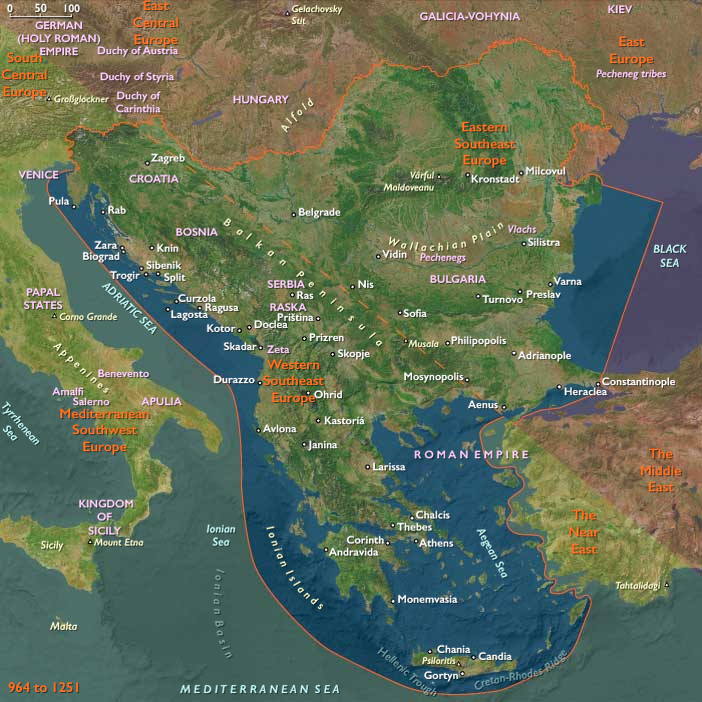
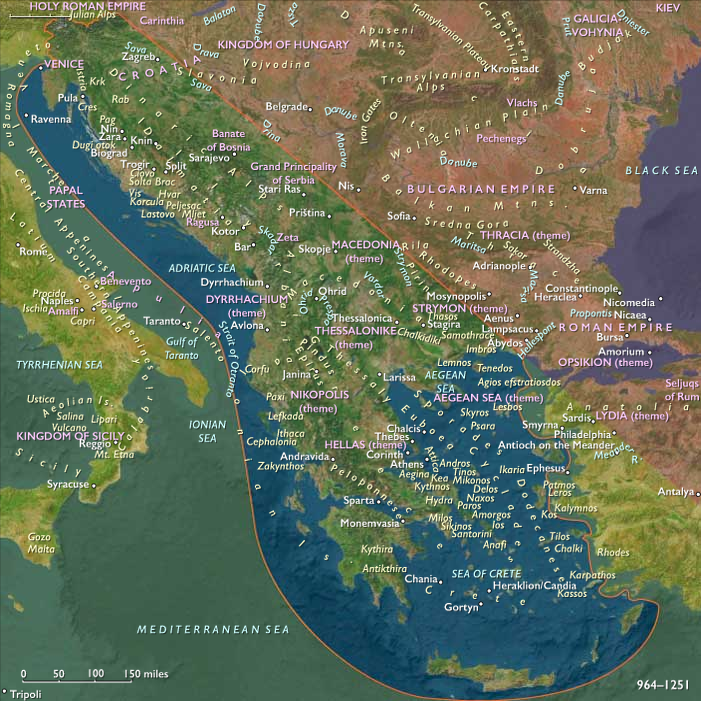
Eastern Southeast Europe (1120–1131 CE): Consolidation, Expansion, and Cultural Flourishing
Settlement and Migration Patterns
Consolidation of Roma Settlements
Between 1120 and 1131 CE, Roma communities increasingly consolidated their presence throughout Eastern Southeast Europe, settling primarily on the outskirts of major urban areas and rural trade routes. This growing Roma presence enhanced the cultural diversity of the region, influencing trade networks and local economies.
Urban Stability and Expansion
Cities such as Constantinople, Adrianople, and Philippopolis continued their steady growth, maintaining robust defenses and expanding infrastructure. These cities reinforced their roles as significant centers of trade, governance, and cultural activity.
Economic and Technological Developments
Trade Network Expansion
Regional economies flourished through expanded trade connections, linking Eastern Southeast Europe with broader Mediterranean, Balkan, and Eurasian markets. Constantinople solidified its position as a primary hub, channeling trade goods such as textiles, grain, and luxury items.
Advancements in Fortification
Urban fortifications were further enhanced, with improvements in city walls, towers, and military logistics. These technological advancements provided cities with greater security against potential threats and enabled continued economic stability.
Cultural and Artistic Developments
Byzantine Artistic Flourishing
Artistic expression thrived, exemplified by religious art, illuminated manuscripts, mosaics, and iconography. Byzantine artistic traditions reached new heights, enriching the cultural and spiritual landscape of the region.
Intellectual Activity and Education
Educational institutions maintained their roles in preserving and disseminating classical and theological knowledge. Intellectual activities continued to flourish, with scholars producing significant theological, philosophical, and historical works.
Social and Religious Developments
Strengthened Governance
Administrative and provincial governance remained effective, managing both urban and rural areas efficiently. Emphasis on military preparedness and civic management supported regional coherence and stability.
Continued Expansion of Christianity
Christianity deepened its integration into societal structures, further solidifying its role in shaping regional cultural, social, and political dynamics. Religious institutions continued to grow in prominence, supporting community cohesion and spiritual life.
Long-Term Consequences and Historical Significance
The period 1120–1131 CE was marked by significant urban and demographic consolidation, robust economic growth, and cultural flourishing. These elements reinforced Eastern Southeast Europe's resilience and provided critical foundations for ongoing regional stability and development during the High Middle Ages.
Eastern Southeast Europe (1132–1143 CE): Strategic Alliances and Continued Economic Rivalry
Settlement and Migration Patterns
Stabilization of Roma Communities
From 1132 to 1143 CE, Roma communities became further integrated into Eastern Southeast Europe, expanding their presence from initial Balkan settlements into broader European regions. Their migration contributed to regional cultural diversity and introduced new socioeconomic dynamics.
Urban Consolidation
Cities such as Constantinople experienced continued stability and moderate urban growth. Infrastructure improvements persisted, with enhanced fortifications and civic projects ensuring sustained urban resilience.
Economic and Technological Developments
Persistent Venetian Trade Dominance
During his reign (1118–1143), Emperor John II Komnenos attempted but ultimately failed to break the growing Venetian monopoly on imperial trade. Venetian control continued to shape regional commerce significantly, despite imperial diplomatic and economic efforts to reduce their influence.
Continued Defensive Innovations
Technological advancements in military defense remained a priority, with ongoing improvements in fortifications, military logistics, and strategic preparedness. These developments were essential for maintaining security amidst economic rivalry and geopolitical tensions.
Cultural and Artistic Developments
Flourishing Byzantine Artistry
Cultural activities continued robustly, reflecting Byzantine artistic traditions. Religious art, public monuments, and architecture flourished, reinforced by imperial and local patronage, highlighting the enduring cultural richness of the region.
Intellectual Continuity
Educational institutions and intellectual endeavors actively preserved classical and theological traditions. Scholarly activities maintained regional cultural continuity, adapting effectively to evolving political and economic conditions.
Social and Religious Developments
Diplomatic Strategies of John II Komnenos
Emperor John II Komnenos pursued strategic diplomatic relations, notably with the newly influential Kingdom of Hungary, capitalizing on family ties by marriage. Recognizing Hungary’s geopolitical significance—lying between the Western and Eastern Roman empires, neighboring the Serbs and Venetians—John fostered diplomatic alliances aimed at counterbalancing the emerging threat posed by the newly established Kingdom of Sicily in 1130, ruled by Roger II. Additionally, the Serbian state under the Vukanović dynasty continued to consolidate its power, playing a crucial role as both a buffer and a rival to Byzantine interests in the Balkans.
Strengthening of Christianity
The role of Christianity further solidified in regional society, shaping cultural, political, and social norms. Expansion and enhancement of religious institutions continued, strengthening societal cohesion and spiritual community life.
Long-Term Consequences and Historical Significance
The period 1132–1143 CE was characterized by strategic diplomatic maneuvers, continued economic rivalry with Venice, and robust cultural and social development. The growing strength and strategic positioning of the Serbian state during this era further complicated regional geopolitics. These events had lasting impacts on Eastern Southeast Europe's regional stability and historical trajectory, significantly influencing the subsequent geopolitical and economic landscapes.
Muslim Arab opposition to the Crusaders, initially fragmented among various petty states, begins, after 1128, gradually to unify under the strong leadership of the Turkish Zangid dynasty, which from 1127 to 1222 is to rule northern Iraq (al-Jazirah) and Syria.
Al-Hariri of Basra, born in Basra in present Iraq, is best known for writing Maqamat al-Hariri (The Assemblies of al-Hariri), a virtuosic display of saj', consisting of fifty anecdotes written in stylized rhymed prose, which was once memorized by heart by scholars, and Mulhat al-i'rab fi al-nawh, an extensive poem on grammar.
The most famous translation of his maqamat was a German version by the poet and Orientalist Friedrich Rückert as Die Verwandlungen von Abu Serug and sought to emulate the rhymes and wordplay of the original.
Some of his other works include a book on errors of expression in Arabic, Durrat al-ghawwās fī awhām al-khawass.
The Assemblies of al-Hariri recounts in the words of the narrator, al-Harith ibn Hammam and al-Hariri's several encounters with artist Abu Zayd al-Saruji.
Mediterranean Southwest Europe (1120–1131 CE): Norman Sicily’s Golden Age, Rise of Maritime Commerce, and Intellectual Exchange
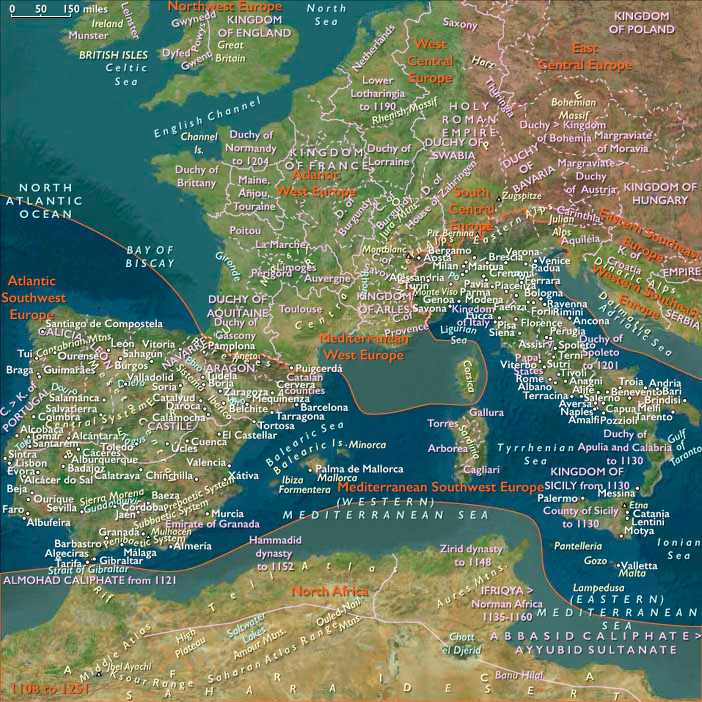
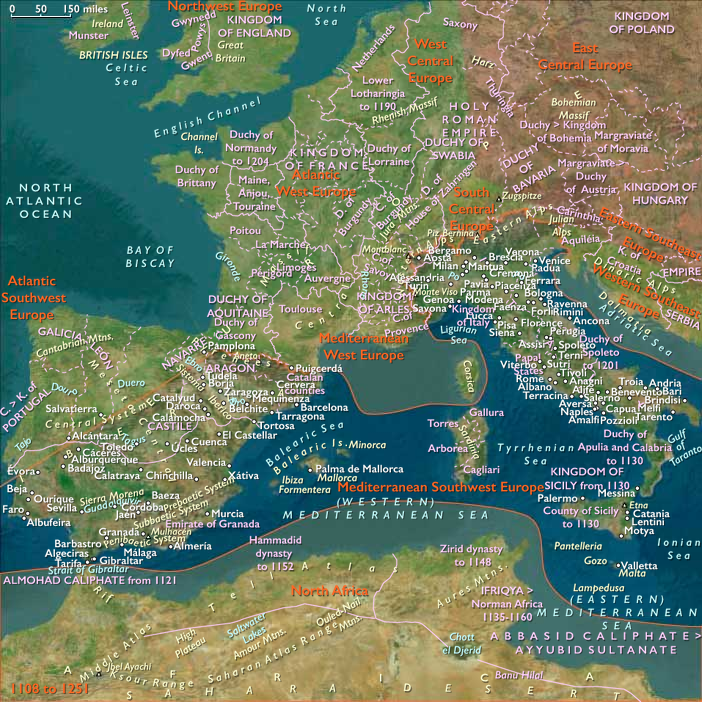
The era 1120–1131 CE in Mediterranean Southwest Europe sees the peak of Norman cultural synthesis in Sicily, continued expansion and prosperity of Italian maritime republics, and intensified intellectual exchanges across the Mediterranean region.
Norman Sicily’s Golden Age under Roger II
Under Roger II, who officially becomes King of Sicily in 1130 CE, Norman Sicily reaches a cultural and political zenith. Roger’s court in Palermo becomes a flourishing center of multicultural integration, drawing scholars, scientists, artists, and intellectuals from across the Mediterranean world. Reflecting influences from Muslim, Byzantine, and Western European traditions, Sicily under Roger II experiences significant advancements in science, art, architecture, and law. The island maintains a uniquely tolerant society, where Muslims, Jews, Eastern Orthodox Greeks, Lombards, and Normans coexist harmoniously under a robust legal framework.
Expansion of Maritime Commerce: Venice and Genoa
Italian maritime republics, particularly Venice and Genoa, continue their economic ascent as dominant maritime and commercial powers. Venice solidifies its strategic position, significantly expanding trade networks linking Western Europe, the Byzantine Empire, and the Islamic world. Concurrently, Genoa strengthens its maritime influence and trade capabilities, rivaling Venice and establishing itself as a major competitor for control of Mediterranean commerce.
Autonomous Communes and Urban Prosperity
Autonomous communes in northern Italy, notably Florence, continue their economic and political evolution. The urban-based communal governments gradually eclipse older feudal structures, fostering conditions favorable to commercial expansion, financial innovation, and civic autonomy. This transformation significantly reshapes the socioeconomic landscape of northern Italy.
Continued Multicultural and Intellectual Exchange in Toledo
Toledo, now firmly under Christian control, remains a critical intellectual crossroads, facilitating ongoing translation efforts of classical Greek and Arabic texts into Latin. The city's scholars—including Mozarabic Christians, Jews, and visiting European intellectuals—sustain and enhance its pivotal role in transmitting ancient knowledge to Western Europe.
Economic Prosperity and Technological Advancements
Technological innovations and maritime advancements underpin continued economic prosperity throughout the region. The enhanced shipbuilding techniques, improved navigation, and increased trade volume contribute significantly to regional growth, urban development, and economic stability.
Legacy of the Era
The era 1120–1131 CE represents a cultural and political high point in Norman Sicily under Roger II, witnesses the steady rise of Italian maritime republics, and sustains robust intellectual exchanges across the Mediterranean. These developments significantly influence Mediterranean Southwest Europe's medieval trajectory, setting foundations for future transformations in culture, commerce, and governance.
Berber tribesman Ibn Tumart proclaims himself the mahdi, or messiah, come to purify Islam, thereby initiating a mass movement directed against North Africa’s ruling Almoravid dynasty.
Years: 1120 - 1131
People
Groups
- Venice, Duchy of
- Pisa, (first) Republic of
- Genoa, (Most Serene) Republic of
- Christians, Roman Catholic
- Christians, Eastern Orthodox
- Roman Empire, Eastern: Komnenos dynasty, restored
- Jerusalem, Latin Kingdom of
- Palestine, Frankish (Outremer)
- Italians (Latins)