
The crusaders' campaign is not only ill …
Years: 1148 - 1148
July
The crusaders' campaign is not only ill advised and mistakenly conceived but badly executed.
Nur ad-Din, together with Saif ad-Din, arrives with Muslim reinforcements and cuts off the crusader's route to their previous position.
Unur, however refuses them entrance, using the presence of Zangi's sons to convince the Franks to release the siege.
The local crusader lords refuse to carry on with the siege, and the three kings have no choice but to abandon the city.
On July 28, after a five-day siege, with Nur ad-Din's forces nearing the city, it becomes evident that the crusader army is dangerously exposed, and a retreat to Jerusalem is ordered, though for their entire retreat they will be followed by Turkish archers who constantly harass them.
This humiliating failure is attributable largely to the conflicting interests of the participants.
Each of the Christian forces feels betrayed by the other and mutual distrust will be fostered for a generation due to the defeat.
The Muslims, on the other hand, receive enormous encouragement by their triumph over another major Western expedition.
Locations
People
- Conrad III of Germany
- Frederick I, Holy Roman Emperor
- Frederick the Fair
- Louis VII of France
- Mu'in ad-Din Unur
- Nur ad-Din Zengi
Groups
- Germans
- Greeks, Medieval (Byzantines)
- Muslims, Sunni
- German, or Ottonian (Roman) Empire
- Turkmen people
- France, (Capetian) Kingdom of
- Christians, Roman Catholic
- Christians, Eastern Orthodox
- Roman Empire, Eastern: Komnenos dynasty, restored
- Jerusalem, Latin Kingdom of
- Damascus, Burid Emirate of
- Zengid dynasty of Syria
- Sicily, Hohenstaufen Kingdom of
Topics
Commodoties
Subjects
Regions
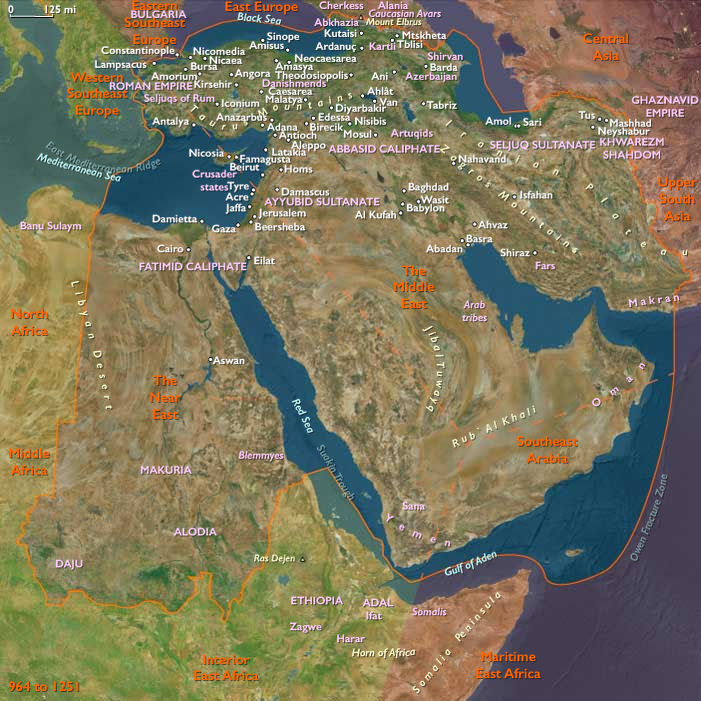
Subregions
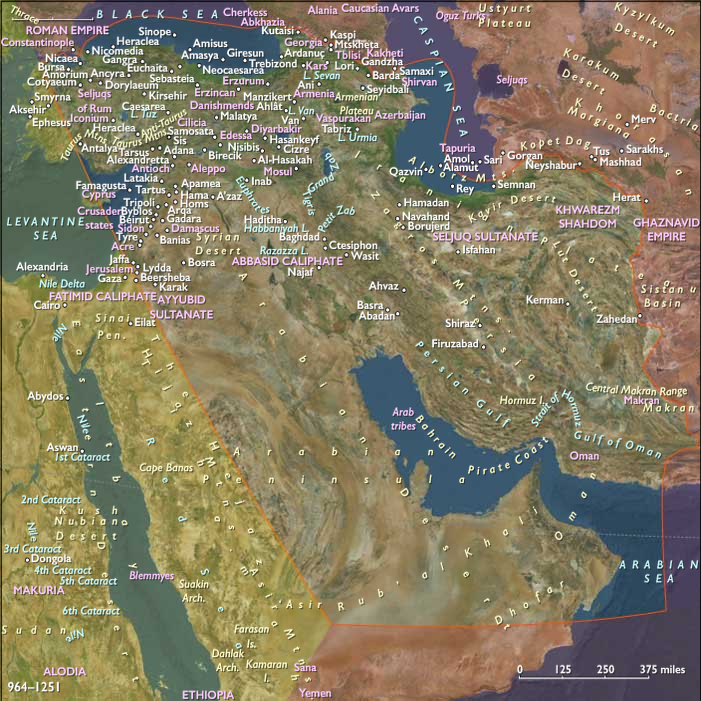
Years: 1148 - 1148
July
Locations
People
- Conrad III of Germany
- Frederick I, Holy Roman Emperor
- Frederick the Fair
- Louis VII of France
- Mu'in ad-Din Unur
- Nur ad-Din Zengi
Groups
- Germans
- Greeks, Medieval (Byzantines)
- Muslims, Sunni
- German, or Ottonian (Roman) Empire
- Turkmen people
- France, (Capetian) Kingdom of
- Christians, Roman Catholic
- Christians, Eastern Orthodox
- Roman Empire, Eastern: Komnenos dynasty, restored
- Jerusalem, Latin Kingdom of
- Damascus, Burid Emirate of
- Zengid dynasty of Syria
- Sicily, Hohenstaufen Kingdom of
Topics
Commodoties
Subjects
Regions
Subregions