
The Berber Uprising in Al-Andalus (741 CE) …
Years: 741 - 741
October
The Berber Uprising in Al-Andalus (741 CE)
The coup that installed Abd al-Malik ibn Qatan al-Fihri as ruler of Al-Andalus in early 741 CE was intended as a failsafe measure to maintain stability. However, when news of the disastrous defeat at Bagdoura (in North Africa) spreads, a general Berber uprising in Spain becomes inevitable.
The Berber Mutiny and Rebellion
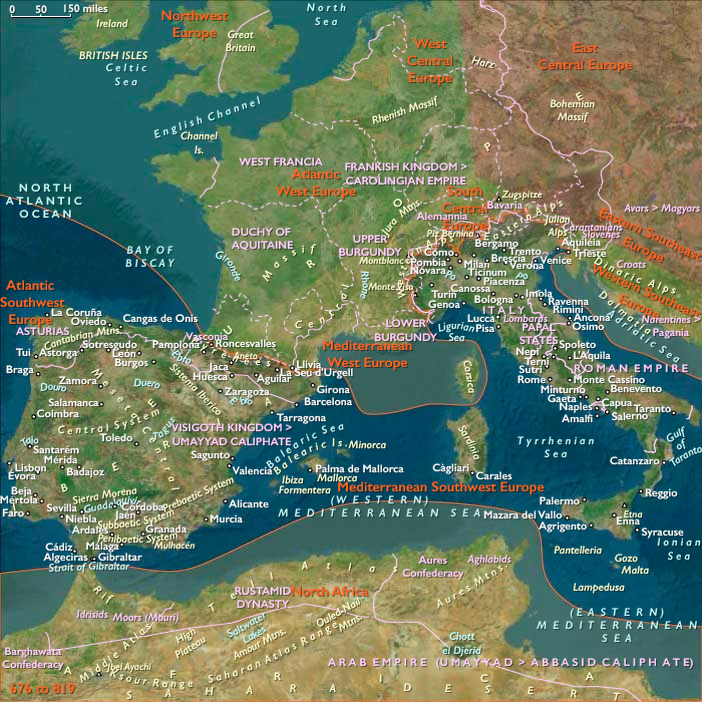
In October 741 CE, Berber garrisons in northwestern Galicia mutiny, overthrowing their Arab commanders, abandoning their fortifications, and forming a Berber rebel army to challenge Andalusian Arab rule in the south.
Although the names of their leaders are lost to history, the Spanish Berber rebel army is well-organized into three columns, each assigned a strategic objective:
- One force marches on Toledo, targeting the main garrison city of the central march.
- Another heads for Córdoba, the Umayyad capital of Al-Andalus.
- A third advances toward Algeciras, hoping to seize the Andalusian fleet and ferry reinforcements from North Africa.
This large-scale Berber rebellion threatens to overthrow Arab dominance in Al-Andalus, ushering in a period of instability and power struggles across Muslim Spain.
Locations
People
- Abd al-Rahman ibn Habib al-Fihri
- Alfonso I of Asturias
- Balj ibn Bishr al-Qushayri
- Hisham ibn Abd al-Malik
- Kulthum ibn Iyad al-Qasi
- Obeid Allah ibn al-Habhab al-Mawsili
- Tha'laba ibn Salama al-Amili
- Yusuf ibn 'Abd al-Rahman al-Fihri
Groups
- Arab people
- Berber people (also called Amazigh people or Imazighen, "free men", singular Amazigh)
- Moors
- Islam
- Muslims, Sunni
- Muslims, Kharijite
- Umayyad Caliphate (Damascus)
- Ifriqiya, Ummayad
- al-Andalus (Andalusia), Muslim-ruled
Topics
Commodoties
Subjects
- Commerce
- Watercraft
- Environment
- Labor and Service
- Conflict
- Mayhem
- Faith
- Government
- Technology
- Movements
Regions
Subregions

Years: 741 - 741
October
Locations
People
- Abd al-Rahman ibn Habib al-Fihri
- Alfonso I of Asturias
- Balj ibn Bishr al-Qushayri
- Hisham ibn Abd al-Malik
- Kulthum ibn Iyad al-Qasi
- Obeid Allah ibn al-Habhab al-Mawsili
- Tha'laba ibn Salama al-Amili
- Yusuf ibn 'Abd al-Rahman al-Fihri
Groups
- Arab people
- Berber people (also called Amazigh people or Imazighen, "free men", singular Amazigh)
- Moors
- Islam
- Muslims, Sunni
- Muslims, Kharijite
- Umayyad Caliphate (Damascus)
- Ifriqiya, Ummayad
- al-Andalus (Andalusia), Muslim-ruled
Topics
Commodoties
Subjects
- Commerce
- Watercraft
- Environment
- Labor and Service
- Conflict
- Mayhem
- Faith
- Government
- Technology
- Movements
Regions
Subregions