
Artois and the Treaty of Senlis: Resolving …
Years: 1493 - 1493
Artois and the Treaty of Senlis: Resolving Franco-Habsburg Rivalries (1477–1493)
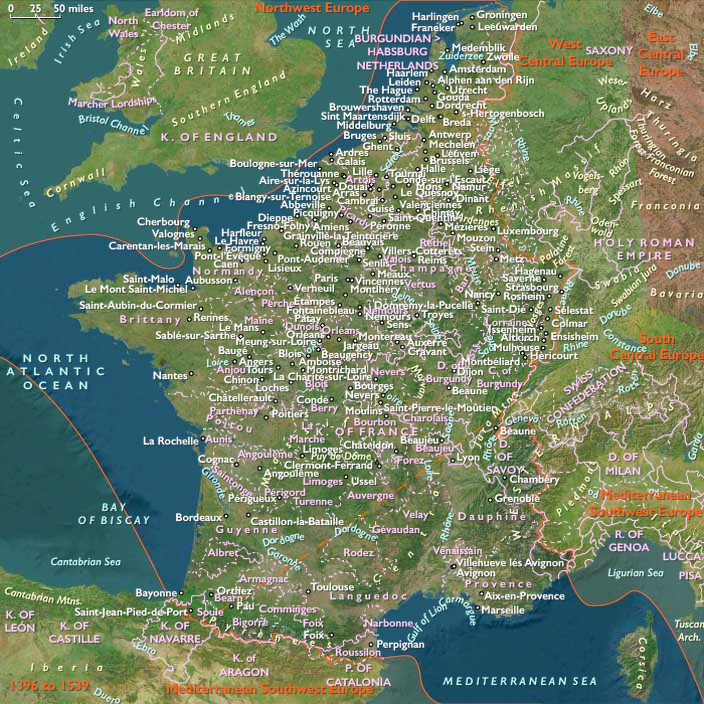
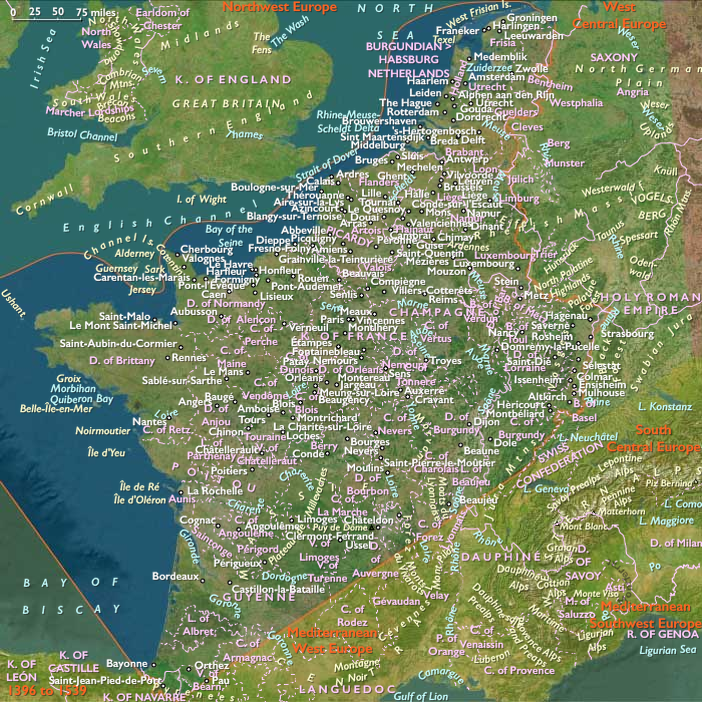
The strategic and economically vibrant County of Artois had long been a contested region within Atlantic West Europe, shaping regional rivalries between the French crown and the House of Habsburg. The extinction of the male line of the Valois-Burgundy dukes following Charles the Bold's death at the Battle of Nancy (January 5, 1477) intensified dynastic claims over the Burgundian inheritance, including Artois, precipitating a period of fierce competition and diplomatic tension.
The Contested Burgundian Legacy (1477–1482)
After Charles the Bold’s demise, King Louis XI of France swiftly occupied the Burgundian territories, including Artois, incorporating the county into France’s administrative structure as a seneschalate. This rapid annexation triggered vehement opposition from Archduke Maximilian of Austria, who, as husband of Charles’s heiress, Mary of Burgundy, aggressively asserted Habsburg claims. In 1479, the ensuing conflict culminated at the Battle of Guinegate, where Maximilian’s forces secured a pivotal victory, temporarily safeguarding the Habsburg interests.
Nevertheless, following Mary’s untimely death in 1482, Maximilian was compelled, under the Treaty of Arras (1482), to cede both Artois and Franche-Comté to France as a dowry for the marriage of his daughter, Margaret of Austria, to the French dauphin, Charles VIII.
The Breton Marriage Crisis and Diplomatic Reversal (1491–1493)
The diplomatic landscape dramatically shifted when Charles VIII repudiated his engagement to Margaret in favor of Anne of Brittany, Maximilian’s intended bride. This breach inflamed Maximilian, prompting him to demand the restitution of Artois, Franche-Comté, and other territories ceded in 1482. By 1493, facing the challenge of his ambitious campaigns in Italy, Charles VIII sought reconciliation with Maximilian, recognizing that a secure northern frontier was crucial for his Italian ambitions.
The Treaty of Senlis (May 23, 1493)
The resulting Treaty of Senlis formally ended hostilities between France and the Burgundian Netherlands, decisively redefining their territorial relationship:
- Artois and Franche-Comté were restored to the Habsburgs, becoming officially integrated into the Holy Roman Empire.
- Flanders and the broader region of the Seventeen Provinces were consolidated under Habsburg authority.
- France, while relinquishing control of Artois and Franche-Comté, retained the strategically significant Duchy of Burgundy (with Dijon as its capital), ensuring continued French influence in the region.
Persistent French Claims and Strategic Outposts
Despite Habsburg territorial gains, France retained several crucial legal claims, feudal rights, and military outposts within Artois and Flanders. These strategic footholds preserved France’s influence, perpetuating a delicate balance of power along the contested northern frontier and setting the stage for ongoing Habsburg-Valois conflicts throughout the sixteenth century.
Long-Term Significance and Geopolitical Impact
The Treaty of Senlis had far-reaching implications:
- It secured the Low Countries firmly within the Habsburg patrimony, laying foundations for future Habsburg dominance in European geopolitics.
- The treaty underscored the ongoing rivalry between the French crown and the Habsburgs, intensifying a dynastic competition that would shape European political dynamics for generations.
- Artois became a focal point in later Franco-Habsburg struggles, notably during the protracted wars of the sixteenth and seventeenth centuries, influencing regional identities, alliances, and hostilities into the modern era.
Thus, the resolution achieved by the Treaty of Senlis (1493) significantly reshaped the territorial and diplomatic landscape of late medieval Atlantic West Europe, embedding tensions and rivalries that resonated throughout subsequent European history.
Locations
People
Groups
- Flanders, County of
- Artois, County of
- France, (Valois) Kingdom of
- Holy Roman Empire
- Naples, Aragonese Kingdom of
- Franche-Comté (province of the Holy Roman Empire)
- Netherlands, Habsburg
Topics
Commodoties
Subjects
Regions
Subregions
Related Events
Showing 1 events out of 1 total
Years: 1493 - 1493
Locations
People
Groups
- Flanders, County of
- Artois, County of
- France, (Valois) Kingdom of
- Holy Roman Empire
- Naples, Aragonese Kingdom of
- Franche-Comté (province of the Holy Roman Empire)
- Netherlands, Habsburg
Topics
Commodoties
Subjects
Regions
Subregions