
The Integration of Champagne into the French …
Years: 1314 - 1314
The Integration of Champagne into the French Crown (1314)
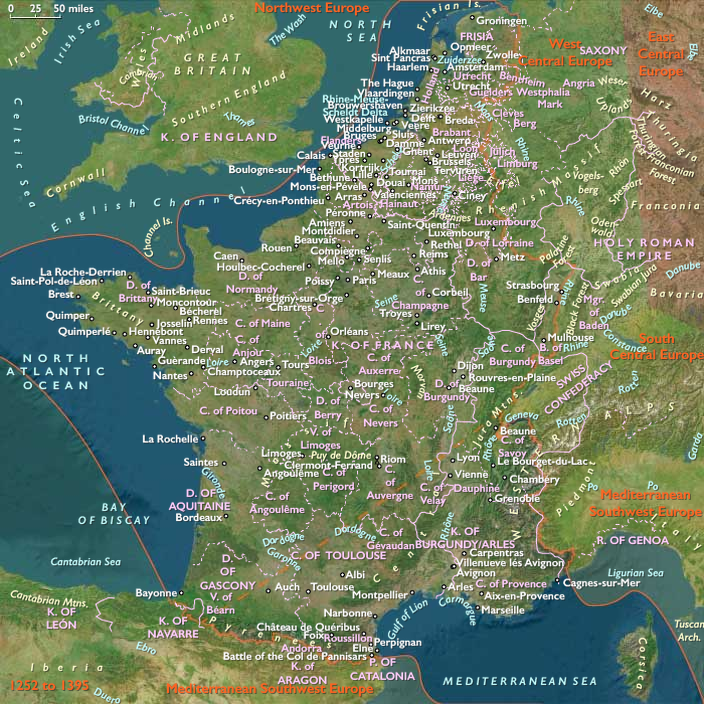
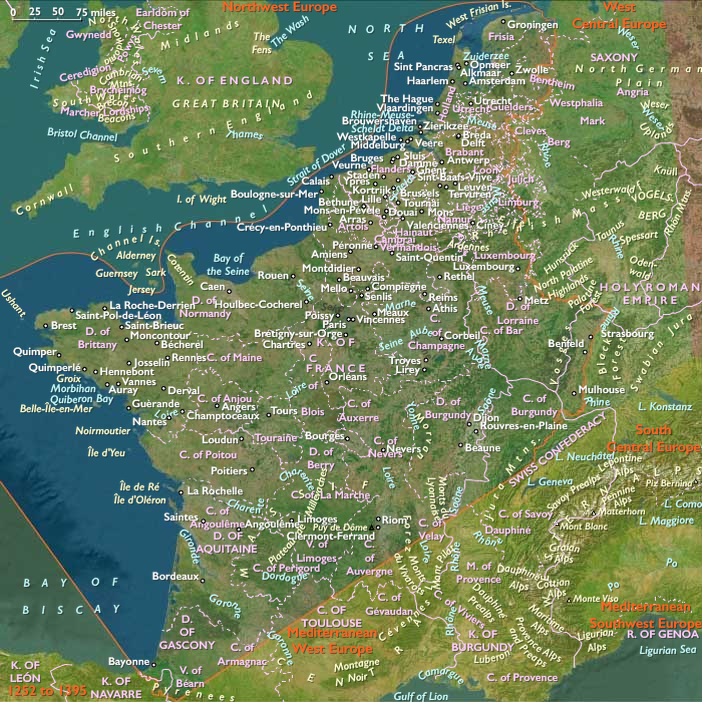
The Counts of Champagne ruled the region from 950, with the territory evolving from the County of Troyes in the late 11th century. Hugh I was the first to officially use the title "Count of Champagne," solidifying its status as a distinct feudal entity.
The Personal Union of Champagne and Navarre (1234)
- In 1234, Count Theobald IV of Champagne inherited the Kingdom of Navarre upon the death of his childless uncle, Sancho VII of Navarre.
- This created a personal union between Champagne and Navarre, greatly increasing the count’s political influence in both France and Spain.
The Union of Champagne, Navarre, and France
- Theobald IV’s great-granddaughter, Joan I of Navarre, married King Philip IV of France, bringing both Champagne and Navarre into the Capetian sphere.
- Their marriage marked the first unification of the Crowns of France and Navarre.
Champagne’s Absorption into the French Crown (1314)
- When their son, Louis X, ascended the French throne in 1314 after Philip IV’s death, Champagne was fully integrated into the French royal domain.
- Unlike Navarre, which would later separate from France, Champagne remained a permanent part of the Crown's territories.
Impact of Champagne’s Integration
- Champagne had long been an economic powerhouse, known for its prosperous fairs and trade networks that connected northern Europe with the Mediterranean.
- With Champagne now under direct royal control, its role as a commercial and financial center became even more central to the Capetian monarchy.
- The loss of its autonomy contributed to the decline of Champagne’s great medieval fairs, as royal policies increasingly centralized trade in Paris.
The integration of Champagne into the French Crown in 1314 marked the end of its independent rule but solidified Capetian control over one of medieval Europe’s most economically vibrant regions.
Locations
People
Groups
Subjects
Regions
Subregions
Related Events
Showing 10 events out of 44787 total
Years: 1314 - 1314
Locations
People
Groups
Subjects
Regions
Subregions