
The Treaty of Corbeil (1258) and the …
Years: 1258 - 1258
The Treaty of Corbeil (1258) and the Shift in Aragonese Policy
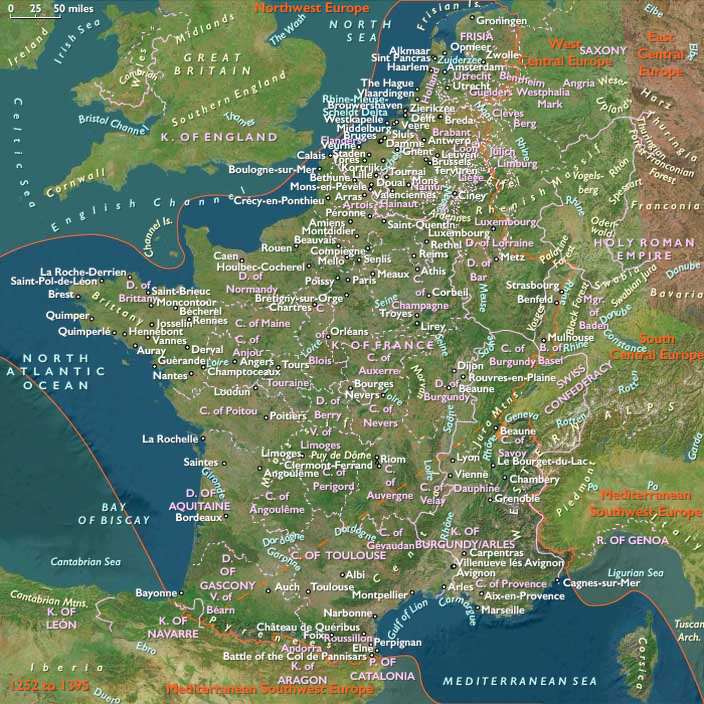
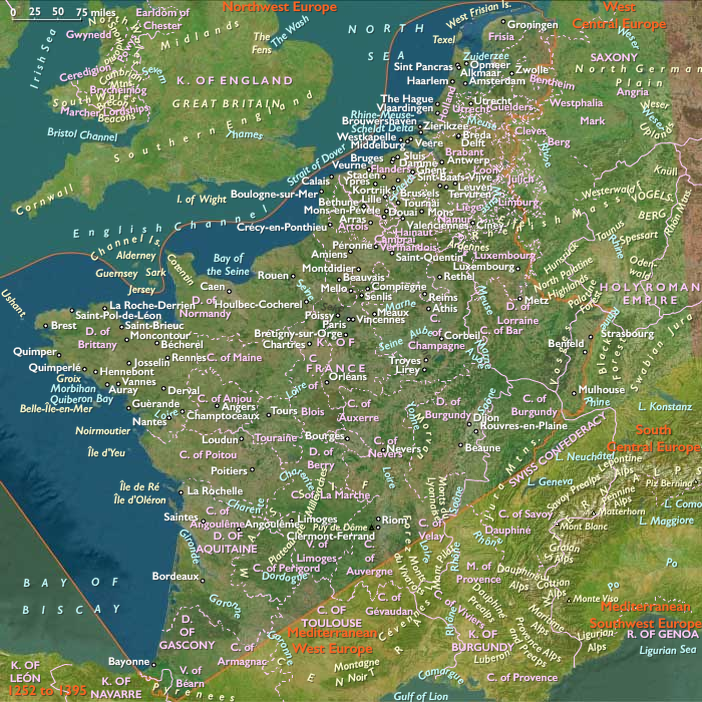
By the mid-13th century, the Counts of Barcelona, who had successfully transformed their fief into the Crown of Aragon, had long pursued a policy of influence north of the Pyrenees. However, by 1258, King James I of Aragon, known as the Conqueror, recognized the practical limitations of expanding his kingdom beyond the Pyrenees.
James I’s Vision and the Treaty of Corbeil (1258)
James I had sought to create a state straddling the Pyrenees, as a counterbalance to the rising power of France north of the Loire. This policy echoed the Visigothic attempt centuries earlier, but it faced insurmountable physical, cultural, and political obstacles, including:
- The growing strength of the French monarchy under Louis IX.
- The fragmentation of feudal allegiances in Occitania and Provence.
- The Aragonese focus on expansion southward against Muslim-held territories in Murcia and Valencia.
Realizing the risks of prolonged conflict with France, James I negotiated the Treaty of Corbeil (1258) with Louis IX, formally abandoning Aragonese claims north of the Pyrenees in exchange for the recognition of Catalonia’s sovereignty free from French feudal control.
Key Provisions of the Treaty
- Aragon renounces its ambitions in Occitania, ending centuries of Catalan expansionist policies in southern France.
- Louis IX formally relinquishes antiquated Frankish claims over Catalonia, dating from the Carolingian Marca Hispanica.
- Aragon abandons its claims to Toulouse, which would eventually pass to the French Crown after the death of Alphonse of Poitiers (1271).
- French control is confirmed over Montpellier, which remained a French enclave within the Crown of Aragon’s sphere of influence.
- The renunciation of the County of Foix, originally included in the treaty, was rejected by James I, as the county was not under French suzerainty.
The Transfer of Provence and Its Consequences
On July 17, 1258, the day after ratifying Corbeil, James I renounced his hereditary rights to the County of Provence in favor of Marguerite of Provence, daughter of Ramon Berenguer IV, his uncle, and wife of Louis IX of France. Since Provence was an imperial fief, not a French one, this transfer eventually paved the way for its later incorporation into France through the House of Valois.
The End of Aragonese Expansion Northward
The direct result of the Treaty of Corbeil was to permanently detach the House of Barcelona-Aragon from the politics of Occitania and Provence, ensuring that southern France would remain in the French sphere of influence. This marked a fundamental shift in Aragonese policy, turning its focus away from the north and toward the Mediterranean and Iberia.
James I’s Later Campaigns
With his northern ambitions set aside, James I spent the remaining two decades of his reign focusing on Iberian expansion:
- He led military campaigns in Murcia, supporting his son-in-law, Alfonso X of Castile, in securing the region from Muslim rule.
- His Mediterranean policies laid the foundation for the later expansion of the Crown of Aragon into the Balearic Islands, Sardinia, Sicily, and Naples in the 14th century.
Long-Term Effects of the Treaty of Corbeil
- Aragon’s focus shifted southward and eastward, fueling Mediterranean expansion rather than feudal struggles in Occitania.
- The House of Barcelona severed ties with Occitania, abandoning the traditional Catalan ambitions in southern France.
- Provence was placed on the path to eventual French annexation, becoming part of France after the extinction of the House of Valois-Provence in the late 15th century.
James I’s pragmatism in signing the treaty ensured that Aragon could consolidate its resources for future Mediterranean and Iberian conquests, setting the stage for its dominance in the Western Mediterranean in the following centuries.
Locations
People
Groups
- Moors
- Toulouse, County of
- Barcelona, County of
- France, (Capetian) Kingdom of
- Castile, Kingdom of
- Aragón, Kingdom of
- Murcia, Muslim statelet, or taifa, of
- Castile, Crown of
- Foix, County of
Topics
Commodoties
Subjects
Regions
Subregions
Related Events
Showing 10 events out of 46099 total
Years: 1258 - 1258
Locations
People
Groups
- Moors
- Toulouse, County of
- Barcelona, County of
- France, (Capetian) Kingdom of
- Castile, Kingdom of
- Aragón, Kingdom of
- Murcia, Muslim statelet, or taifa, of
- Castile, Crown of
- Foix, County of
Topics
Commodoties
Subjects
Regions
Subregions