
The Council of Vannes and the Increasing …
Years: 465 - 465
The Council of Vannes and the Increasing Exclusion of Jews (465 CE)
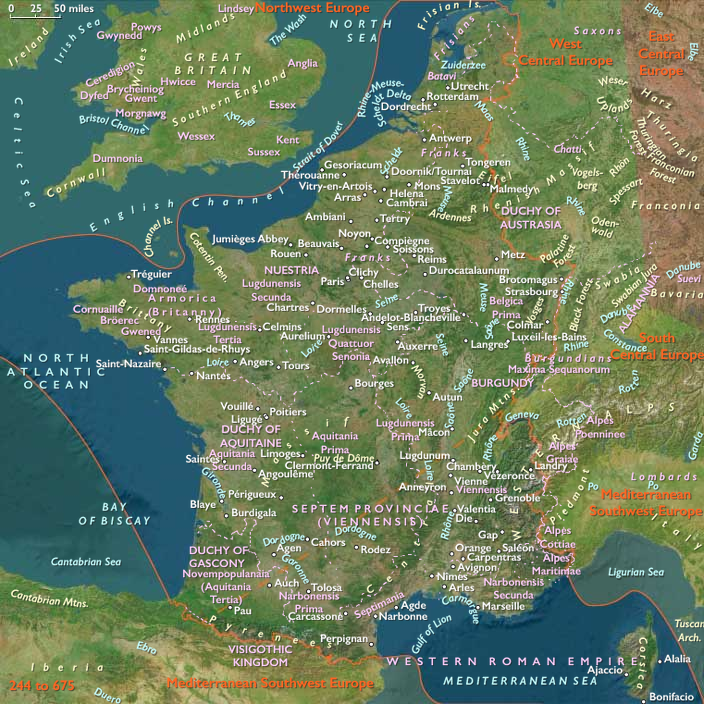
In 465 CE, the Council of Vannes, held in Gaul, issues a decree explicitly prohibiting Christian clergy from participating in Jewish feasts. This decision is part of a broader trend in late Roman and early medieval Christendom, aimed at increasing the separation between Jewish and Christian communities.
The Context of Religious Exclusion
By the mid-fifth century:
- The Western Roman Empire is collapsing, but Christian bishops remain powerful figures, filling the void left by weakened imperial administration.
- The Church is growing more institutionalized, and councils such as Vannes seek to define orthodoxy and enforce religious boundaries.
- Previous legislation, such as in the Theodosian Code, had already placed legal and economic restrictions on Jewish communities, reflecting an increasingly hostile stance.
Impact of the Decree
- The prohibition reinforces Jewish exclusion from Christian society, ensuring that Christian clergy do not engage with Jewish religious life.
- It signals a tightening of Church control over its members, emphasizing a growing anti-Jewish sentiment in Church doctrine.
- This kind of clerical restriction will later evolve into broader societal laws, further marginalizing Jewish communities in medieval Europe.
The Council of Vannes is part of a larger movement that will culminate in the full legal and social segregation of Jews in later medieval Christendom. It reflects the transition from the religious pluralism of the Roman world to the more exclusionary policies of post-Roman Christian societies.
Locations
Groups
- Jews
- Roman Empire, Western (Ravenna)
- Christianity, Chalcedonian
- Roman Empire, Eastern: Leonid dynasty
Topics
Subjects
Regions
Subregions
Related Events
Showing 10 events out of 58598 total
Years: 465 - 465
Locations
Groups
- Jews
- Roman Empire, Western (Ravenna)
- Christianity, Chalcedonian
- Roman Empire, Eastern: Leonid dynasty
Topics
Subjects
Regions
Subregions