
The Council of Constance, with the support …
Years: 1415 - 1415
July
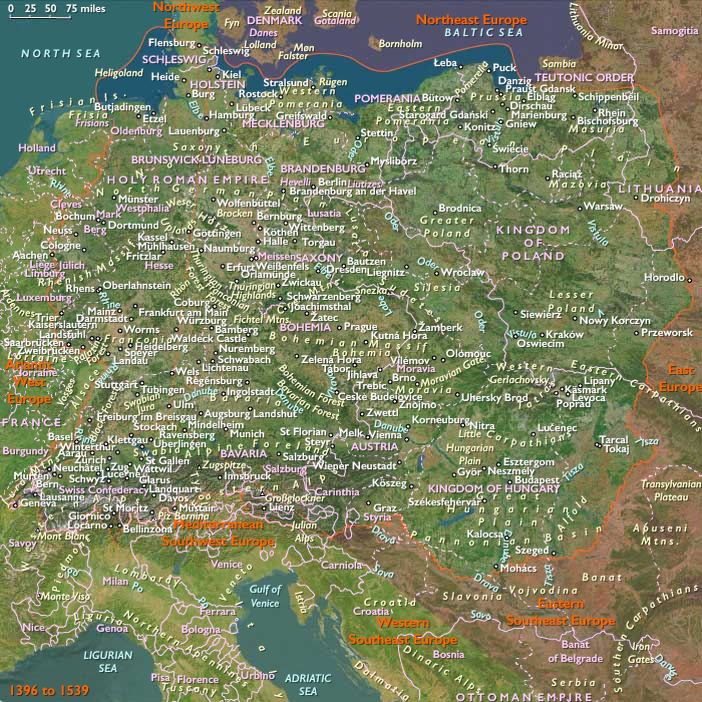
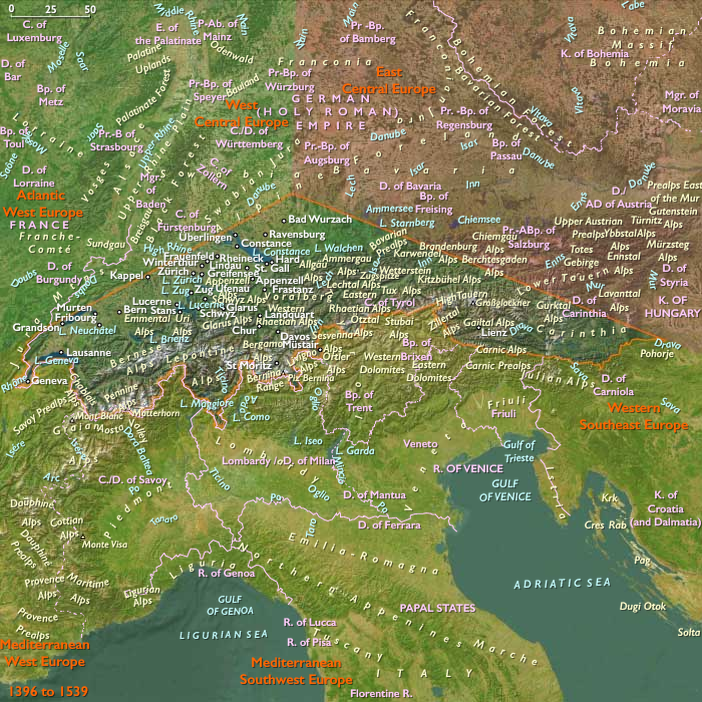
The Council of Constance, with the support of King Sigismund, enthroned before the high altar of the cathedral of Constance, recommends that all three popes abdicate, and that another be chosen.
In part because of the constant presence of the King, other rulers demanded that they have a say in who would be pope.
Gregory XII then sends representatives to Constance, whom he grants full powers to summon, open and preside over an Ecumenical Council; he also empowers them to present his resignation to the Papacy.
This will pave the way for the end of the Western Schism.
The legates are received by King Sigismund and by the assembled Bishops, and the King yields the presidency of the proceedings to the papal legates, Cardinal Dominici of Ragusa and Prince Charles of Malatesta.
On July 4, 1415, the Bull of Gregory XII, which appoints Malatesta and Cardinal Dominici of Ragusa as his proxies at the council, is formally read before the assembled Bishops.
The cardinal then reads a decree of Gregory XII that convokes the council and authorizes its succeeding acts.
Thereupon, the Bishops vote to accept the summons.
Prince Malatesta immediately informs the Council that he is empowered by a commission from Pope Gregory XII to resign the Papal Throne on the Pontiff's behalf.
He asks the Council whether they would prefer to receive the abdication at that point or at a later date.
The Bishops vote to receive the Papal abdication immediately.
Thereupon the commission by Gregory XII authorizing his proxy to resign the Papacy on his behalf is read and Malatesta, acting in the name of Gregory XII, pronounces the resignation of the papacy by Gregory XII and hands a written copy of the resignation to the assembly.
Former Pope Gregory XII is then created titular Cardinal Bishop of Porto and Santa Ruffina by the Council, with rank immediately below the Pope (which makes him the highest-ranking person in the Church, since, due to his abdication, the See of Peter is vacant).
Gregory XII's cardinals are accepted as true cardinals by the Council, but the members of the council delay electing a new pope for fear that a new pope would restrict further discussion of pressing issues in the Church.
The council also deals harshly with the heresies of John Wycliffe and Jan Hus, posthumously condemning Wycliffe on May 4, 1415, and ordering his body exhumed and burned.
Hus, arrested within a month and summoned to Constance under a letter of indemnity, is condemned by council and burned at the stake notwithstanding on July 6, 1415.
Sigismund had refused to protect Hus despite his previous guarantees of safe conduct.
Locations
People
Groups
Topics
Commodoties
Subjects
Regions
Subregions
Years: 1415 - 1415
July
Locations
People
Groups
Topics
Commodoties
Subjects
Regions
Subregions