
Filters:
Simón Bolívar, first president of what becomes …
Years: 1816 - 1827
Simón Bolívar, first president of what becomes known as Bolivia, transfers authority over Upper Peru in 1825 to his lieutenant, Antonio José de Sucre, who calls a constituent assembly in Chuquisaca to determine the future of the region.
Almost all delegates want an independent Upper Peru and rejected attachment to Argentina or Peru.
The assembly adopts a declaration of independence on August 6, 1825.
Five days later, the assembly, hoping to placate Bolívar's reservations about the independence of Upper Peru, resolves to name the new nation after him.
The new Republic of Bolivia, created in the territory that had formed the audiencia of Charcas, faces profound problems.
The wars of independence have disrupted the economy.
The entire mining industry is in decline because of destruction, flooding, and abandonment of mines.
Lack of investment and scarcity of labor contribute to a sharp drop in silver production.
Agricultural production is low, and Bolivia has to import food, even staples consumed by the Indian population.
The government has serious financial difficulties because of the huge military expenditures and debt payments to Peru as compensation for the army of liberation.
All these problems are aggravated by the isolation of the new republic from the outside world and the difficulties of securing its borders.
Almost all delegates want an independent Upper Peru and rejected attachment to Argentina or Peru.
The assembly adopts a declaration of independence on August 6, 1825.
Five days later, the assembly, hoping to placate Bolívar's reservations about the independence of Upper Peru, resolves to name the new nation after him.
The new Republic of Bolivia, created in the territory that had formed the audiencia of Charcas, faces profound problems.
The wars of independence have disrupted the economy.
The entire mining industry is in decline because of destruction, flooding, and abandonment of mines.
Lack of investment and scarcity of labor contribute to a sharp drop in silver production.
Agricultural production is low, and Bolivia has to import food, even staples consumed by the Indian population.
The government has serious financial difficulties because of the huge military expenditures and debt payments to Peru as compensation for the army of liberation.
All these problems are aggravated by the isolation of the new republic from the outside world and the difficulties of securing its borders.
Locations
People
Groups
- Aymara people (Amerind tribe)
- Guaraní, Eastern Bolivian
- Guaraní (Amerind tribe)
- Uru people
- Christians, Roman Catholic
- Quechua (Amerind tribe)
- Spaniards (Latins)
- Brazil, Colonial
- Río de la Plata, Governorate of the
- Charcas, Real Audiencia of (Upper Peru)
- Río de la Plata, Viceroyalty of
- Spain, Bourbon Kingdom (first restoration) of
- Peru, Republic of
- Bolivia, Republic of
Topics
- Colonization of the Americas, Spanish
- Encomienda system
- Enlightenment, Age of
- Bolivian War of Independence
- Bolivar's War
- Peruvian War of Independence
Commodoties
Subjects
Regions
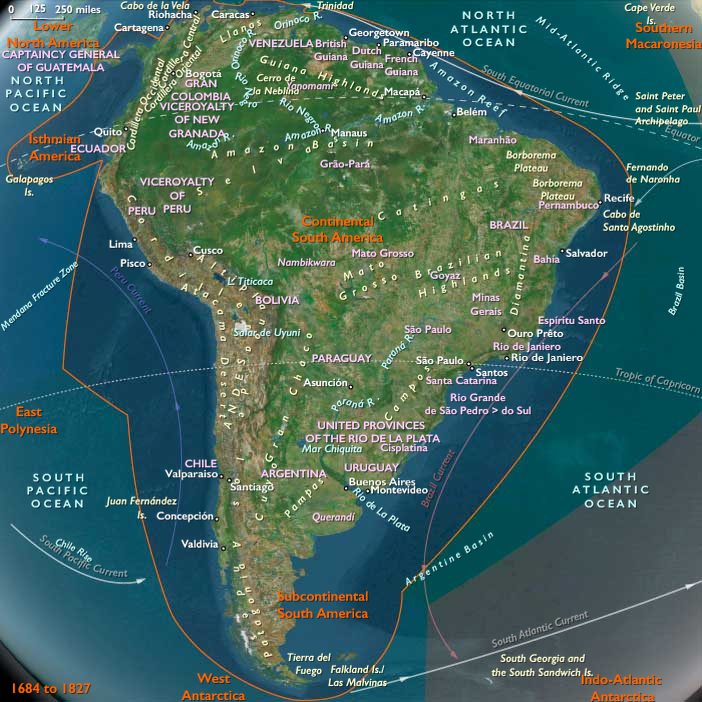
Subregions
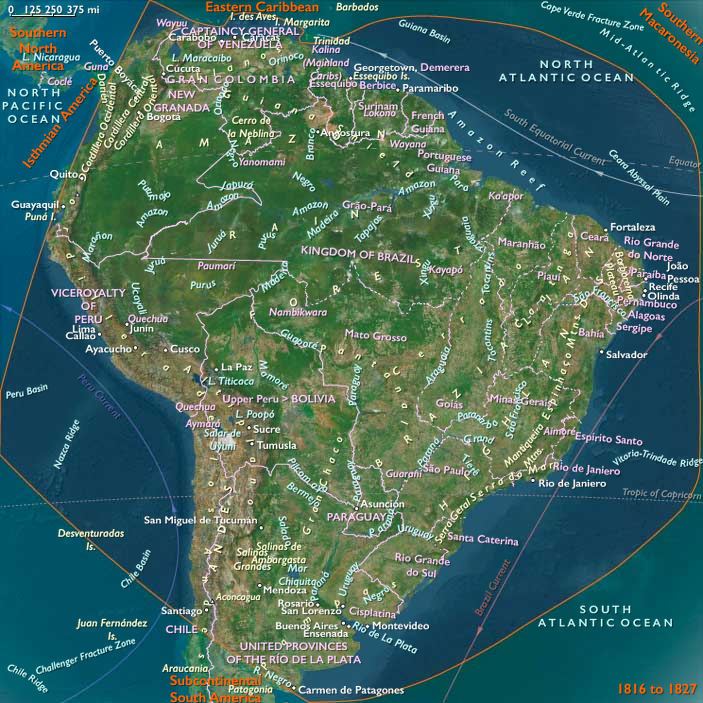
Years: 1816 - 1827
Locations
People
Groups
- Aymara people (Amerind tribe)
- Guaraní, Eastern Bolivian
- Guaraní (Amerind tribe)
- Uru people
- Christians, Roman Catholic
- Quechua (Amerind tribe)
- Spaniards (Latins)
- Brazil, Colonial
- Río de la Plata, Governorate of the
- Charcas, Real Audiencia of (Upper Peru)
- Río de la Plata, Viceroyalty of
- Spain, Bourbon Kingdom (first restoration) of
- Peru, Republic of
- Bolivia, Republic of
Topics
- Colonization of the Americas, Spanish
- Encomienda system
- Enlightenment, Age of
- Bolivian War of Independence
- Bolivar's War
- Peruvian War of Independence
Commodoties
Subjects
Regions
Subregions