
The conquest of the Canary Islands has …
Years: 1478 - 1478
The conquest of the Canary Islands has so far been the province of the Castilian nobility in exchange for a covenant of allegiance with the crown.
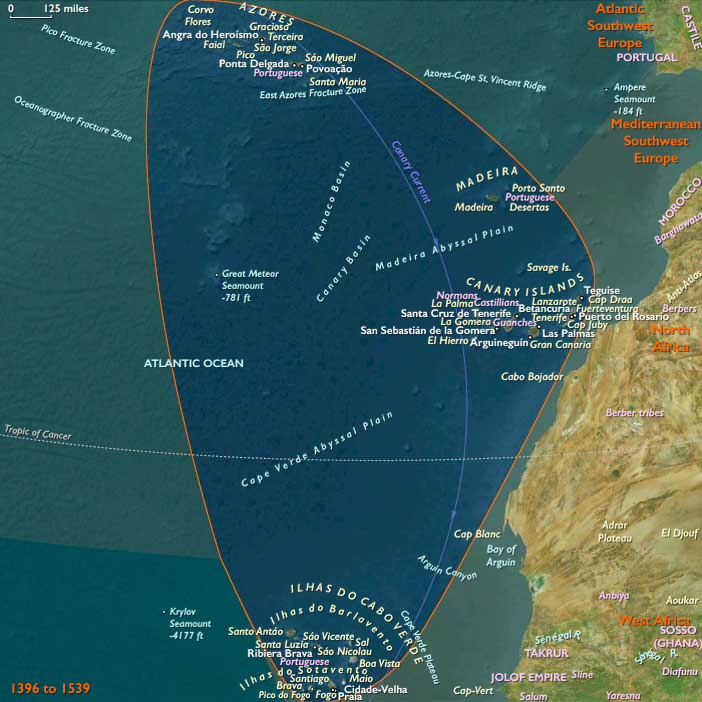
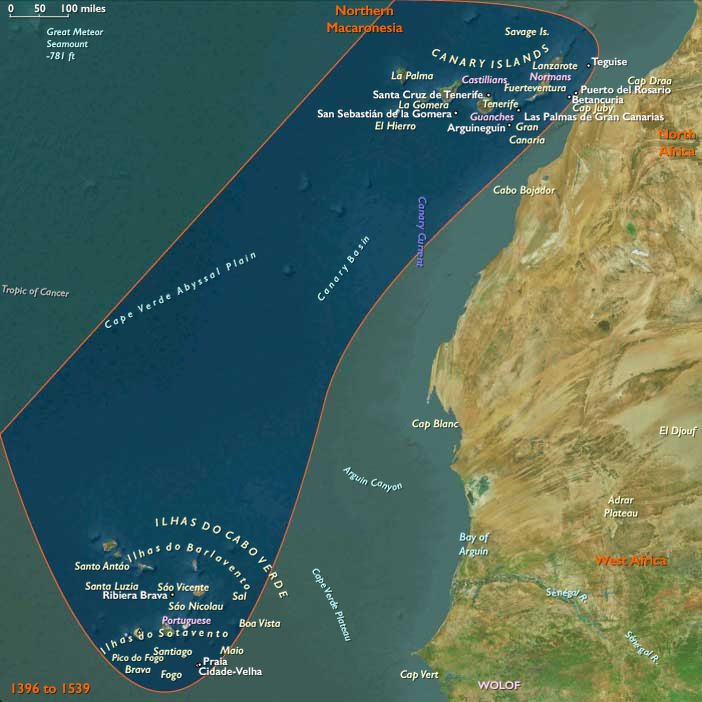
Isabel and Fernando had in 1476 ordered an investigation into rights of conquest in the Canary Islands, and in the spring of 1478 they send Juan Rejon with sixty soldiers and thirty cavalry to the Grand Canary, where the natives retreat inland.
Earlier threats by Pope Sixtus IV to excommunicate all captains or pirates who enslaved Christians in the bull Regimini Gregis of 1476 could have been intended to emphasize the need to convert the natives of the Canary Islands and Guinea and establish a clear difference in status between those who have converted and those who resist.
The ecclesiastical penalties were directed towards those who were enslaving the recent converts.
This opens a new phase of conquest, in which the Catholic Monarchs command and arm the invading forces.
he funding for the enterprise becomes the responsibility of the Crown and individuals interested in the economic exploitation of the island's resources.
The islands involved, Gran Canaria, La Palma and Tenerife, have larger populations and offered the best economic rewards.
The Guanches of the three islands, but particularly those of Gran Canaria and Tenerife, offer a clear and prolonged resistance to the conquest.
Locations
People
Groups
- Guanches
- Papal States (Republic of St. Peter)
- Christians, Roman Catholic
- Aragón, Kingdom of
- Aragon, Crown of
- Castile, Crown of
- Canary Islands (Castilian colony)
Topics
Commodoties
Subjects
Regions
Subregions
Related Events
Showing 10 events out of 40734 total
Years: 1478 - 1478
Locations
People
Groups
- Guanches
- Papal States (Republic of St. Peter)
- Christians, Roman Catholic
- Aragón, Kingdom of
- Aragon, Crown of
- Castile, Crown of
- Canary Islands (Castilian colony)
Topics
Commodoties
Subjects
Regions
Subregions