
The Treaty of Paris (Treaty of Meaux, …
Years: 1229 - 1229
The Treaty of Paris (Treaty of Meaux, 1229): The End of the Albigensian Crusade and the Integration of Occitania into the French Crown
The Treaty of Paris, also known as the Treaty of Meaux, was signed in 1229, bringing an official end to the Albigensian Crusade (1209–1229) and resulting in the integration of Occitania into the French Crown. This treaty marked the final submission of the southern lords and the Capetian consolidation of power over Languedoc, effectively ending Occitan political independence.
Background: The Albigensian Crusade and the Fall of Occitania
- The Albigensian Crusade, launched in 1209, was originally intended to suppress the Cathar heresy in southern France but quickly evolved into a broader war of conquest between the northern French lords and the Occitan nobility.
- By 1226, King Louis VIII had launched a renewed campaign, capturing Avignon and other key southern cities before his death that same year.
- His son, Louis IX (Saint Louis), inherited the war effort under the regency of Blanche of Castile, who sought a political resolution to consolidate Capetian control.
Terms of the Treaty of Paris (1229)
The treaty forced Raymond VII, Count of Toulouse, the last major independent lord of Occitania, to:
-
Formally Submit to the French Crown
- Raymond VII recognized King Louis IX as his feudal overlord, ending the region’s traditional autonomy.
-
Cede Territory to the Capetians
- Major portions of Languedoc were directly annexed to the French royal domain.
- Toulouse was allowed to remain under Raymond’s rule, but it was placed under heavy royal oversight.
-
Marry His Daughter to a French Prince
- Raymond VII’s daughter, Joan of Toulouse, was forced to marry Alphonse of Poitiers, the brother of Louis IX, ensuring the county’s future absorption into the French crown.
-
Persecute Remaining Cathars
- The treaty mandated the continued suppression of Catharism, strengthening Inquisition efforts in the region.
Impact and Legacy
- Occitania’s Political Autonomy Was Ended
- The treaty marked the final integration of Languedoc into the French kingdom, effectively eliminating Occitan independence.
- The Capetians Solidified Their Control Over Southern France
- With Toulouse and other strongholds under royal influence, the French monarchy extended its direct authority further south than ever before.
- The Inquisition Was Intensified
- The treaty gave official backing to the Inquisition, leading to decades of persecution against the remaining Cathars.
The Treaty of Paris (Meaux) in 1229 was a turning point in French history, marking the end of the medieval Occitan identity as an independent political force and the rise of a more centralized Capetian monarchy in France.
Locations
People
Groups
- Papal States (Republic of St. Peter)
- Toulouse, County of
- French people (Latins)
- France, (Capetian) Kingdom of
- Christians, Roman Catholic
- Catharism (Albigenses)
Topics
Commodoties
Subjects
Regions
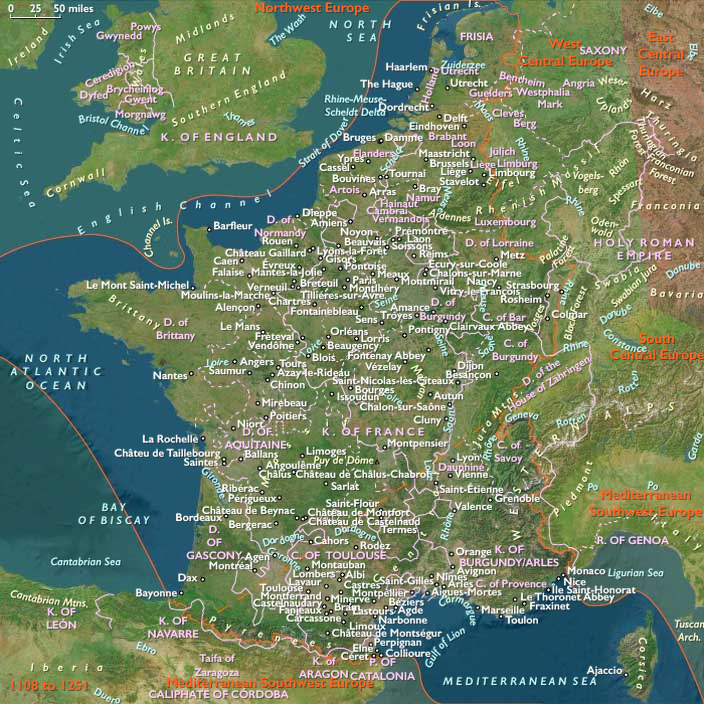
Subregions
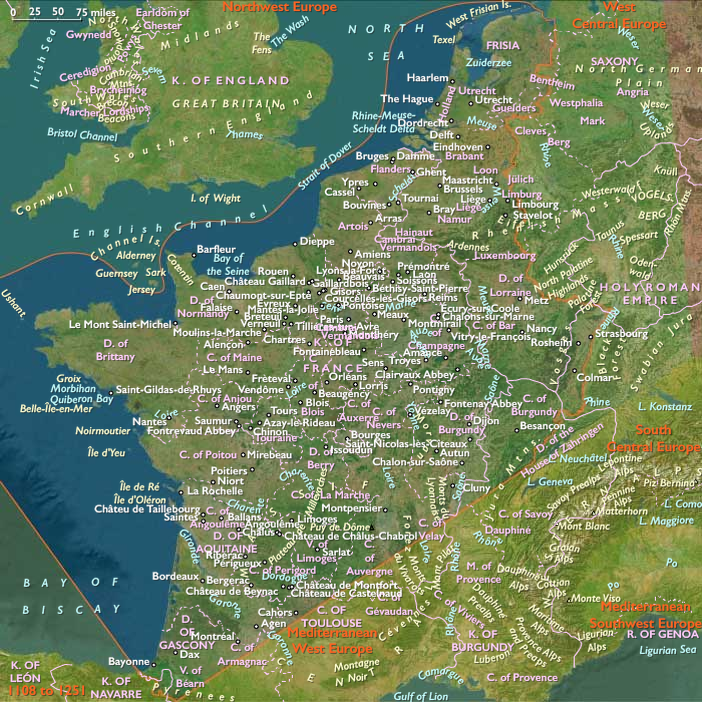
Related Events
Showing 10 events out of 47050 total
Years: 1229 - 1229
Locations
People
Groups
- Papal States (Republic of St. Peter)
- Toulouse, County of
- French people (Latins)
- France, (Capetian) Kingdom of
- Christians, Roman Catholic
- Catharism (Albigenses)
Topics
Commodoties
Subjects
Regions
Subregions