
The Treaty of Paris (1259): A Fragile …
Years: 1259 - 1259
The Treaty of Paris (1259): A Fragile Peace Between France and England
In 1259, King Louis IX of France sought to permanently establish peaceful relations with England by signing the Treaty of Paris with King Henry III. The agreement aimed to settle territorial disputes that had persisted since the early 13th century, particularly after the losses suffered by King John of England in the Anglo-French War (1202–1214).
Key Terms of the Treaty
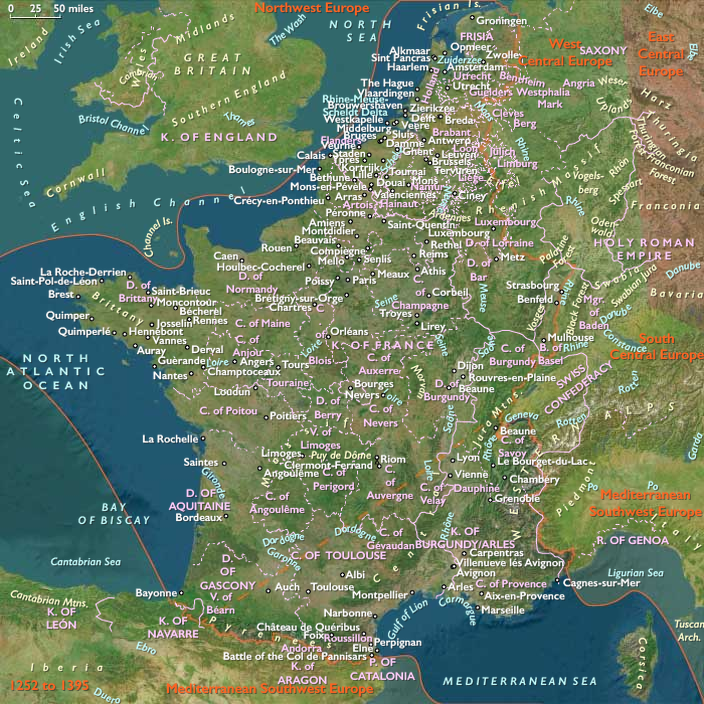
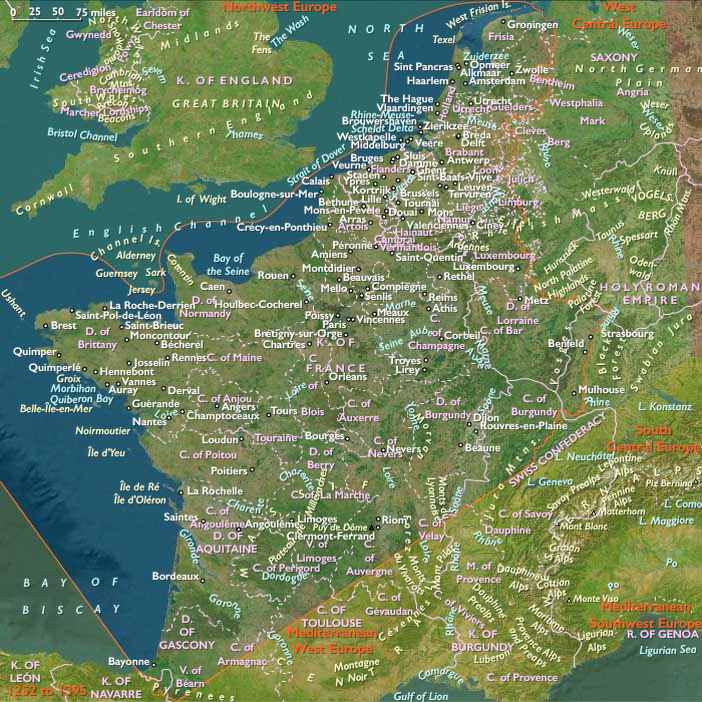
- Henry III officially renounced his claims to several French territories that had once been part of the Angevin Empire, including:
- Normandy (except for the Channel Islands)
- Maine
- Anjou
- Poitou
- In return, Louis IX formally recognized Henry III as his vassal for the territories that England still controlled in France, particularly:
- Gascony
- Guienne (Aquitaine)
This arrangement confirmed English rule in southwestern France but placed Henry III in a feudal relationship with the French king, acknowledging his vassalage to the Capetian monarchy.
Strategic Benefits for Both Monarchs
- For Louis IX, the treaty was an effective tool of Capetian expansion through feudal vassalage rather than direct conquest. By forcing the English king into a subordinate position, Louis consolidated his dynasty’s control over former Angevin lands while ensuring a period of stability in France.
- For Henry III, the treaty was a pragmatic concession. His father, King John, had lost Normandy and other French possessions in the early 1200s, and England lacked the military strength to recover them. By securing French recognition of English rule in Gascony and Guienne, Henry ensured that England retained a continental foothold, even if under vassalage.
- Additionally, Louis IX agreed to withdraw his support for rebellious English barons, who had previously sought French assistance during the First Barons' War (1215–1217) and continued to challenge royal authority.
A Precursor to the Hundred Years' War
While the treaty secured a temporary peace, it failed to resolve the fundamental issue of English sovereignty over territories in France. The institutional inequality created by the feudal relationship between the English and French kings would not be sustainable.
- For the Capetians, this arrangement worked well, as it extended their influence over England’s remaining continental lands without open warfare.
- For the Valois dynasty, however, the feudal subordination of the English king to the French Crown became an explosive issue.
- In 1337, when Philip VI of France (the first Valois king) attempted to confiscate Gascony, King Edward III of England rejected his vassalage and instead claimed the French throne, launching the Hundred Years' War (1337–1453).
Long-Term Impact
The Treaty of Paris (1259) established a temporary balance between France and England, but it planted the seeds of future conflict. The English monarchs, though vassals in name, still ruled substantial lands in France, ensuring that Anglo-French tensions would eventually reignite in the form of one of the longest and most transformative wars in European history.
Locations
People
Groups
- Maine, County of
- Gascony, Duchy of
- Anjou, County of
- Normandy, Duchy of
- Aquitaine, (Angevin) Duchy of
- France, (Capetian) Kingdom of
- England, (Plantagenet, Angevin) Kingdom of
Topics
Subjects
Regions
Subregions
Related Events
Showing 10 events out of 46073 total
Years: 1259 - 1259
Locations
People
Groups
- Maine, County of
- Gascony, Duchy of
- Anjou, County of
- Normandy, Duchy of
- Aquitaine, (Angevin) Duchy of
- France, (Capetian) Kingdom of
- England, (Plantagenet, Angevin) Kingdom of
Topics
Subjects
Regions
Subregions