
The Commoners and the Social Hierarchy in …
Years: 1252 - 1395
The Commoners and the Social Hierarchy in Medieval Portugal
At the bottom of Portugal’s social structure were the commoners, who made up the vast majority of the population. Though lacking the privileges of the nobility and clergy, they formed the backbone of Portugal’s economy and military efforts, particularly during the Reconquista and the colonization of the south.
The Social Strata of Commoners
-
Serfs (Servos) – The Lowest and Most Numerous Class
- Tied to the land by heredity, serfs were bound to royal, noble, or ecclesiastical estates.
- Engaged primarily in agriculture, stockraising, and village crafts, providing essential labor to sustain the kingdom.
- Unlike slaves, serfs had limited rights and could not be sold individually, but they lacked personal freedom.
- Could achieve freedom by migrating south as colonists in newly conquered territories, where they were granted better legal status.
-
Clients (Colonos or Comendados) – Freemen in Dependence
- Freemen without land, they entered into protection agreements with nobles or clergy in exchange for service.
- Often served as laborers, craftsmen, or minor military retainers.
- Dependent on their overlords but maintained a status above serfs due to their legal freedom.
-
Villein-Knights (Cavaleiros-Vilãos) – The Bridge Between Commoners and Nobles
- A special class of commoners who could afford to maintain a horse and weapons.
- Served in military campaigns and were often encouraged to settle on the southern frontier to raid and defend against Muslim forces.
- Though technically commoners, their military role and privileges placed them in a transitional status between commoners and nobility.
Slavery in Portugal
Outside the formal social hierarchy, slaves (escravos) were typically Muslim captives from the Reconquista.
- Most were forced to work on the estates of the military orders, particularly in the Alentejo, where landowners needed labor to sustain agricultural production.
- Slaves were considered chattel property and had no legal rights but could sometimes gain freedom through ransom or conversion to Christianity.
- Unlike serfs, who were tied to the land, slaves could be bought, sold, or transferred at will.
The Changing Status of Commoners
As Portugal expanded southward, the status of commoners evolved. The colonization of new territories provided opportunities for social mobility, allowing serfs to gain freedom, clients to become landowners, and villein-knights to integrate into the lower nobility. Over time, Portugal’s monarchy increasingly relied on the merchant class and free townsmen, further altering the medieval social order.
People
Groups
- Jews
- Benedictines, or Order of St. Benedict
- Islam
- Portuguese people
- León, Kingdom of
- Burgundy, Duchy of
- Christians, Roman Catholic
- Portugal, (second) County of
- Hospitallers of St. John of Jerusalem
- Templar, Knights (Poor Knights of Christ and of the Temple of Solomon)
- Almohad Caliphate
- Portugal, Burgundian (Alfonsine) Kingdom of
- Santiago, Order of
- Calatrava, Order of
- Franciscans, or Order of St. Francis
- Calatrava, Order of
- Dominicans, or Order of St. Dominic
Topics
Commodoties
Subjects
Regions
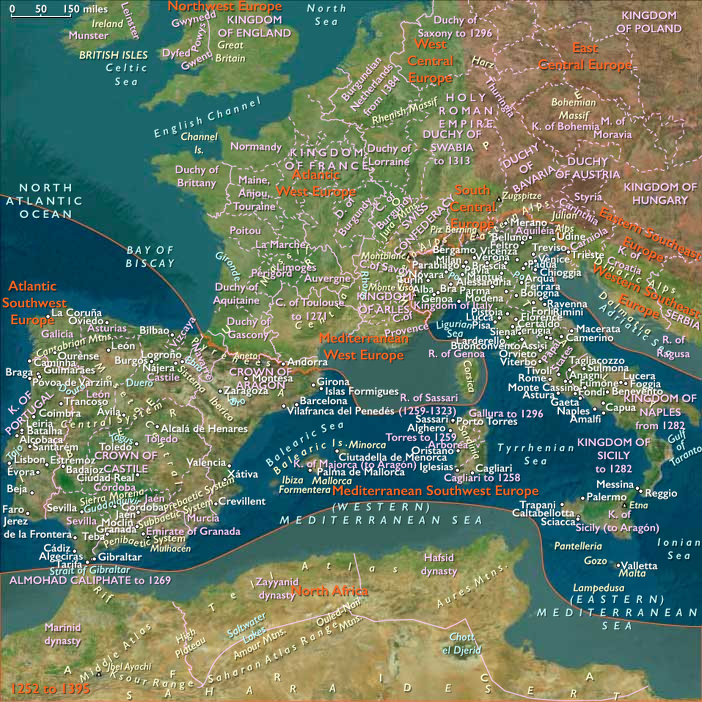
Subregions
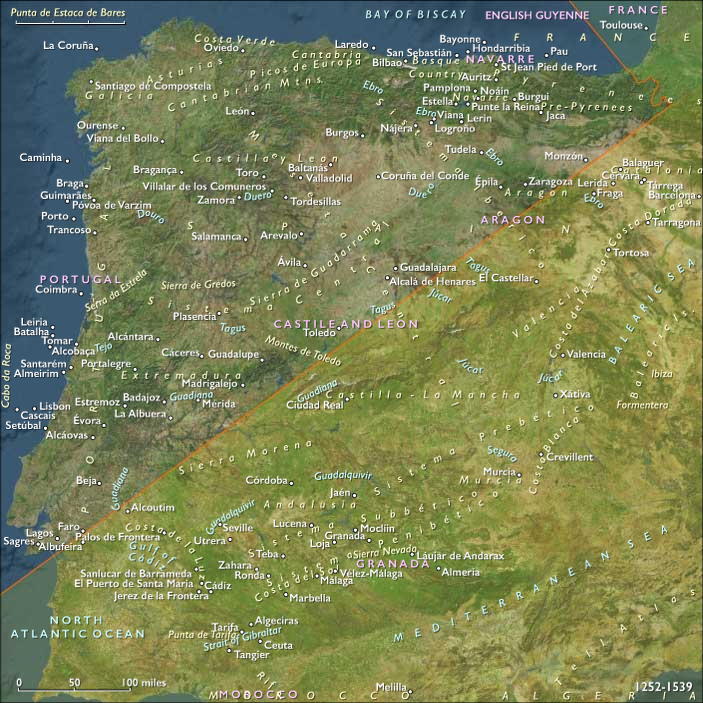
Years: 1252 - 1395
People
Groups
- Jews
- Benedictines, or Order of St. Benedict
- Islam
- Portuguese people
- León, Kingdom of
- Burgundy, Duchy of
- Christians, Roman Catholic
- Portugal, (second) County of
- Hospitallers of St. John of Jerusalem
- Templar, Knights (Poor Knights of Christ and of the Temple of Solomon)
- Almohad Caliphate
- Portugal, Burgundian (Alfonsine) Kingdom of
- Santiago, Order of
- Calatrava, Order of
- Franciscans, or Order of St. Francis
- Calatrava, Order of
- Dominicans, or Order of St. Dominic
Topics
Commodoties
Subjects
Regions
Subregions