
The Commission is not happy with the …
Years: 1794 - 1794
March
The Commission is not happy with the methods used for killing the rebels, so soon after this "more normal firing squads supplemented the guillotine." (Schom, Alan (1997). "Fouche's Police". Napoleon Bonaparte. HarperCollins Publishers, New York. pp. 253–255).
These methods lead to the carrying out of "over 1800 executions in the coming months."
Fouché, claiming that "Terror, salutary terror, is now the order of the day here....We are causing much impure blood to flow, but it is our duty to do so, it is for humanity's sake," calls for the execution of 1,905 citizens.
As Napoleon's biographer Alan Schom has written: Alas, Fouché's enthusiasm had proved a little too effective, for when the blood from the mass executions in the center of Lyons gushed from severed heads and bodies into the streets, drenching the gutters of the Rue Lafont, the vile-smelling red flow nauseated the local residents, who irately complained to Fouché and demanded payment for damages.
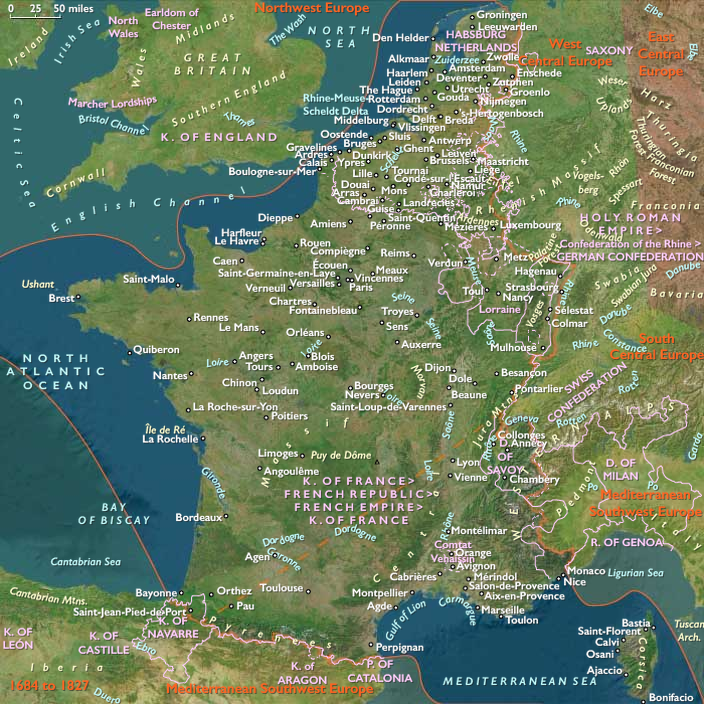
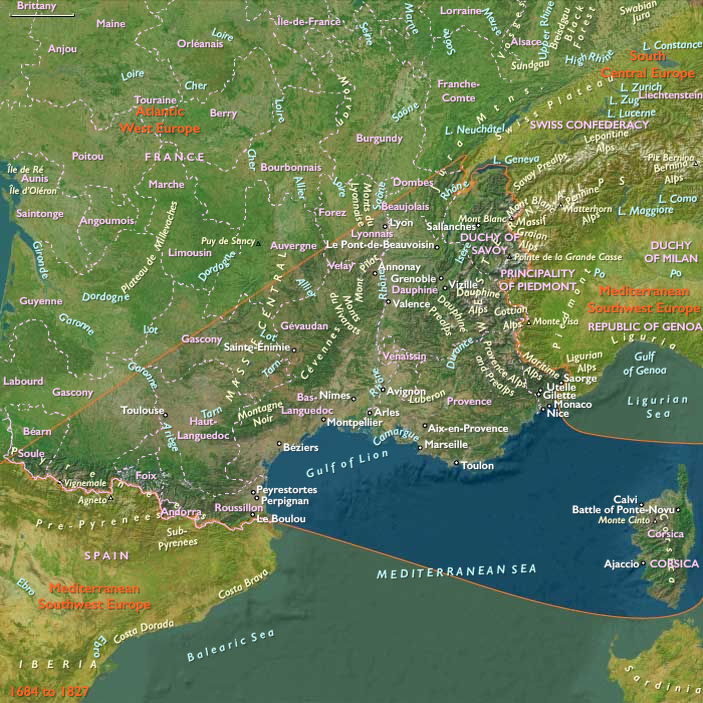
Fouché, sensitive to their outcry, obliged them by ordering the executions moved out of the city to the Brotteaux field, along the Rhône.
From late 1793 into spring, 1794, every day "batch after batch of bankers, scholars, aristocrats, priests, nuns, and wealthy merchants and their wives, mistresses, and children" are taken from the city jails to Brotteaux field, tied to stakes, and dispatched by firing squads or mobs. (Schom)
Outwardly, his conduct is marked by the utmost rigor, and on his return to Paris early in April 1794, he thus characterizes his policy: "The blood of criminals fertilizes the soil of liberty and establishes power on sure foundations".
Locations
People
Groups
Topics
- French Revolution
- First Coalition, War of the
- French Revolutionary Wars, or “Great French War”
- Vendée, War in the
- French Revolutionary Wars: Campaigns of 1793
Commodoties
Subjects
Regions
Subregions
Related Events
Showing 10 events out of 23492 total
Years: 1794 - 1794
March
Locations
People
Groups
Topics
- French Revolution
- First Coalition, War of the
- French Revolutionary Wars, or “Great French War”
- Vendée, War in the
- French Revolutionary Wars: Campaigns of 1793
Commodoties
Subjects
Regions
Subregions