
The Colonna had meanwhile organized an attack …
Years: 1527 - 1527
April
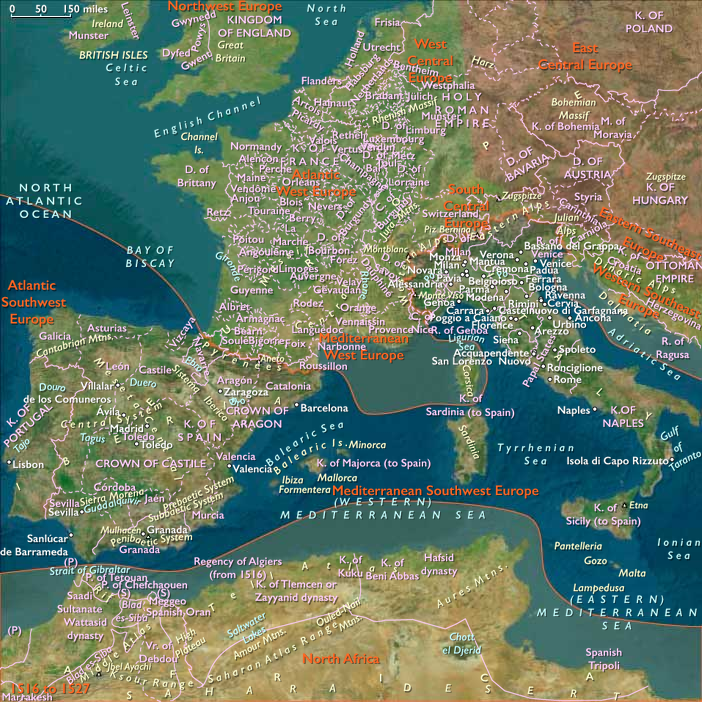
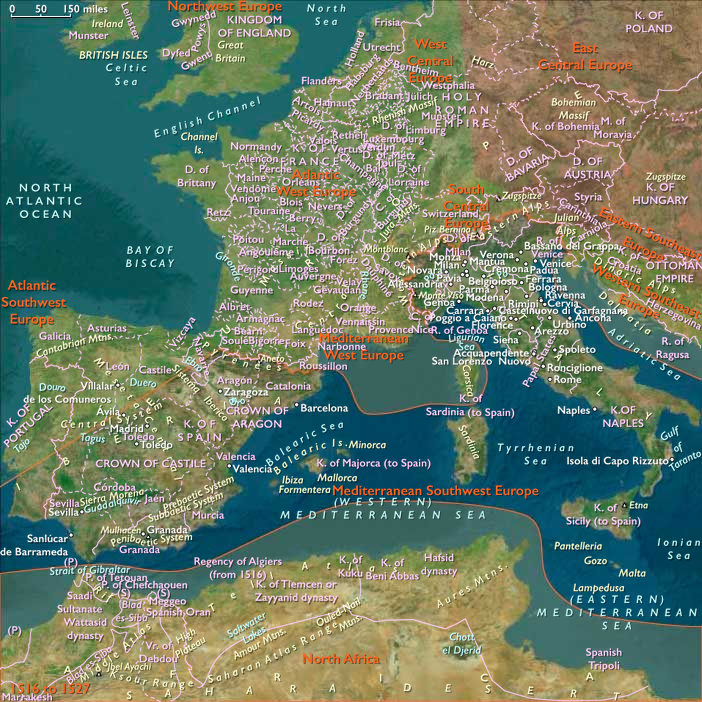
The Colonna had meanwhile organized an attack on Rome, defeating the Papal forces and briefly seizing control of the city in March 1526; they had soon been soon paid off and departed, however.
The Imperial army has defeated the French army in Italy, but funds are not available to pay the soldiers.
The thirty-four thousand Imperial troops mutiny and force their commander, Charles III of Bourbon, to lead them towards Rome.
Apart from some six thousand Spaniards under the Duke, the army includes some fourteen thousand Landsknechts under Georg von Frundsberg, some Italian infantry led by Fabrizio Maramaldo, the powerful Italian cardinal Pompeo Colonna and Luigi Gonzaga, and also some cavalry under command of Ferdinando Gonzaga and Philibert, Prince of Orange.
Though Martin Luther himself is not in favor of it, some who consider themselves followers of Luther's Protestant movement view the Papal capital as a target for religious reasons, and share with the soldiers a desire for the sack and pillage of a very rich city that appear to be an easy target.
Numerous bandits, along with the League's deserters, join the army during its march.
The Duke leaves Arezzo on April 20, 1527, taking advantage of the chaos among the Venetians and their allies after a revolt that has broken out in Florence against the Medici.
In this way, …
Locations
People
- Anne de Montmorency
- Antonio de Leyva
- Charles III, Duke of Bourbon
- Charles V, Holy Roman Emperor
- Charles de Lannoy
- Eleanor of Austria
- Fabrizio Maramaldo
- Fernando d'Avalos
- Ferrante I Gonzaga
- Francesco II Sforza
- Francis I of France
- Georg von Frundsberg
- Henry II, king of Navarre
- Henry VIII of England
- Hugo de Moncada
- Isabella of Portugal
- John Stewart, Duke of Albany
- Louise of Savoy
- Martin Luther
- Philibert de Chalon
- Pompeo Colonna
- Pope Clement VII
- Suleiman I “the Magnificent”
- Thomas Wolsey
Groups
- Papal States (Republic of St. Peter)
- Flanders, County of
- Genoa, (Most Serene) Republic of
- Venice, (Most Serene) Republic of
- Austria, Archduchy of
- Artois, County of
- Hungary, Kingdom of
- Swiss mercenaries
- France, (Valois) Kingdom of
- Holy Roman Empire
- Scotland, Kingdom of
- Milan, Duchy of
- Ottoman Empire
- Ferrara, Duchy of
- England, (Tudor) Kingdom of
- Landsknechts
- Naples, Kingdom of
- Florence, Medici-ruled
- Spain, Habsburg Kingdom of
- Lutheranism
- Hungary, Royal
Topics
Commodoties
Subjects
Regions
Subregions
Years: 1527 - 1527
April
Locations
People
- Anne de Montmorency
- Antonio de Leyva
- Charles III, Duke of Bourbon
- Charles V, Holy Roman Emperor
- Charles de Lannoy
- Eleanor of Austria
- Fabrizio Maramaldo
- Fernando d'Avalos
- Ferrante I Gonzaga
- Francesco II Sforza
- Francis I of France
- Georg von Frundsberg
- Henry II, king of Navarre
- Henry VIII of England
- Hugo de Moncada
- Isabella of Portugal
- John Stewart, Duke of Albany
- Louise of Savoy
- Martin Luther
- Philibert de Chalon
- Pompeo Colonna
- Pope Clement VII
- Suleiman I “the Magnificent”
- Thomas Wolsey
Groups
- Papal States (Republic of St. Peter)
- Flanders, County of
- Genoa, (Most Serene) Republic of
- Venice, (Most Serene) Republic of
- Austria, Archduchy of
- Artois, County of
- Hungary, Kingdom of
- Swiss mercenaries
- France, (Valois) Kingdom of
- Holy Roman Empire
- Scotland, Kingdom of
- Milan, Duchy of
- Ottoman Empire
- Ferrara, Duchy of
- England, (Tudor) Kingdom of
- Landsknechts
- Naples, Kingdom of
- Florence, Medici-ruled
- Spain, Habsburg Kingdom of
- Lutheranism
- Hungary, Royal
Topics
Commodoties
Subjects
Regions
Subregions