
The collapse of the Dos Pilas state …
Years: 761 - 761
The collapse of the Dos Pilas state seems to have benefited other sites in the region, such as Itzan, Cancuen and Machaquila, which all demonstrate renewed strength coincident with the fall of the city.
Locations
Groups
Topics
Commodoties
Subjects
Regions
Subregions
Related Events
Filter results
Showing 10 events out of 55163 total
Wang Wei is traditionally credited with founding the Southern school of Chinese landscape painting.
His delicately rendered landscape paintings reflect, like his lyrical poetry, a love of nature and an inner tranquility borne of Buddhism and meditation.
Wang Wei was residing in the capital of Chang'an when he was captured by the rebels when they took the city in 756.
Although the emperor Xuanzong and his court and most of the governmental officials had already evacuated to Sichuan, Wang Wei had come down with dysentery and at that time was an invalid and thus unable to travel, especially not on this notoriously mountainous and difficult passage.
The rebels then took their prize captive to their capital at Luoyang, where the government of the rebellion sought his collaboration.
According to some sources, he attempted to avoid actively serving the insurgents during the capital's occupation by pretending to be deaf; other sources state that, in an attempt to destroy his voice, he drank medicine that created cankers on his mouth.
In any case, at Luoyang, Wang Wei was unable to avoid becoming officially one of the rebels, with an official title.
With the ascendency of Suzong, in 757 and the Tang recapture of Luoyang from the rebel forces, Wang Wei was arrested and imprisoned by the Tang government as a suspected traitor.
The charges of disloyalty were eventually dropped, partly because of the intervention of his brother, Wang Jin, who held high government rank (as Undersecretary of the Board of Punishments) and whose loyal efforts in the defense of Taiyuan were well known.
Furthermore, the poems he had written during his captivity were produced, and accepted as evidence in favor of his loyalty.
Following his pardon, Wang Wei spent much of his time in his Buddhist practice and activities.
Then, with the further suppression of the rebellion, he again received a government position, in 758, at first in a lower position than prior to the rebellion, as a Taizi Zhongchong, in the court of the crown prince rather than that of the emperor himself.
In 759, Wang Wei was not only restored to his former position in the emperor's court, but he was eventually promoted.
Over time, he was moved to the secretarial position of Jishizhong and his last position, which he held until his death in 761, was Shangshu Youcheng, or Deputy Prime Minister.
As these positions are in the city of Chang'an, they are not too far from his private estate to prevent him from visiting and repairing it.
During all this time, he has continued his artistic endeavors.
Li Fuguo is made the minister of defense (Bingbu Shangshu) in 761, but further wants to be made chancellor.
Emperor Suzong, who by this point is fearful of Li Fuguo, refuses on the basis that he does not have the support of the officials, Li Fuguo tries to persuade Pei Mian, a senior official who had previously been chancellor, to recommend him.
Emperor Suzong tells the chancellor Xiao Hua that if an important official (i.e., someone like Pei) recommended Li Fuguo, he would no longer have the excuse to refuse Li Fuguo's request.
When Xiao subsequently discusses this with Pei, Pei adamantly states that he will never allow Li Fuguo to be chancellor.
Subsequently, Li Fuguo is not able to be chancellor while Emperor Suzong is alive, much to Li Fuguo's resentment.
The Ibadi movement had reached North Africa by 719, when the missionary Salma ibn Sa'd was sent from the Ibādī jama'a of Basra to Kairouan.
By 740, their efforts had converted the major Berber tribes of Huwara around Tripoli, in the Nafusa Mountains and at Zenata in western Tripolitania.
In 757 (140 AH), a group of four Basra-educated missionaries including ʻAbd ar-Rahman ibn Rustam had proclaimed an Ibadi imamate, starting an abortive state led by Abu l-Khattab Abdul-A'la ibn as-Samh, which lasts until the Abbasid Caliphate suppresses it in 761 and Abul-Khattab Abdul-A'la ibn as-Samh is killed when an Abbasid Caliphate army reconquers Kairouan.
After this, the center of Ibadi power in the Maghreb becomes centered in Algeria.
ʻAbd ar-Rahmān ibn Rustam, a Tunisian-born convert to the Ibadi movement of Persian origin and one of the four founders of the imamate, is elected Imam in 761; after this, the post will remain in his family, a practice which the Ibadiyya justifies by noting that he came from no tribe, and thus his family had no bias towards any of the tribes of which the state was formed.
The new imamate is centered on the newly built capital of Tiaret; several Ibādī tribes displaced from Tunisia and Tripolitania settle here and strong fortifications are built.
It will became a major stop on the newly developing trade routes with sub-Saharan Africa and the Middle East, described by visitors such as the Sunni historian Ibn al-Saghir as notably multi-religious, with a significant and loyal Christian minority and a substantial number of Sunnis and Jews, and open religious debate is encouraged.
Ibn al-Saghir also describes the Imāam as ascetic, repairing his own house and refusing gifts; the citizens sharply criticize him if they consider him derelict in his duty.
Religious ethics are strictly enforced by law.
Fruela I of Asturias: Marriage Alliance, Border Conflicts, and the Founding of Oviedo
During his reign, King Fruela I of Asturias successfully suppresses a Basque uprising, after which he takes the noblewoman Munia (or Munina) as his wife. The circumstances of their marriage are debated:
- Some accounts suggest that Munia was taken as a bride following his victory, marking a diplomatic triumphover the independent Basque Duchy.
- Others interpret the union as a strategic marriage alliance, intended to strengthen ties between the ruling housesof Asturias and the Basques of Álava, preventing their defection to the Banu Qasi in the Ebro Valley.
It remains unclear whether territory in Álava or other Basque lands were part of Munia’s dowry, but over the coming centuries, Asturias and Pamplona will continue to struggle for dominance over the border region, which remains culturally Basque until it is gradually integrated into the Crown of Castile under the Jimena dynasty.
Munia’s Legacy and Fruela’s Successor
Munia becomes the mother of Fruela’s successor, Alfonso II of Asturias, and, according to legend, also the mother of Jimena, who in turn is said to be the mother of Bernardo del Carpio, the legendary Asturian hero.
The Founding of Oviedo and Church Relations
During Fruela’s reign, the city of Oviedo is founded when Abbot Máximo and his uncle Fromestano construct a church dedicated to Saint Vincent on November 25, 761.
Like his father, Alfonso I "the Catholic", Fruela maintains strong ties with the Church, continuing a close alliance between the monarchy and religious institutions in the growing Christian kingdom of Asturias.
The 761 Aquitanian Campaign: Frankish Victory in the Auvergne
In 761, as Pepin the Short advances into Aquitaine, Duke Waifer seeks to counter the Frankish offensive by ordering his border counts to mount a counterattack against Frankish-held Burgundy. He commands Count Chunibert of Bourges and Count Blandinus of the Auvergne to assemble their forces for an assault on Chalon-sur-Saône, a strategic stronghold on the northeastern frontier of Aquitaine.
Composition of the Aquitanian Army
The army assembled for this campaign likely consists primarily of local levies, as Gascon (Basque) warriors—a key professional core of Waifer's forces—are not mentioned in this engagement. The continuator of the Chronicle of Fredegar, who is otherwise careful to document Gascon participation, omits them here, suggesting that this force lacks the experienced Vascones mercenaries who typically form Waifer’s elite troops.
The Frankish Counteroffensive and the Fall of the Auvergne
Though the Aquitanian forces ravage parts of Burgundy, Pepin’s response is swift. He pushes the invaders backand goes on the offensive, capturing key fortresses in Auvergne, including:
- Bourbon
- Chantelle
- Clermont
Count Blandinus is forced to surrender, signaling a major setback for Waifer's resistance. The garrison at Bourbon is specifically identified by the continuator of Fredegar as the “men of Waifer” (homines Waiofarii), reinforcing that these fortresses were essential to Aquitanian defense.
The Treaty and Frankish Control in the Auvergne
By the end of the campaign, Pepin secures permanent control over many fortresses in the Auvergne through a treaty, marking a turning point in the war. With the loss of these strategic strongholds, Aquitaine’s defenses are significantly weakened, bringing Waifer one step closer to defeat and Frankish rule one step closer to full consolidation.
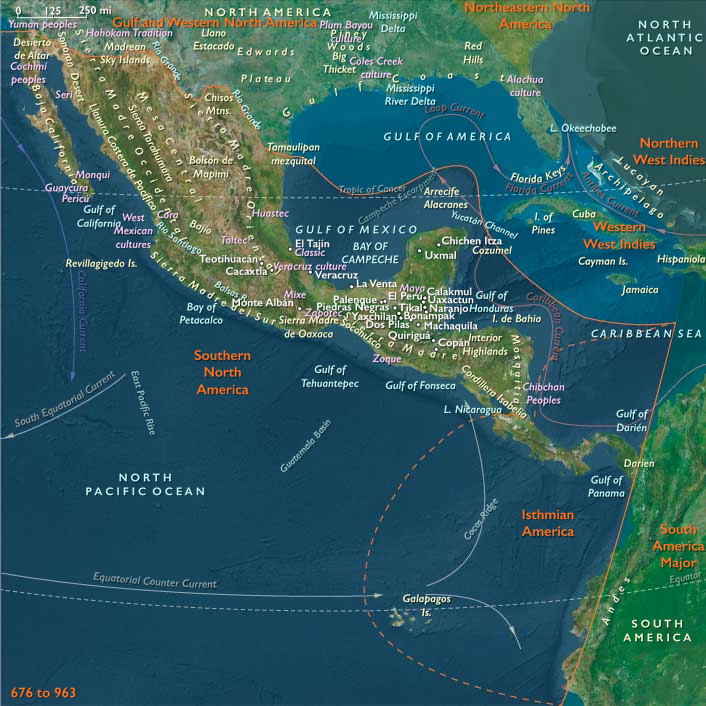
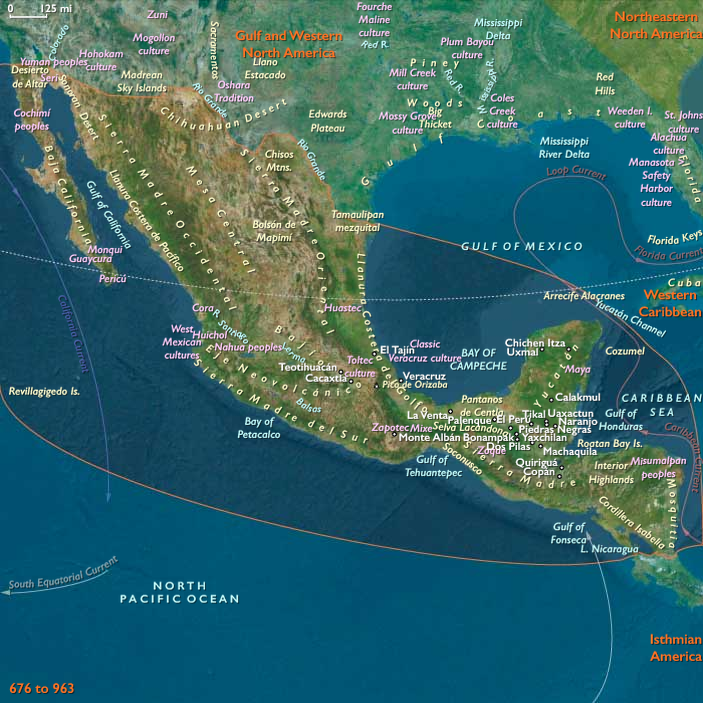
Dos Pilas is a Pre-Columbian site of the Maya civilization located in what is now the department of Petén, Guatemala.
It dates to the Late Classic Period, being founded by an offshoot of the dynasty of the great city of Tikal in 629 in order to control trade routes in the Petexbatún region, particularly the Pasión River.
Dos Pilas broke away from Tikal in 648 and became a vassal state of Calakmul, although the first two kings of Dos Pilas continued to use the same emblem glyph that Tikal did.
It was a predator state from the beginning, conquering Itzan, Arroyo de Piedra and Tamarindito.
Dos Pilas and a nearby city, Aguateca, eventually became the twin capitals of a single ruling dynasty.
The kingdom as a whole has been named as the Petexbatun Kingdom, after Lake Petexbatún, a body of water draining into the Pasión River.
Ongoing conflict in the Maya region had soon destabilized the whole area following the defeat of Dos Pilas' patron Calakmul and in 761 the city is dramatically abandoned after Tamarindito and other Petexbatún centers rebel against their Dos Pilas overlord.
A hieroglyphic stairway at Tamarindito mentions the enforced flight of K'awiil Chan K'inich, who is never mentioned again.
The Dos Pilas royal family probably transports itself to the more defensible Aguateca, which lies only ten kilometers to the southeast.
The violent end of Dos Pilas is evident from the smashed remains of a royal throne recovered from the Bat Palace.
The entire Petexbatún region will be engulfed by warfare in the late eighth century until almost all the settlements of the former Dos Pilas kingdom are abandoned.
The monuments of Ixlú in the central Petén lakes region bear some hieroglyphic texts that closely resemble texts from Dos Pilas, suggesting that the lords of Ixlú may have been refugees from the collapse of the Petexbatún region.
Li Fuguo, bearing a grudge against Xiao, insists to Emperor Suzong in 762 that Xiao be removed and replaced with Yuan Zai.
Throughout the years, Empress Zhang and Li Fuguo's alliance has held.
However, as of spring 762, when both Emperors Xuanzong and Suzong are seriously ill, Empress Zhang and Li Fuguo have begun to be rivals.
She summons Li Chu (whose name had been changed to Li Yu and who had been created crown prince) and tries to persuade him to join her in killing Li Fuguo and his ally Cheng Yuanzhen.
Li Yu declines, and she instead tries to persuade his younger brother Li Xi the Prince of Yue, to join her.
Li Xi agrees.
She and Li Xi thereafter have the eunuch Duan Hengjun select some two hundred strong eunuchs, ready to ambush Li Fuguo and Cheng.
On May 14, Empress Zhang issues an order in Emperor Suzong's name, summoning Li Yu.
Cheng finds out and informs Li Fuguo, who intercepts Li Yu at the palace gate and then escorts him to the camp of the imperial guards under Li Fuguo's command.
The guards under Li Fuguo's command now enter the palace and arrest Empress Zhang and Li Xi; the other eunuchs and ladies in waiting flee, leaving Emperor Suzong without care.
On May 16, Emperor Suzong dies, and Li Fuguo thereafter executes Empress Zhang and Li Xi, as well as Li Xian the Prince of Yan, and then declares Li Yu emperor (as Emperor Daizong).
Emperor Daizong is secretly displeased, but in order to placate Li Fuguo, gives him the title of Shangfu (meaning, "like father") and ordersthat he not be referred to by name.
He also makes Li Fuguo Sikong (one of the Three Excellencies) and Zhongshu Ling—the head of the legislative bureau of government (Zhongshu Sheng) and a post considered one appropriate for a chancellor.
Li Fuguo gives a major part of the command responsibilities to Cheng Yuanzhen.
Carrying out further retaliation against Xiao Hua, Li Fuguo has Xiao further demoted.
Li Fuguo does not expect that both Emperor Daizong and Cheng, who want more power, will turn against him.
In summer 762, at Cheng's secret suggestion, Emperor Daizong issues an edict that strips Li Fuguo of the titles of minister of defense and assistant of military affairs to the supreme commander—thus stripping him of military command—giving the latter post to Cheng.
He also orders Li Fuguo to leave the palace and take residence up outside, although he creates Li Fuguo the Prince of Bolu.
Li Fuguo becomes apprehensive and offers to retire, and Emperor Daizong declines and sends him away with formal respect.
Because Li Fuguo had killed Empress Zhang and had supported him for the throne, Emperor Daizong does not want to kill him openly.
Instead, on November 8, 762, an assassin gets into Li Fuguo's mansion and kills him, taking his head and an arm away as well.
Emperor Daizong formally issues an order seeking the arrest of the assassin, and buries Li Fuguo in a grand ceremony, after having a wooden head and wooden arm carved to be buried with the rest of the body, although he gives Li Fuguo the unflattering posthumous name of Chou (meaning "power abuser").
The Bulgarian Khan Vinekh, after the success in the battle of the Rishki Pass in 759, had showed surprising inaction and desire for peace.
This eventually costs him the throne and his life when, in 762, he is assassinated, together with all his kin.
Telets, a leader of the conspiracy, is elected to succeed him.
According to the Namelist of Bulgarian Rulers, Telets reigned for three years "instead of another", and he was a member of the Ugain clan.
This is corroborated by the Byzantine sources, which indicate that Telets replaced the legitimate rulers of Bulgaria.
The same sources describe Telets as a brave and energetic man in his prime (about thirty years old).
Scholars have conjectured that Telets may have belonged to an anti-Slavic faction of the Bulgarian nobility.
The capital of the 'Abbasid Caliphate is moved in 762 from Kufa to …
Years: 761 - 761
Locations
Groups
Topics
Commodoties
Subjects
Regions
Subregions