
Filters:
The Cloth Hall of Ypres (Completed 1380) …
Years: 1380 - 1380
The Cloth Hall of Ypres (Completed 1380)
- The Cloth Hall of Ypres, one of the largest medieval commercial buildings, reflected the city’s dominance in the cloth trade.
- It provided:
- Storage and trading space for textiles, which were a major export product of Flanders.
- Meeting areas for merchants to negotiate trade agreements.
- Like Bruges’ Town Hall, it featured a large belfry, signifying urban self-governance and economic power.
Economic and Political Context
- The late 14th century marked a peak in Flemish cloth manufacture and trade, with cities like Bruges, Ypres, and Ghent acting as major centers of production.
- The prominence of belfries in these structures mirrored the growing political autonomy of Flemish towns, which often functioned as semi-independent city-states within the feudal framework of the Low Countries.
- These urban centers maintained strong connections with England, importing raw wool for cloth production and exporting finished textiles to European markets.
Legacy and Influence
- The Bruges Town Hall and the Ypres Cloth Hall remain landmarks of Flemish civic architecture, symbolizing the commercial and municipal power of medieval Flanders.
- Their belfries became models for later town halls across Belgium and northern France, reinforcing the tradition of strong, trade-driven urban centers.
The construction of these grand civic buildings (1376–1380) reflected the prosperity of the Flemish cloth trade, establishing Bruges and Ypres as dominant forces in medieval European commerce.
Locations
Groups
Commodoties
Subjects
Regions
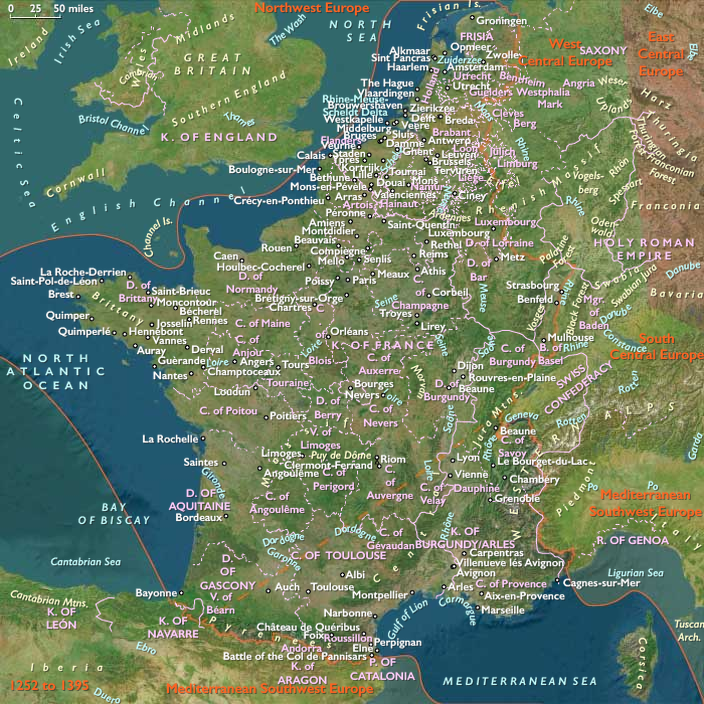
Subregions
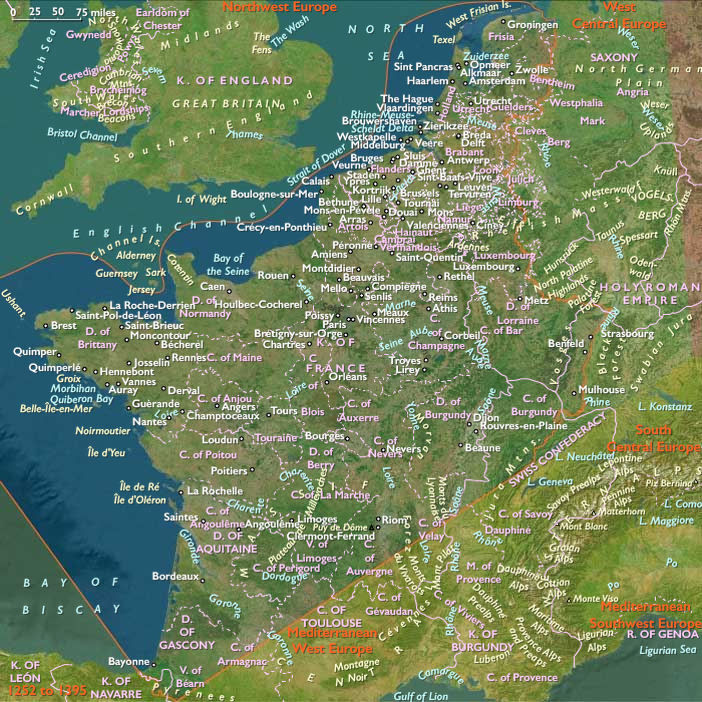
Years: 1380 - 1380
Locations
Groups
Commodoties
Subjects
Regions
Subregions