
Filters:
The Siege of Paris (885–886) and Charles …
Years: 886 - 886
The Siege of Paris (885–886) and Charles the Fat’s Betrayal
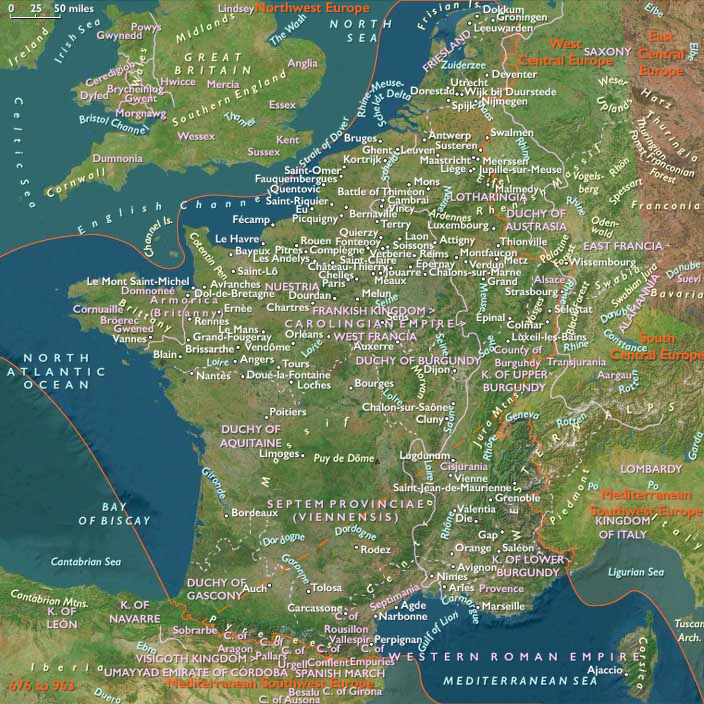
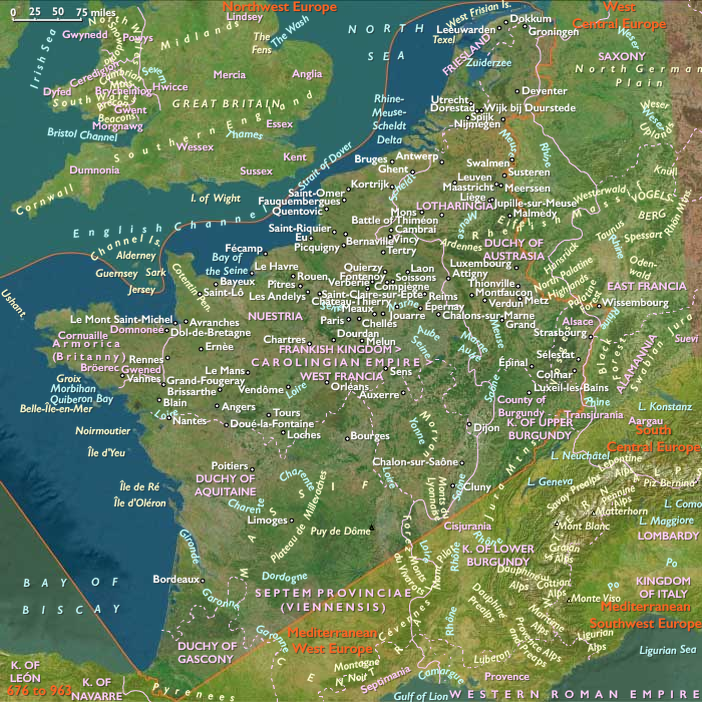
Between 885 and 886, Paris, heavily fortified since its sack by the Danes in 857, withstands a massive Viking siegelasting eleven months. The Norse invaders, numbering around 40,000 warriors aboard 700 ships, launch relentless attacks against the fortified city, yet the Parisian defenders, led by Count Odo and Bishop Gozlin, refuse to surrender.
Paris Under Siege: A Brutal Standoff
- The Vikings attempt multiple assaults, trying to breach the fortified bridges of the Île de la Cité, but the Parisian garrison holds firm.
- Disease and starvation begin to spread within the city, weakening the defenders.
- In early 886, Count Odo personally rides out of Paris, breaking through Viking lines to seek reinforcements from Emperor Charles the Fat.
Charles the Fat Arrives… But Refuses to Fight
- Charles the Fat finally arrives with a large army and encircles the Viking force, setting up a camp at Montmartre.
- Despite securing a strong position, Charles refuses to engage the Vikings in battle, shocking his own commanders.
- Instead of fighting, he negotiates with the Norse leaders and pays them off, allowing them to continue their raids elsewhere.
The Humiliation of West Francia
- Charles orders the Vikings to sail down the Seine and plunder Burgundy, which is already in revolt against him.
- This diplomatic maneuver further undermines Frankish authority, as Charles is seen as abandoning his own people to Viking devastation.
- The decision enrages the nobles of West Francia, who see Charles’ inaction as cowardice and betrayal.
Consequences of the Siege and Charles’ Downfall
- Despite being greatly outnumbered, Paris holds out and is never taken, solidifying its status as a center of Frankish resistance.
- Count Odo’s leadership during the siege makes him a hero among the Frankish nobility, paving the way for his later election as King of West Francia in 888.
- The humiliating settlement with the Vikings severely damages Charles the Fat’s already weak reputation, leading to his deposition in 887.
The Siege of Paris: A Turning Point in West Francia
The Siege of Paris (885–886) is a defining moment in the decline of Carolingian authority and the rise of local feudal power. While Charles the Fat’s failure to protect his kingdom leads to his downfall, the bravery of Paris’ defenders propels Odo into power, marking the beginning of the end of Carolingian rule in West Francia.
Locations
People
Groups
- Franks
- Italy, Carolingian Kingdom of
- Vikings
- Frankish, or Carolingian (Roman) Empire
- Saxony, Duchy of
- Brittany, Kingdom of
- Francia Occidentalis (West Francia, or France), Kingdom of
- Francia Orientalis (East Francia), Kingdom of
- Burgundy, Lower, Kingdom of
Topics
Commodoties
Subjects
Regions
Subregions
Years: 886 - 886
Locations
People
Groups
- Franks
- Italy, Carolingian Kingdom of
- Vikings
- Frankish, or Carolingian (Roman) Empire
- Saxony, Duchy of
- Brittany, Kingdom of
- Francia Occidentalis (West Francia, or France), Kingdom of
- Francia Orientalis (East Francia), Kingdom of
- Burgundy, Lower, Kingdom of
Topics
Commodoties
Subjects
Regions
Subregions