
The English Occupation and French Recapture of …
Years: 1373 - 1373
The English Occupation and French Recapture of Angoulême (1361–1373)
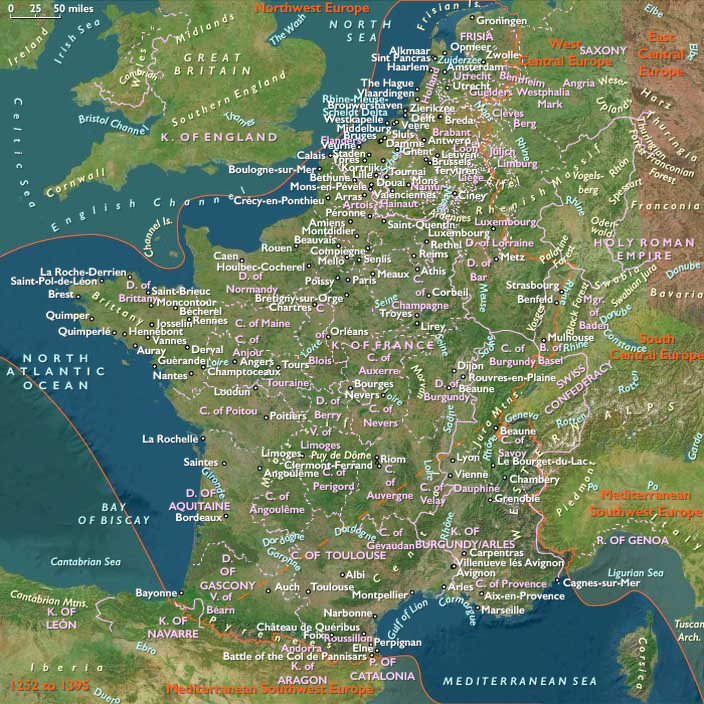
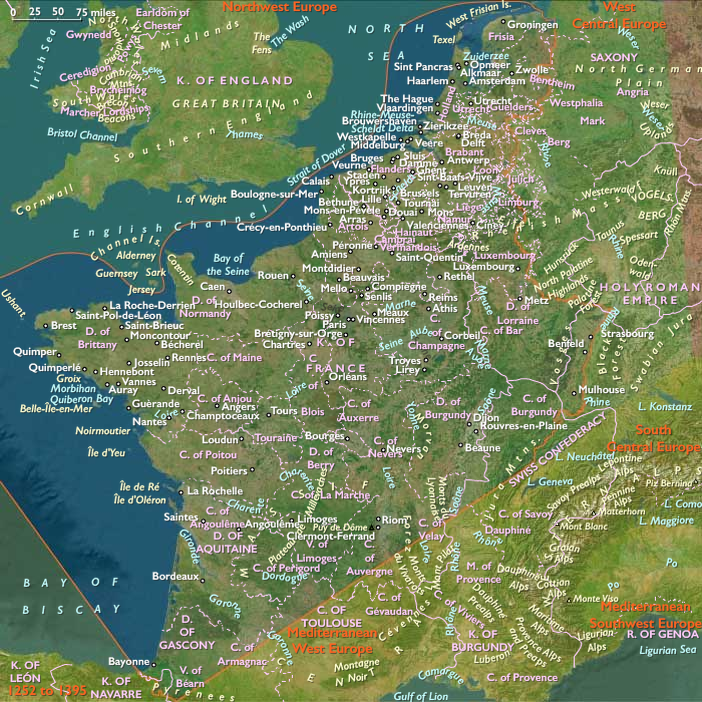
The city of Angoulême, along with the rest of Angoumois, fell under English control following the Treaty of Brétigny (1360), which temporarily expanded English sovereignty in France. However, by 1373, King Charles V’s forces expelled the English, restoring French rule and granting Angoulême numerous privileges.
English Occupation Under John Chandos (1361)
- From October 16 to 22, 1361, John Chandos, Lieutenant of Edward III of England and Constable of Aquitaine, arrived in Angoulême to implement English rule.
- During this time, he:
- Took possession of the city, its castles, and the monastery of Saint-Pierre.
- Received oaths of allegiance from the leading figures of Angoulême, ensuring loyalty to Edward III.
French Reconquest of Angoulême (1373)
- King Charles V of France, having adopted a strategy of reconquering English-held territories, launched a campaign in western France.
- In 1373, French troops expelled the English from Angoulême, marking a turning point in the war.
- As a reward for its return to French rule, Charles V granted the city numerous privileges, reinforcing its economic and political autonomy.
Impact and Legacy
- The recapture of Angoulême was part of the larger French resurgence under Charles V, which saw many English-held territories return to French control.
- John Chandos, a key English commander, would later be killed in battle in 1370, weakening English leadership in Aquitaine.
- The fall of Angoulême signaled the decline of English rule in western France, as Charles V’s reconquests continued to erode English gains from the Treaty of Brétigny.
The French reconquest of Angoulême in 1373 was a significant step in reversing English territorial expansion, ensuring that the city remained under French rule for the remainder of the Hundred Years' War.
Locations
People
Groups
Topics
Commodoties
Subjects
Regions
Subregions
Related Events
Showing 10 events out of 43786 total
Years: 1373 - 1373
Locations
People
Groups
Topics
Commodoties
Subjects
Regions
Subregions