
The citizens of Zürich swear allegiance before …
Years: 1351 - 1351
The citizens of Zürich swear allegiance before representatives of the cantons of Lucerne, Schwyz, Uri and Unterwalden, the other members of the Swiss Confederacy.
Thus, Zürich becomes the fifth member of the Swiss Confederacy, which is at this time a loose confederation of de facto independent states.
Locations
Groups
- Zürich, Imperial Free City of
- Swiss Confederacy, Old (Swiss Confederation)
- Uri, Swiss Canton of
- Schwyz, Swiss Canton of
- Schwyz, Imperial (Free) City of
- Unterwalden, Swiss Canton of
- Lucerne, Swiss Canton of
- Zürich, Imperial (Free) City of
- Zürich, Swiss Canton of
Subjects
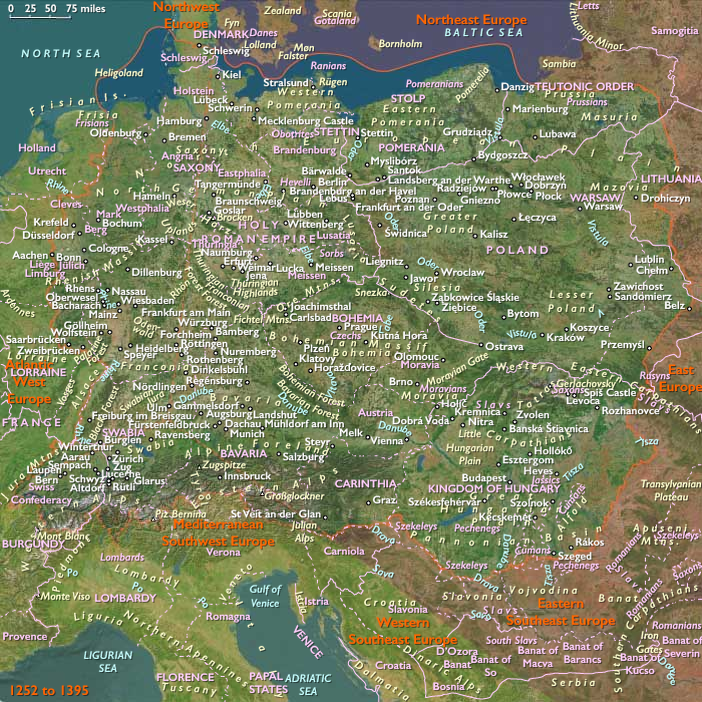
Regions
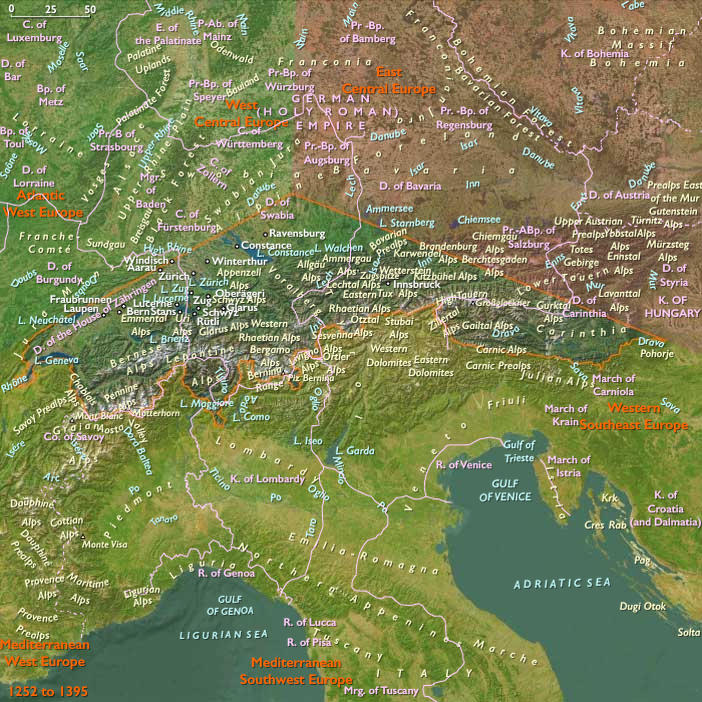
Subregions
Related Events
Showing 10 events out of 44180 total
Years: 1351 - 1351
Locations
Groups
- Zürich, Imperial Free City of
- Swiss Confederacy, Old (Swiss Confederation)
- Uri, Swiss Canton of
- Schwyz, Swiss Canton of
- Schwyz, Imperial (Free) City of
- Unterwalden, Swiss Canton of
- Lucerne, Swiss Canton of
- Zürich, Imperial (Free) City of
- Zürich, Swiss Canton of
Subjects
Regions
Subregions