
Filters:
The Cimbri and Their Allies in Gaul: …
Years: 109BCE - 109BCE
The Cimbri and Their Allies in Gaul: Victory Over the Romans in Gallia Narbonensis (109 BCE)
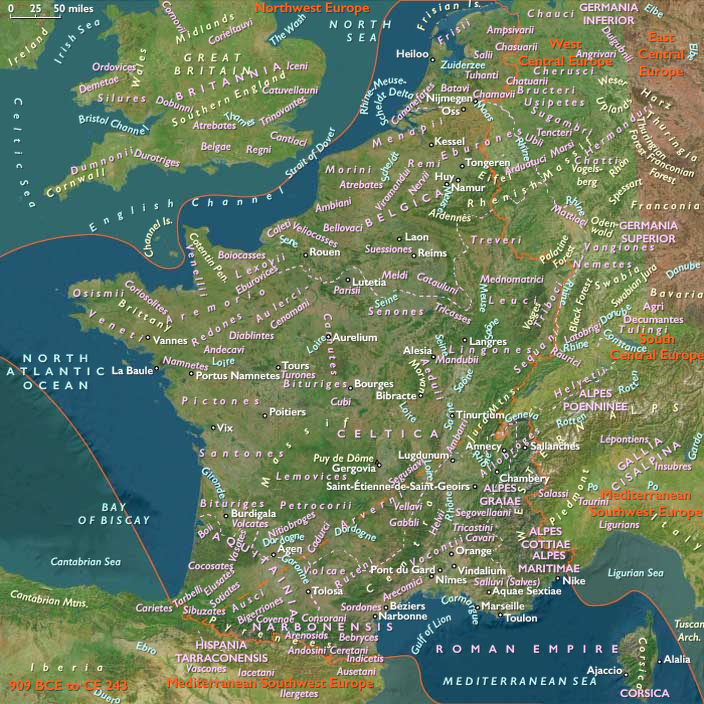
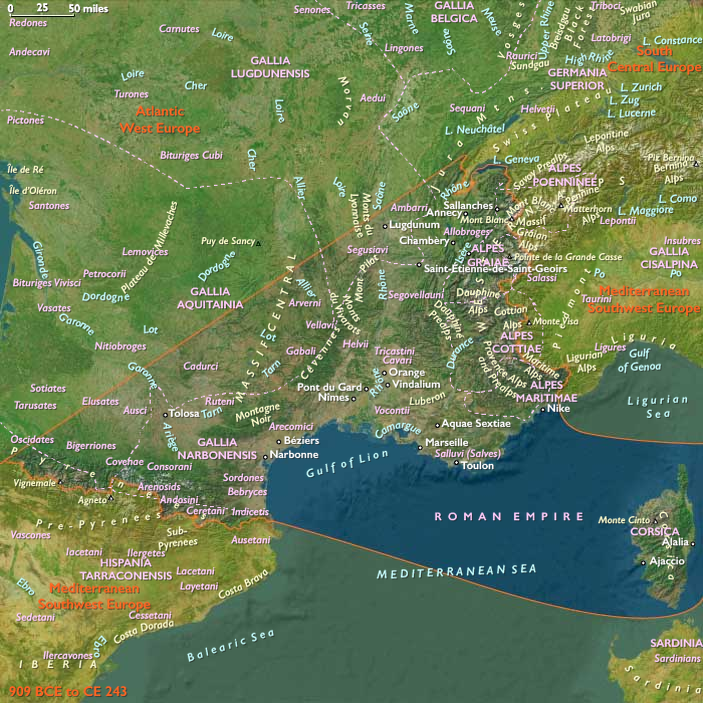
After their victory over the Romans at Noreia (113 BCE), the Cimbri and their allied tribes, including the Teutons and Ambrones, turned westward, moving into Gallia Narbonensis (modern southern France). Their migratory push into Roman-controlled territory led to another clash with the Roman Republic.
The Battle Against Marcus Junius Silanus (109 BCE)
- In 109 BCE, the Cimbri encountered a Roman force under Consul Marcus Junius Silanus, who had been sent to halt their advance in Gallia Narbonensis.
- The Roman army suffered a decisive defeat, further shaking Roman confidence and exposing the vulnerability of the Republic’s northern frontiers.
- This second major victory for the Cimbri over Rome fueled their reputation as a formidable migratory force, intensifying fears of a barbarian invasion.
Aftermath and Strategic Impact
- Following their victory, the Cimbri did not immediately march on Italy, but instead continued their movement through Gaul, raiding settlements and searching for a permanent homeland.
- Their success against Rome at Noreia (113 BCE) and Gallia Narbonensis (109 BCE) demonstrated their superior mobility, battlefield tactics, and ability to challenge Roman legions.
- The defeats led to Roman military reforms and the eventual rise of Gaius Marius, who would later face the Cimbri and Teutonic threat in a decisive series of battles.
This phase of the Cimbrian migration marked a critical turning point in Roman history, setting the stage for one of the Republic’s greatest military crises and the military-political transformations that followed.
Groups
Topics
- Classical antiquity
- Pre-Roman Iron Age of Northern Europe
- Roman Age Optimum
- Roman Republic, Crisis of the
- Cimbrian War
Commodoties
Subjects
Regions
Subregions
Related Events
Showing 1 events out of 1 total
Years: 109BCE - 109BCE
Groups
Topics
- Classical antiquity
- Pre-Roman Iron Age of Northern Europe
- Roman Age Optimum
- Roman Republic, Crisis of the
- Cimbrian War
Commodoties
Subjects
Regions
Subregions