
The chroniclers of the expedition do not …
Years: 1582 - 1582
The chroniclers of the expedition do not note any influence of the Coronado expedition on the Pueblos, who apparently had not adopted any Spanish customs nor had they preserved any of the horses or other livestock left behind by Coronado.
They have, moreover, apparently recovered in numbers from the disastrous levies on their resources that Coronado had imposed.
Chamuscado and Rodriguez with their slight numbers make fewer demands on the Pueblos, although they have one altercation after natives kill three Spanish horses.
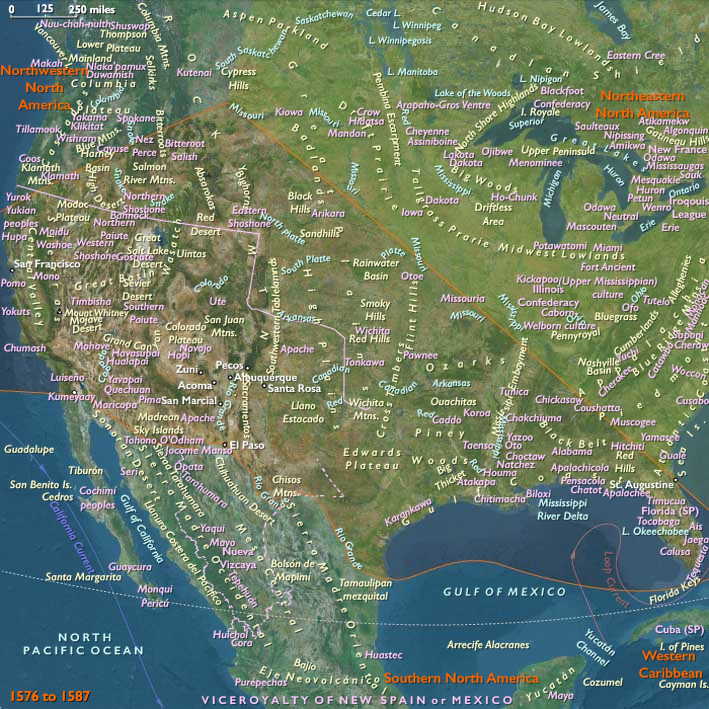
Chamuscado and Rodriguez visit sixty-one Pueblo towns along the Rio Grande and its tributaries and count a total of seven thousand and three houses of one or more stories in the pueblos.
If all houses were occupied and if a later estimate of eight persons per house is accurate, the population of the towns visited may have been fifty-six thousand people. In addition, they hear of other pueblos, including the Hopi, which they are unable to visit.
The Spanish learn that Friar Juan had been killed by natives only two or three days after leaving the expedition.
Despite the killing of Friar Juan, the two remaining friars are determined to stay in New Mexico.
The soldiers leave them, most of their supplies, and several Indian servants behind in the Tiwa town of Puaray and depart to return to Santa Barbara on June 31, 1582.
Chamuscado, almost seventy years of age, dies during their return journey.
The eight remaining soldiers will arrive in Santa Barbara on April 15, 1582.
The two friars and their native servants left behind are also soon killed by the Tiwa, although two natives had escaped and returned to Mexico to tell the story.
The Chamuscado and Rodriguez expedition had been a modest affair, but revives Spanish interest in New Mexico and will lead to a colony being established here a few years later by Juan de Oñate.
They have, moreover, apparently recovered in numbers from the disastrous levies on their resources that Coronado had imposed.
Chamuscado and Rodriguez with their slight numbers make fewer demands on the Pueblos, although they have one altercation after natives kill three Spanish horses.
Chamuscado and Rodriguez visit sixty-one Pueblo towns along the Rio Grande and its tributaries and count a total of seven thousand and three houses of one or more stories in the pueblos.
If all houses were occupied and if a later estimate of eight persons per house is accurate, the population of the towns visited may have been fifty-six thousand people. In addition, they hear of other pueblos, including the Hopi, which they are unable to visit.
The Spanish learn that Friar Juan had been killed by natives only two or three days after leaving the expedition.
Despite the killing of Friar Juan, the two remaining friars are determined to stay in New Mexico.
The soldiers leave them, most of their supplies, and several Indian servants behind in the Tiwa town of Puaray and depart to return to Santa Barbara on June 31, 1582.
Chamuscado, almost seventy years of age, dies during their return journey.
The eight remaining soldiers will arrive in Santa Barbara on April 15, 1582.
The two friars and their native servants left behind are also soon killed by the Tiwa, although two natives had escaped and returned to Mexico to tell the story.
The Chamuscado and Rodriguez expedition had been a modest affair, but revives Spanish interest in New Mexico and will lead to a colony being established here a few years later by Juan de Oñate.
Locations
People
Groups
- Zuni people (Amerind tribe)
- Hopi (Amerind tribe)
- Pueblo IV culture
- Acoma Pueblo
- Apache (Na-Dené tribe)
- Tiwa People
- New Spain, Viceroyalty of
- Spain, Habsburg Kingdom of
Topics
Commodoties
- Weapons
- Gem materials
- Domestic animals
- Grains and produce
- Textiles
- Strategic metals
- Slaves
- Sweeteners
- Land
- Tobacco
Subjects
Regions
Subregions
Related Events
Showing 10 events out of 34867 total
Years: 1582 - 1582
Locations
People
Groups
- Zuni people (Amerind tribe)
- Hopi (Amerind tribe)
- Pueblo IV culture
- Acoma Pueblo
- Apache (Na-Dené tribe)
- Tiwa People
- New Spain, Viceroyalty of
- Spain, Habsburg Kingdom of
Topics
Commodoties
- Weapons
- Gem materials
- Domestic animals
- Grains and produce
- Textiles
- Strategic metals
- Slaves
- Sweeteners
- Land
- Tobacco
Subjects
Regions
Subregions