
"Thoros son of Hethum", according to the …
Years: 1098 - 1098
March
"Thoros son of Hethum", according to the Chronicle of Matthew of Edessa, had been installed as governor of Edessa by the Seljuq emir of Damascus, Tutush I, who had defeated and killed emir Bouzan in the year 543 of the Armenia era (26 Feb. 1094 - 25 Feb. 1095).
According to Sturdza, Hethum [I] was descended from the Pahlavouni, an important family in Caucasian Armenia.
He conquered land to the east of that conquered by his fellow Armenian Rupen.
Steven Runciman calls Thoros the "son-in-law" of Gabriel of Melitene.
Tutush had captured Edessa around 1094 and established Thoros as governor.
Thoros had immediately tried to take control of the city for himself; when Yaghi-Siyan, emir of Antioch, and Ridwan, emir of Aleppo, took refuge in Edessa after being defeated by Malik Shah I, Thoros had tried to take them captive and ransom them.
The other Edessan nobles did not agree with this and they were freed.
Thoros had then fortified Edessa and cut off the citadel, garrisoned by Turkish and Armenian troops.
The Turks and Artuqids had then besieged the city for two months, but were unable to capture it even after breaking through the walls.
The Turks had withdrawn and Thoros had been recognized as lord of the city.
As a Greek Orthodox Christian, he is not well loved by his Armenian subjects in Edessa.
Thoros has resisted attacks from the Seljuqs, but in early 1098 had had to ask for help from the crusaders, who are occupied at the siege of Antioch.
Baldwin of Boulogne had come to Edessa rather than participate in the siege, probably looking to carve out some territory for himself, and had captured Turbessel.
Thoros had invited him to Edessa and made an alliance with him in February 1098.
Baldwin had gradually convinced Thoros to adopt him as his son and heir, but having done this, Baldwin attacks Thoros' officers and besieges him in the citadel.
Thoros agrees to let him have the city and makes plans to flee with his family to Melitene, but shortly afterwards, on March 9, Thoros is assassinated by the Armenian inhabitants of the city, possibly at Baldwin's command, and Baldwin becomes the new ruler, thus creating the County of Edessa, the first of the crusader states.
Locations
People
- Adhemar of Le Puy
- Al-Afdal Shahanshah
- Alexios I Komnenos
- Baldwin I of Jerusalem
- Bohemond I of Antioch
- Constantine I
- Danishmend Gazi
- Eustace III
- Fakhr al-Mulk Radwan
- Godfrey of Bouillon
- Guglielmo Embriaco
- Hugh I
- Iftikhar al-Dawla
- Kerbogha
- Kilij Arslan I
- Manuel Boutoumites
- Peter the Hermit
- Pope Urban II
- Raymond IV
- Robert Curthose
- Robert II, Count of Flanders
- Stephen
- Tancred
- Tatikios
- Thoros of Edessa
- Yaghi-Siyan
Groups
- Arab people
- Persian people
- Armenian people
- Jews
- Kurdish people
- Lombards (West Germanic tribe)
- Germans
- Christians, Armenian Apostolic Orthodox
- Christians, Maronite
- Christians, Miaphysite (Oriental Orthodox)
- Coptic Orthodox Church of Alexandria
- Greeks, Medieval (Byzantines)
- Islam
- Egypt in the Middle Ages
- Muslims, Sunni
- Muslims, Shi'a
- Syrian people
- Papal States (Republic of St. Peter)
- Toulouse, County of
- Flemish people
- Flanders, County of
- Abbasid Caliphate (Baghdad)
- Normandy, Duchy of
- Normans
- German, or Ottonian (Roman) Empire
- Turkmen people
- Cyprus, East Roman (Byzantine)
- Fatimid Caliphate
- French people (Latins)
- France, (Capetian) Kingdom of
- Hungary, Kingdom of
- Genoa, (Most Serene) Republic of
- Druze, or Druse, the
- Bulgaria, Theme of
- Lorraine (Lothier), Lower, (second) Duchy of
- Seljuq Empire (Isfahan)
- Christians, Roman Catholic
- Christians, Eastern Orthodox
- England, (Norman) Kingdom of
- Danishmends
- Rum, Sultanate of
- Apulia, Norman Duchy of
- Aleppo, Seljuq Emirate of
- Armenia, Baronry of Little, or Lesser
- Roman Empire, Eastern: Komnenos dynasty, restored
- Artuquids
- Edessa, County of
Topics
Commodoties
Subjects
Regions
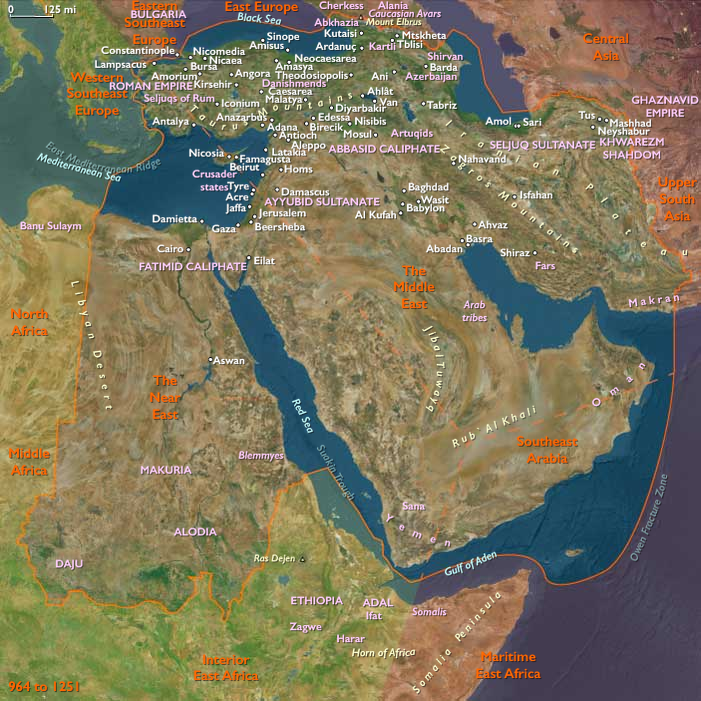
Subregions
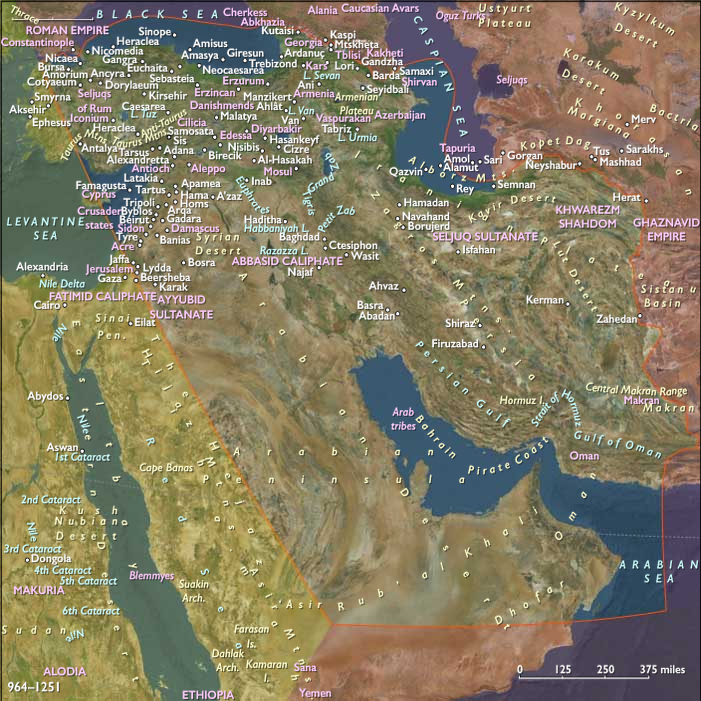
Related Events
Showing 10 events out of 50129 total
Years: 1098 - 1098
March
Locations
People
- Adhemar of Le Puy
- Al-Afdal Shahanshah
- Alexios I Komnenos
- Baldwin I of Jerusalem
- Bohemond I of Antioch
- Constantine I
- Danishmend Gazi
- Eustace III
- Fakhr al-Mulk Radwan
- Godfrey of Bouillon
- Guglielmo Embriaco
- Hugh I
- Iftikhar al-Dawla
- Kerbogha
- Kilij Arslan I
- Manuel Boutoumites
- Peter the Hermit
- Pope Urban II
- Raymond IV
- Robert Curthose
- Robert II, Count of Flanders
- Stephen
- Tancred
- Tatikios
- Thoros of Edessa
- Yaghi-Siyan
Groups
- Arab people
- Persian people
- Armenian people
- Jews
- Kurdish people
- Lombards (West Germanic tribe)
- Germans
- Christians, Armenian Apostolic Orthodox
- Christians, Maronite
- Christians, Miaphysite (Oriental Orthodox)
- Coptic Orthodox Church of Alexandria
- Greeks, Medieval (Byzantines)
- Islam
- Egypt in the Middle Ages
- Muslims, Sunni
- Muslims, Shi'a
- Syrian people
- Papal States (Republic of St. Peter)
- Toulouse, County of
- Flemish people
- Flanders, County of
- Abbasid Caliphate (Baghdad)
- Normandy, Duchy of
- Normans
- German, or Ottonian (Roman) Empire
- Turkmen people
- Cyprus, East Roman (Byzantine)
- Fatimid Caliphate
- French people (Latins)
- France, (Capetian) Kingdom of
- Hungary, Kingdom of
- Genoa, (Most Serene) Republic of
- Druze, or Druse, the
- Bulgaria, Theme of
- Lorraine (Lothier), Lower, (second) Duchy of
- Seljuq Empire (Isfahan)
- Christians, Roman Catholic
- Christians, Eastern Orthodox
- England, (Norman) Kingdom of
- Danishmends
- Rum, Sultanate of
- Apulia, Norman Duchy of
- Aleppo, Seljuq Emirate of
- Armenia, Baronry of Little, or Lesser
- Roman Empire, Eastern: Komnenos dynasty, restored
- Artuquids
- Edessa, County of
Topics
Commodoties
Subjects
Regions
Subregions