
The chronic fighting throughout the eighteenth century …
Years: 1792 - 1803
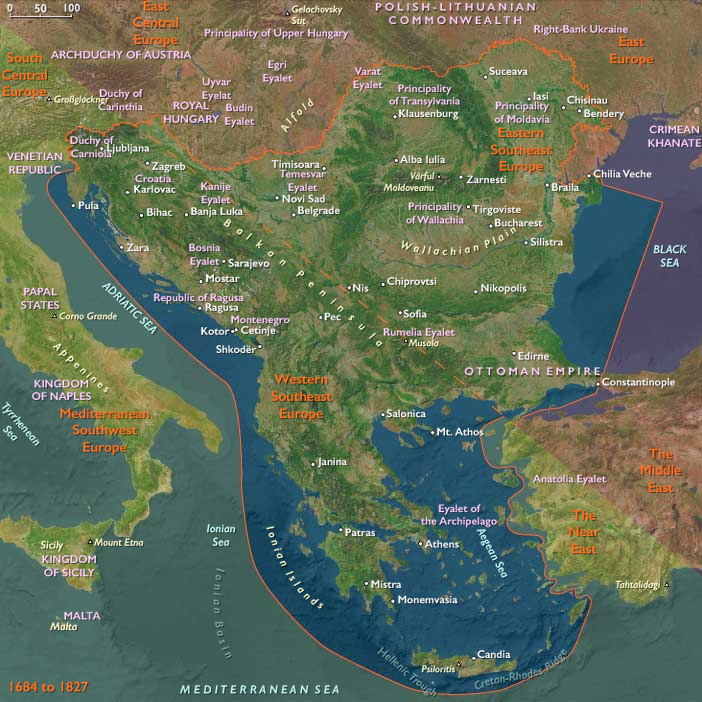
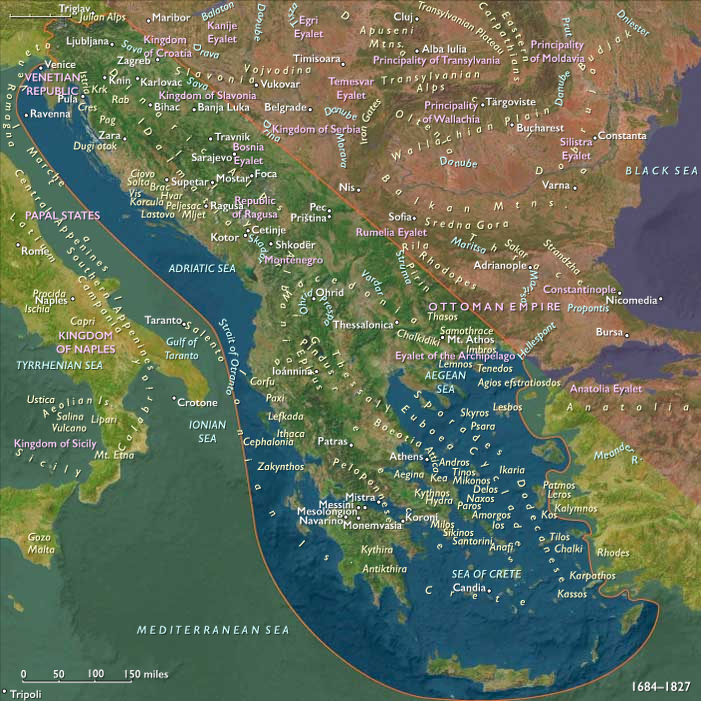
The chronic fighting throughout the eighteenth century has weakened Bosnia.
War had necessitated increased taxation, causing tax revolts.
Forced conscription and frequent plague epidemics have led to a relative reduction in the Muslim population, which has contributed its manpower to Ottoman campaigns throughout the empire and may have suffered disproportionately from the effects of plague in the cities.
During the eighteenth century, there has been strong growth in the Christian population; by the end of the century, the Muslims are probably no longer in the majority.
The social consequences of war also include a change in the system of land tenure: increasingly, the old feudal timar estates are being converted into a type of private estate known as a ciftlik, in response to the imperial treasury's need for cash instead of old-style feudal service.
The conditions of work demanded of the peasants on these estates are usually much more severe, and these peasants tend increasingly to be Christians, since Muslim peasants are able to acquire smallholdings in their own right.
Nevertheless, Ottoman Bosnia is not permanently sunk in misery.
Descriptions of Sarajevo by visiting travelers portray it as one of the wonders of the Balkans, with fountains, bridges, schools, libraries, and mosques.
Numerous works of poetry, philosophy, and theology are written.
The cities of Sarajevo and ...
Locations
Groups
- Islam
- Christians, Roman Catholic
- Christians, Eastern Orthodox
- Ottoman Empire
- Bosnia, Sanjak of
- Bosnia, Ottoman eyalet of
Commodoties
Subjects
Regions
Subregions
Years: 1792 - 1803
Locations
Groups
- Islam
- Christians, Roman Catholic
- Christians, Eastern Orthodox
- Ottoman Empire
- Bosnia, Sanjak of
- Bosnia, Ottoman eyalet of
Commodoties
Subjects
Regions
Subregions