
Filters:
Scientific and Technological Contributions of the Islamic …
Years: 1108 - 1251
Scientific and Technological Contributions of the Islamic World to Europe
During the medieval period, the Islamic world makes significant advancements in science and technology, many of which are later transmitted to Europe, influencing the Renaissance and the Scientific Revolution.
Major Scientific Contributions
- Algebra – Developed by Al-Khwarizmi, whose works introduce systematic methods for solving equations.
- Chemistry (Alchemy) – Islamic scholars refine distillation, crystallization, and experimental methods, laying the groundwork for modern chemistry.
- Geology – The concept of uniformitarianism is introduced by Al-Biruni, influencing later European geological thought.
- Spherical Trigonometry – Used in astronomy and navigation, further developed by Al-Tusi and Al-Battani, paving the way for advancements in European cartography.
- Medicine – Figures such as Avicenna (Ibn Sina) and Al-Razi compile comprehensive medical treatises, which are later used in European universities.
Technological and Agricultural Transfers to Europe
- Astronomical Instruments – The astrolabe, perfected by Islamic astronomers, enables more accurate navigation and timekeeping, later adopted by European explorers.
- Irrigation Techniques – Advanced water management systems, such as qanats and norias, improve European agriculture.
- New Crops – Various plants, including sugarcane, rice, citrus fruits, cotton, and coffee, are introduced to Europe via Al-Andalus and the Crusades.
These Islamic contributions play a crucial role in the transmission of knowledge to medieval Europe, particularly through centers of learning in Al-Andalus, Sicily, and the Crusader States, helping to bridge the classical world with the emerging European scientific tradition.
Groups
Topics
Commodoties
Subjects
Regions
Subregions
- Middle East
- Upper South Asia
- Maritime East Africa
- Near East
- Western Southeast Europe
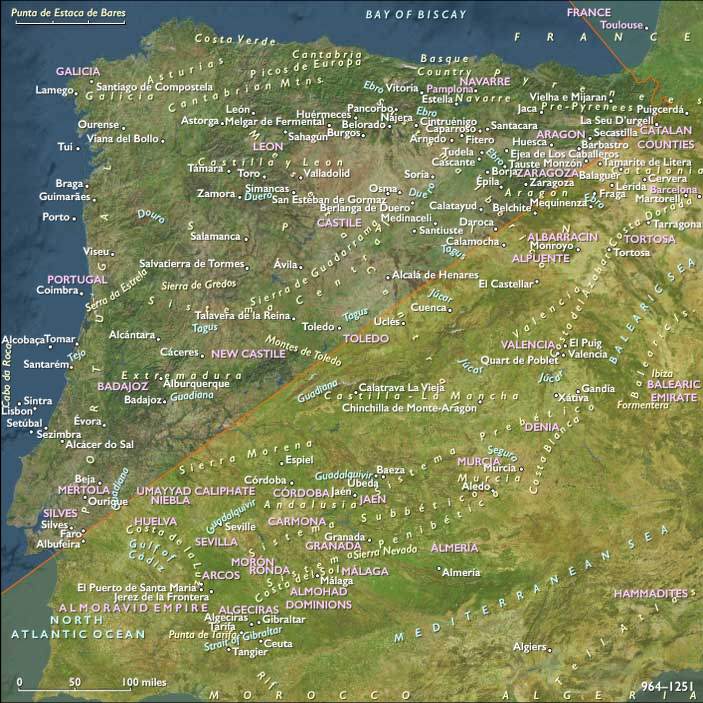
- Mediterranean Southwest Europe
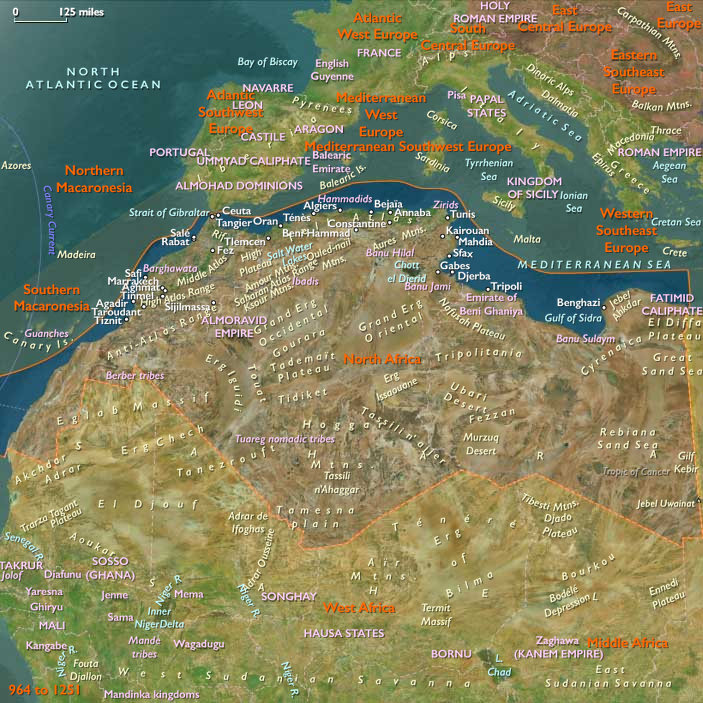
- North Africa
- Atlantic Southwest Europe
Related Events
Showing 10 events out of 129 total
Years: 1108 - 1251
Groups
Topics
Commodoties
Subjects
Regions
Subregions
- Middle East
- Upper South Asia
- Maritime East Africa
- Near East
- Western Southeast Europe
- Mediterranean Southwest Europe
- North Africa
- Atlantic Southwest Europe