
The Chinese government pays an indemnity of …
Years: 1844 - 1844
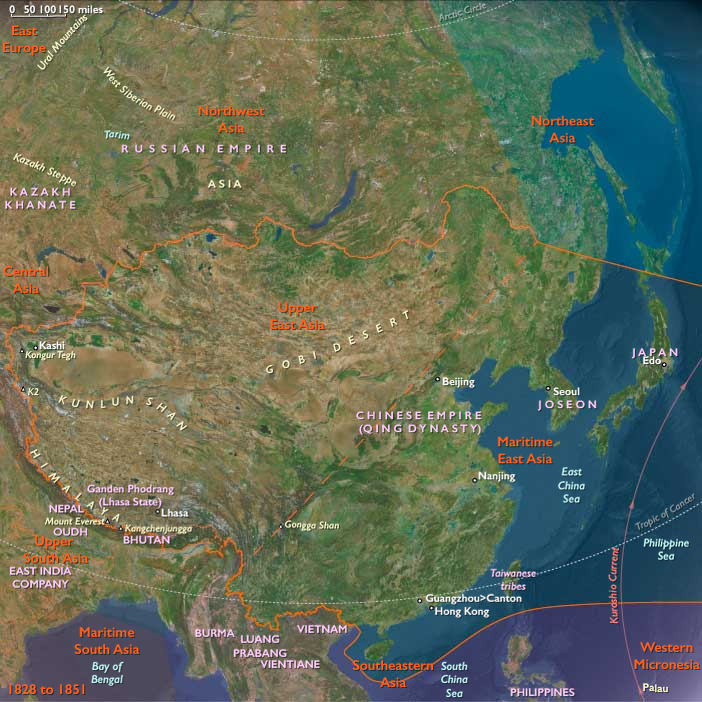
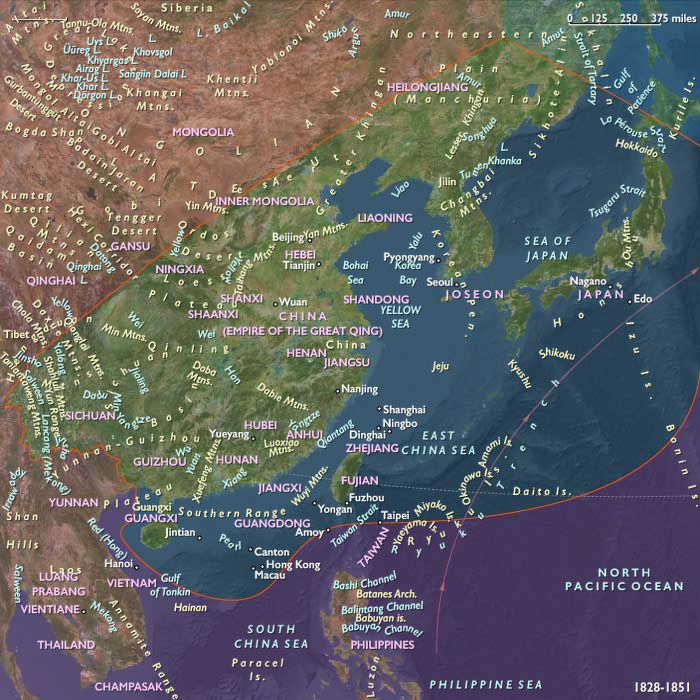
The Chinese government pays an indemnity of twelve million dollars to cover the expenses of the British expedition, in addition to six billion dollars already paid as ransom for the city of Canton.
Further, they pay a compensation of six million dollars as the value of the destroyed opium stocks.
Another three million dollars is to be paid by Chinese merchants to the British subjects at Canton.
Locations
Groups
- Chinese Empire, Qing (Manchu) Dynasty
- Britain (United Kingdom of Great Britain and Ireland)
- France, constitutional monarchy of
Topics
Commodoties
Subjects
Regions
Subregions
Related Events
Showing 10 events out of 17228 total
Years: 1844 - 1844
Locations
Groups
- Chinese Empire, Qing (Manchu) Dynasty
- Britain (United Kingdom of Great Britain and Ireland)
- France, constitutional monarchy of
Topics
Commodoties
Subjects
Regions
Subregions