
The kingdom of Garhwal to the west …
Years: 1684 - 1827
The kingdom of Garhwal to the west is mostly hill country but includes the rich vale of Dehra Dun.
During the late eighteenth century, the kingdom had been devastated by conquerors as varied as Afghans, Sikhs from the Punjab, and Marathas from western India.
The armies of Nepal had been poised to attack Garhwal in 1790, but the affair with Tibet had shifted their attention.
In 1803 after Garhwal is devastated by an earthquake, the Nepalese armies move in, defeat and kill the raja of Garhwal in battle, and annex a ruined land.
General Amar Singh Thapa moves farther west and during a three-year campaign defeats or buys off local princes as far as Kangra, the strongest fort in the hills.
The Nepalese lay siege to Kangra until 1809, when Ranjit Singh, ruler of the Sikh state in the Punjab, intervenes and drives the Nepalese army east of the Sutlej River.
Amar Singh Thapa spends several years putting down rebellions in Garhwal and Kumaon, towns that submit to military occupations but are never fully integrated into the Gurkha state.
The Nepalese are being checked in the west.
Locations
People
Groups
- Kirat people
- Bengalis
- Persian people
- Pashtun people (Pushtuns, Pakhtuns, or Pathans)
- Buddhism
- Khas peoples
- Indian people
- Chinese (Han) people
- Tibetan people
- Rajasthan, Rajput Kingdoms of
- Rajputs
- Islam
- Muslims, Sunni
- Newar people
- Maratha
- Sikhs
- Gurkha
- Tibet, Lamacracy of
- Bhutan, Kingdom of
- Sikkim, Kingdom of
- Chinese Empire, Qing (Manchu) Dynasty
- Mughal Empire (Delhi)
- Britain, Kingdom of Great
- East India Company, British (United Company of Merchants of England Trading to the East Indies)
- India, East India Company rule in
- Bengal Presidency
- Nepal, Shah Kingdom of
- Sikh Empire
- Punjab, Sikh Kingdom of the
Topics
Subjects
Regions
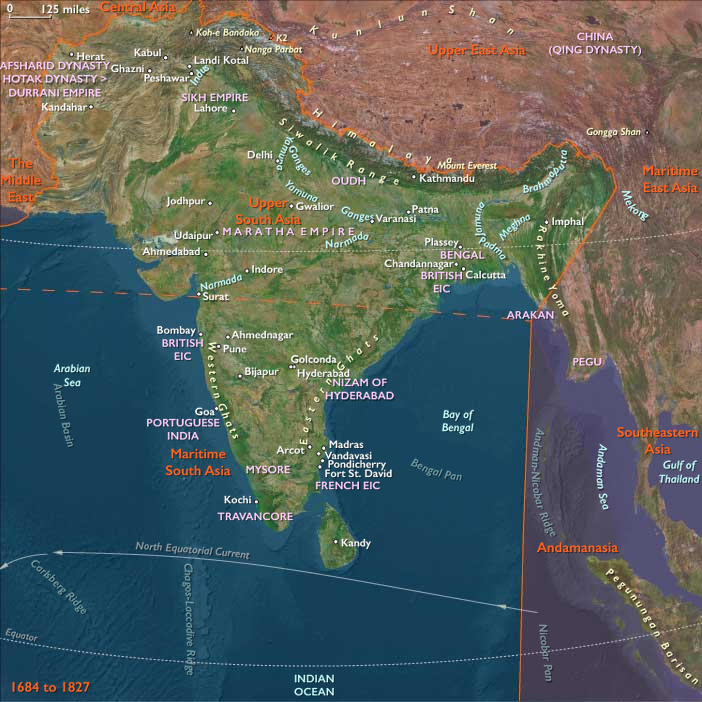
Subregions
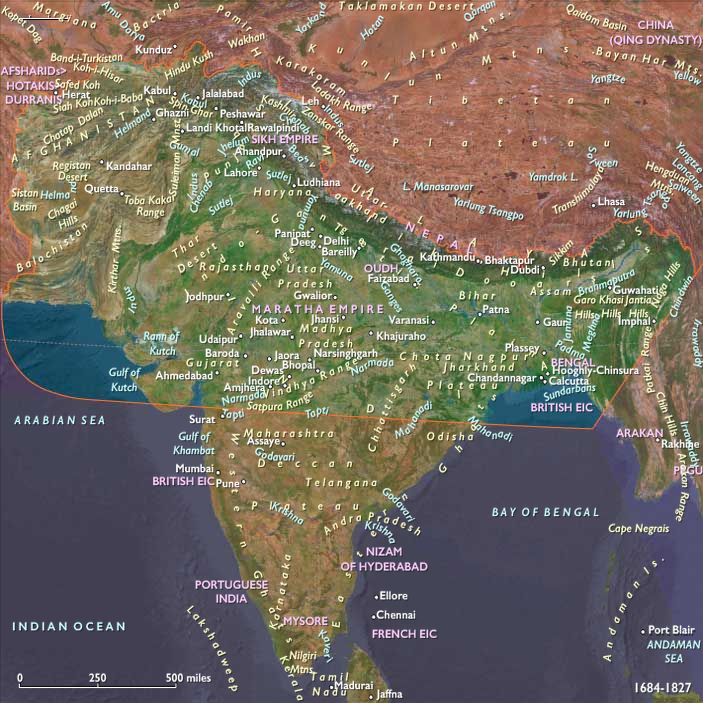
Years: 1684 - 1827
Locations
People
Groups
- Kirat people
- Bengalis
- Persian people
- Pashtun people (Pushtuns, Pakhtuns, or Pathans)
- Buddhism
- Khas peoples
- Indian people
- Chinese (Han) people
- Tibetan people
- Rajasthan, Rajput Kingdoms of
- Rajputs
- Islam
- Muslims, Sunni
- Newar people
- Maratha
- Sikhs
- Gurkha
- Tibet, Lamacracy of
- Bhutan, Kingdom of
- Sikkim, Kingdom of
- Chinese Empire, Qing (Manchu) Dynasty
- Mughal Empire (Delhi)
- Britain, Kingdom of Great
- East India Company, British (United Company of Merchants of England Trading to the East Indies)
- India, East India Company rule in
- Bengal Presidency
- Nepal, Shah Kingdom of
- Sikh Empire
- Punjab, Sikh Kingdom of the
Topics
Subjects
Regions
Subregions