
The Chinese court had been summoned Ly …
Years: 602 - 602
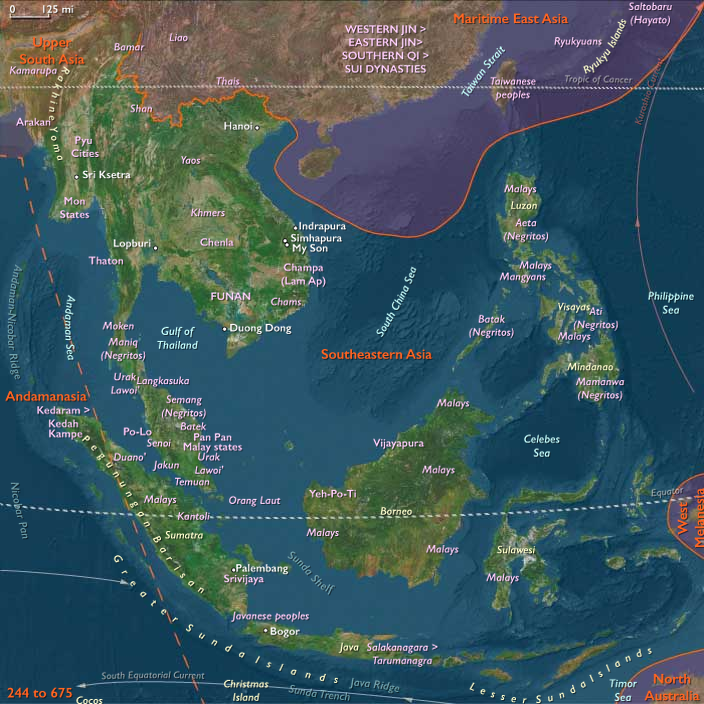
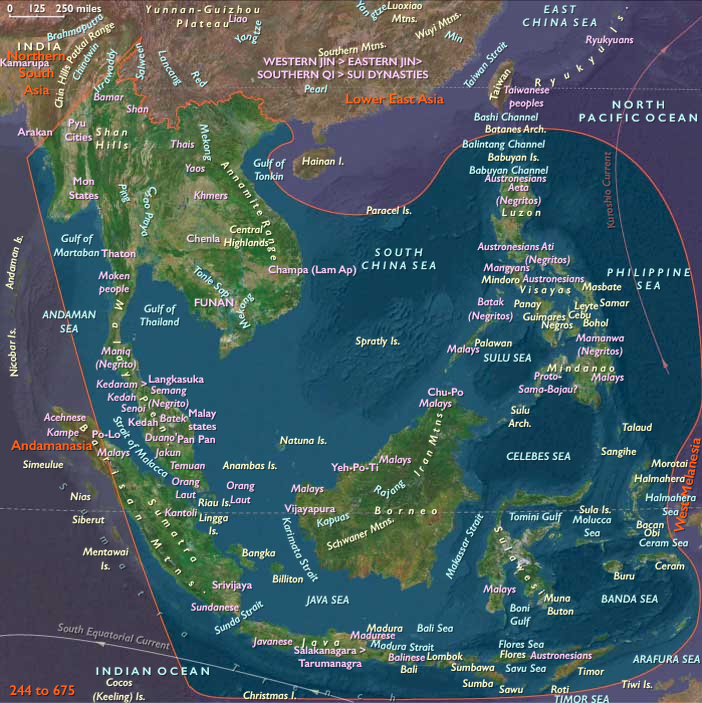
The Chinese court had been summoned Ly Phat Tu in 601.
Having delayed his attendance.
he eventually rebels in 602, even though he had recognized Sui authority in 595.
He concentrates his military forces at the Ly capital Co Loa and at Long Bien.
General Liu Fang leads his Sui army in the invasion of Ly, departing via Yunnan to the Ly territory.
However, the Ly armies are unprepared to fend them off, because they had not expected that the Sui army would take this invasion route.
In the end, Ly Phat Tu surrenders to the Sui forces.
Consequently, the Chinese take him captive and transfer him to the Sui capital, Chang'an.
Liu Fang's army also forces the submission of or defeats the remaining local clans.
The conquered territory is incorporated under Chinese rule.
Locations
People
Groups
- Vietnamese people
- Chinese (Han) people
- Ly Dynasty, Early (Van Xuan)
- Sui Dynasty (Imperial Chinese dynasty)
Topics
Commodoties
Subjects
Regions
Subregions
Related Events
Showing 10 events out of 57105 total
Years: 602 - 602
Locations
People
Groups
- Vietnamese people
- Chinese (Han) people
- Ly Dynasty, Early (Van Xuan)
- Sui Dynasty (Imperial Chinese dynasty)
Topics
Commodoties
Subjects
Regions
Subregions