
The Chinese central government had soon observed …
Years: 1175 - 1175
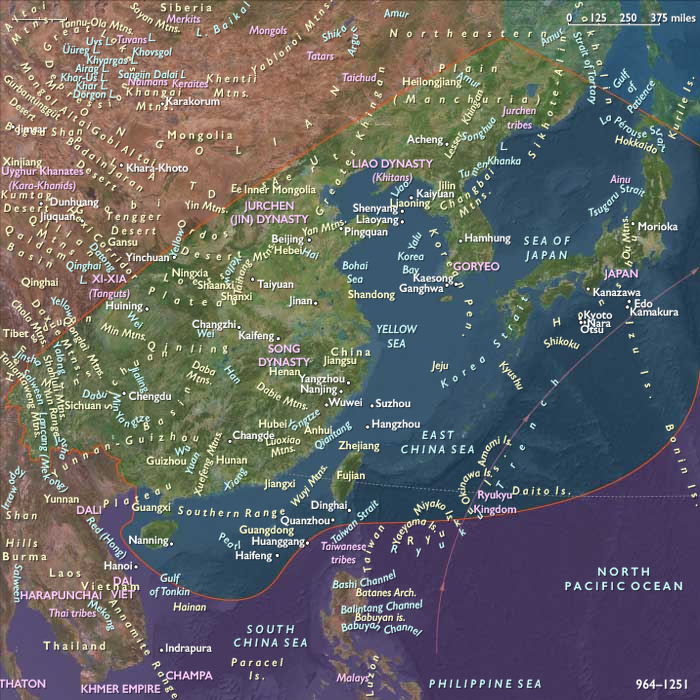
The Chinese central government had soon observed the economic advantages of printing paper money, issuing a monopoly right of several of the deposit shops to the issuance of these certificates of deposit.
By the early twelfth century, the amount of banknotes issued in a single year amounted to an annual rate of tweny-six million strings of cash coins.
The central government officially stepped in by the 1120s and produced their own state-issued paper money (using woodblock printing).
Even before this point, the Song government was amassing large amounts of paper tribute.
It is recorded that each year before 1101, the prefecture of Xinan (modern Xi-xian, Anhui) alone would send 1,500,000 sheets of paper in seven different varieties to the capital at Kaifeng.
In that year of 1101, the Emperor Huizong of Song decided to lessen the amount of paper taken in the tribute quota, because it was causing detrimental effects and creating heavy burdens on the people of the region.
However, the government still needs masses of paper product for the exchange certificates and the state's new issuing of paper money.
For the printing of paper money alone, the Song court has established several government-run factories in the cities of Huizhou, …
Locations
Groups
Commodoties
Subjects
Regions

Subregions
Related Events
Showing 5 events out of 5 total
Years: 1175 - 1175
Locations
Groups
Commodoties
Subjects
Regions
Subregions