
The Early Reign of Louis the Pious …
Years: 816 - 816
October
The Early Reign of Louis the Pious and the 816 Papal Coronation
Following his accession in 814, Louis the Pious surrounds himself with trusted advisors, continuing some of his father’s ministers while introducing new figures to his court. Among his chief counselors are:
- Bernard, Margrave of Septimania, a powerful noble in southern Gaul.
- Ebbo, Archbishop of Reims, an ambitious churchman born a serf, whom Louis elevates to high office—though he will later betray the emperor.
- Elisachar, Abbot of St. Maximin near Trier, and Hildebold, Archbishop of Cologne, both retained from Charlemagne’s administration.
- Benedict of Aniane, a Visigothic monastic reformer, tasked with strengthening the Frankish Church.
Benedict of Aniane and the Reform of Monastic Life
Benedict of Aniane, often called the Second Benedict, enforces a major religious reform:
- He ensures that all monastic houses in Louis' realm adhere to the Rule of Saint Benedict, originally formulated by Benedict of Nursia (480–550)—the First Benedict.
- This reform standardizes monastic discipline, reinforcing the importance of communal prayer, manual labor, and study as the pillars of monastic life.
The Papal Coronation of Louis the Pious (816)
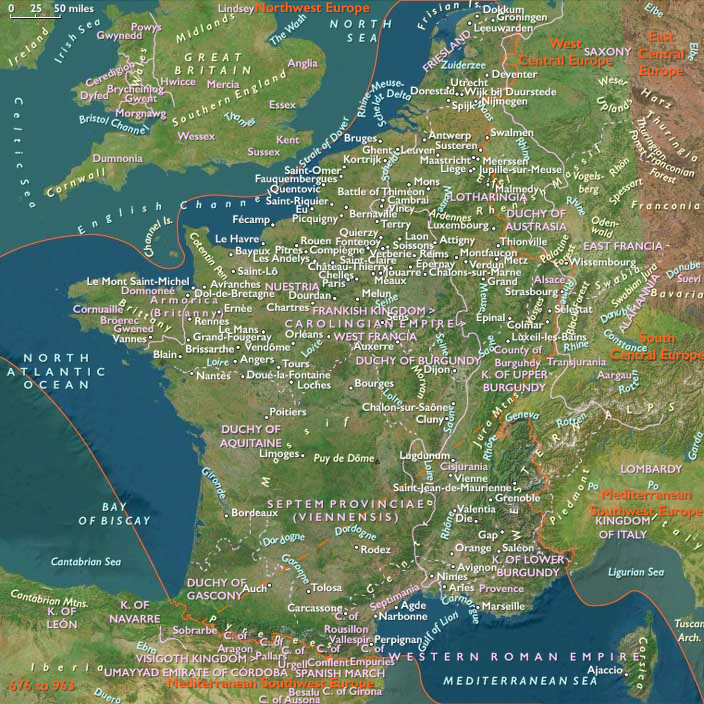
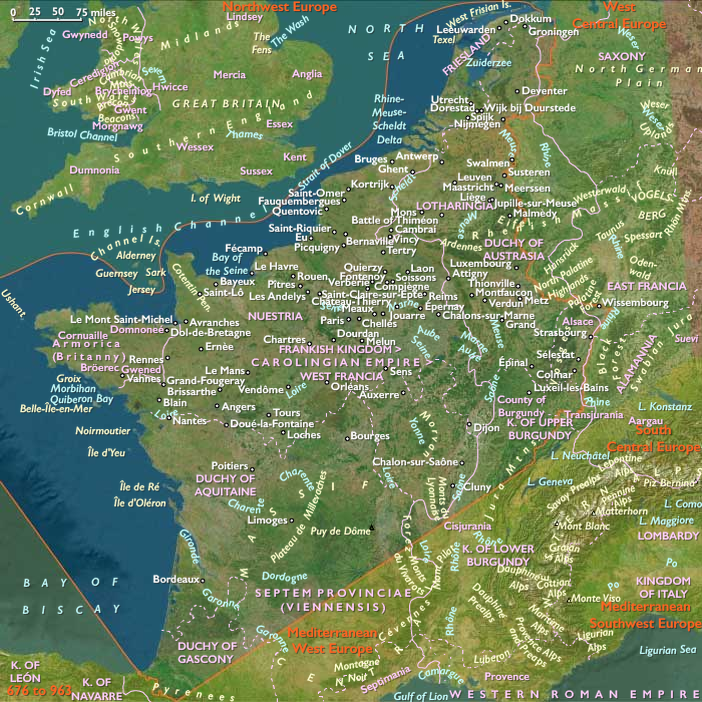
In October 816, Pope Stephen IV travels north to meet Louis the Pious at Reims, where the emperor prostrates himself three times before the Pope, demonstrating his piety and submission to the Church.
On Sunday, October 5, 816, during Mass, Stephen formally anoints and crowns Louis as emperor, placing on his head a crown claimed to have belonged to Constantine the Great. At the same time, he also crowns Louis’ wife, Ermengarde of Hesbaye, and salutes her as Augusta.
This event serves multiple purposes:
- It reinforces papal authority in the imperial coronation process, especially after Louis had self-coronated in 813 at the behest of Charlemagne.
- It reaffirms the alliance between the Frankish rulers and the papacy, solidifying the Papal States and their privileges.
- It emphasizes that imperial legitimacy is granted not just by heredity or conquest, but also through papal approval.
Diplomatic Agreements and Religious Reforms
While at Louis’ court, Pope Stephen IV secures:
- A land grant, likely at Vendeuvre-sur-Barse, reinforcing the Church’s growing territorial independence.
- The renewal of the Frankish-papal alliance, confirming the privileges of the Roman Church and the continued sovereignty of the Papal States.
- The promotion of Theodulf of Orléans to archbishop, a significant elevation in the Frankish ecclesiastical hierarchy.
- The release of Roman political prisoners, exiled during the turbulent reign of Pope Leo III.
Stephen also urges Louis to enforce reforms among the clergy living under the Rule of Chrodegang, including:
- The strict separation of men and women in religious communities.
- The requirement that monastic property be held in common, ensuring no individual accumulation of wealth.
- Regulations on food and wine consumption, reinforcing a disciplined clerical lifestyle.
The Coronation of 816: A Turning Point in Frankish-Papal Relations
The 816 coronation of Louis the Pious is a significant moment in the history of the Frankish Empire and the papacy. It marks a shift from Charlemagne’s imperial self-reliance to a more church-dependent rule, paving the way for increasing papal influence over the empire’s affairs. This coronation foreshadows the medieval struggles between secular rulers and the papacy, as both seek to define the limits of imperial and ecclesiastical power in Europe.
Locations
People
- Bernard of Italy
- Bernard of Septimania
- Ebbo
- Louis the Pious
- Pope Leo III
- Pope Paschal I
- Pope Stephen IV
Groups
- Franks
- Alamannia
- Christianity, Chalcedonian
- Septimania
- Benedictines, or Order of St. Benedict
- Papal States (Republic of St. Peter)
- Italy, Carolingian Kingdom of
- Aquitaine, (Carolingian) Kingdom of
- Bavaria, Carolingian Duchy of
- Frankish, or Carolingian (Roman) Empire
- Saxony, Duchy of
- Roman Empire, Eastern: Non-dynastic
Topics
Subjects
Regions
Subregions
Related Events
Showing 10 events out of 54697 total
Years: 816 - 816
October
Locations
People
- Bernard of Italy
- Bernard of Septimania
- Ebbo
- Louis the Pious
- Pope Leo III
- Pope Paschal I
- Pope Stephen IV
Groups
- Franks
- Alamannia
- Christianity, Chalcedonian
- Septimania
- Benedictines, or Order of St. Benedict
- Papal States (Republic of St. Peter)
- Italy, Carolingian Kingdom of
- Aquitaine, (Carolingian) Kingdom of
- Bavaria, Carolingian Duchy of
- Frankish, or Carolingian (Roman) Empire
- Saxony, Duchy of
- Roman Empire, Eastern: Non-dynastic
Topics
Subjects
Regions
Subregions