
South Central Europe (909 BCE – …
Years: 909BCE - 819
South Central Europe (909 BCE – 819 CE) Early Iron and Antiquity — Hallstatt/La Tène Alps, Rome’s Provinces, and Early Confederations
Geographic and Environmental Context
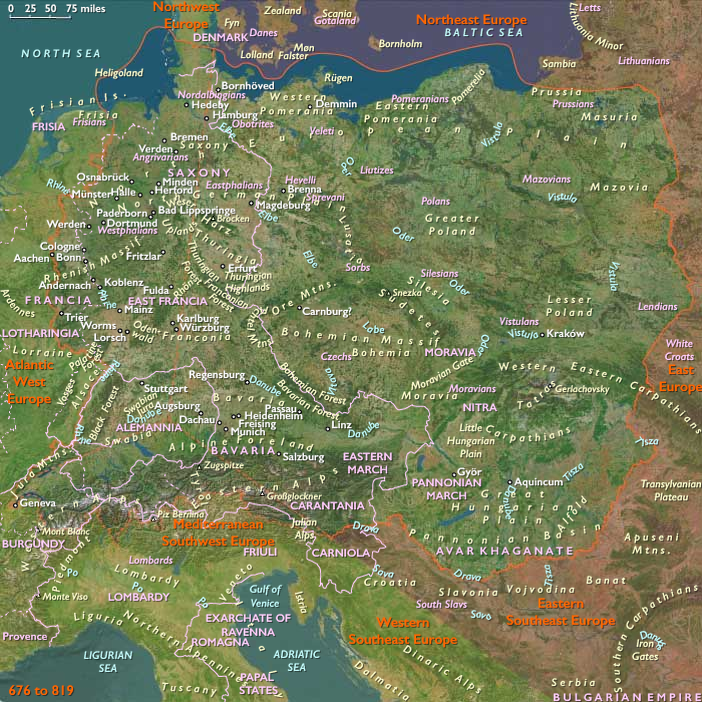
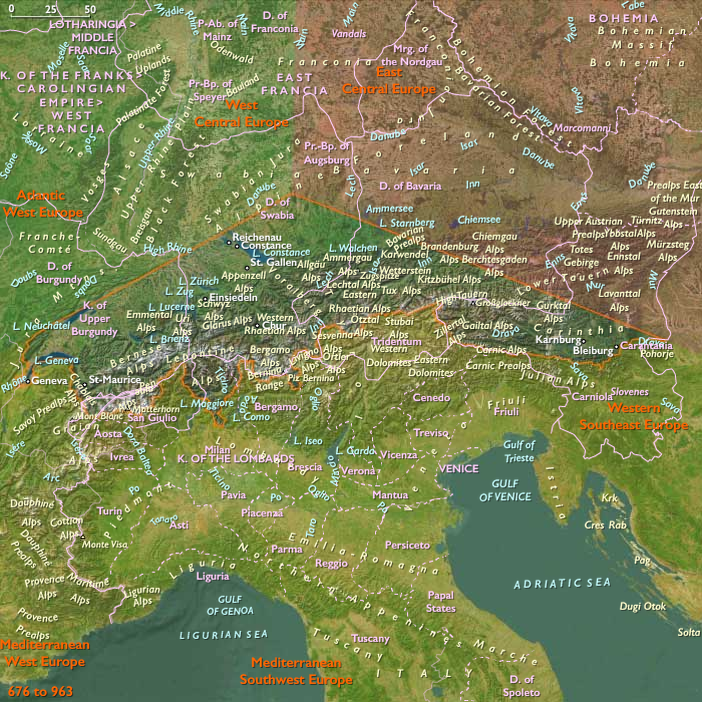
Western Southeast Europe includes southern and western Austria (including Carinthia; excluding Salzburg), Liechtenstein, Switzerland (excluding Basel and the eastern Jura), southeastern Swabia (southeastern Baden-Württemberg), and southwestern Bavaria.-
Anchors: Hallstatt/La Tène Alpine belt, Raetia–Noricum (Roman provinces), Aare–Reuss–Rhône Swiss core, Tyrol–Carinthia passes, Rheintal–Liechtenstein hinge, Swiss Plateau towns (Zürich, Bern, Geneva).
Climate & Environmental Shifts
-
First-millennium variability; generally temperate; suited to viticulture and dairying in lee basins.
Societies & Political Developments
-
Celtic La Tène groups dominated uplands/plateau until Rome annexed Raetia and Noricum (1st c. CE).
-
Roman roads, bridges, and municipia (e.g., Aventicum/Avenches, Augusta Raurica near but outside our bounds) integrated the Alps; valley vici grew along passes.
-
After 3rd-century crises and Alamannic pressure, fortified hilltops and late Roman strongpoints proliferated.
-
Alemanni/Bavarians settled forelands; Raetic–Rhaeto-Romance communities persisted in inner Alps.
-
By 7th–9th c., early Swiss pagi and Alemannic/Bavarian duchies coalesced; Carantania (in Carinthia) formed a Slavic principality under Bavarian–Frankish shadow.
Economy & Trade
-
Alpine salt, copper/iron, and stone; plateau grain, wine, dairy; Roman transit tolls; post-Roman fairs revived along Rheintal–Brenner–Gotthard.
Technology & Material Culture
-
Iron plow and tools; Roman engineering (masonry bridges, milestones); late Roman hillforts; early medieval timber churches.
-
Pottery shifted from wheel-made Roman to handmade Germanic forms; glass/metalwork persisted in towns.
Belief & Symbolism
-
Celtic cults → Roman polytheism → Christianity (late Roman bishoprics in Geneva, Avenches; early monasteries in Valais/Grisons); Germanic and Slavic pagan elements persisted locally.
Environmental Adaptation & Resilience
-
Transhumance, terracing, hay meadows stabilized Alpine subsistence; Roman and post-Roman route redundancy kept trade moving through political shocks.
Legacy & Transition
By 819 CE, South Central Europe was a pass-keeper’s realm: Romanized valley networks overlain by Alemannic/Bavarian and Carantanian polities, with Zürich–Bern–Geneva and the Alpine passes (Brenner–Gotthard–Great St. Bernard) forming the skeleton for the coming high-medieval commercial boom.
Groups
Topics
Commodoties
Subjects
Regions
Subregions
Years: 909BCE - 819
Groups
Topics
Commodoties
Subjects
Regions
Subregions