
The characteristic material culture of the Egyptian …
Years: 3213BCE - 3070BCE
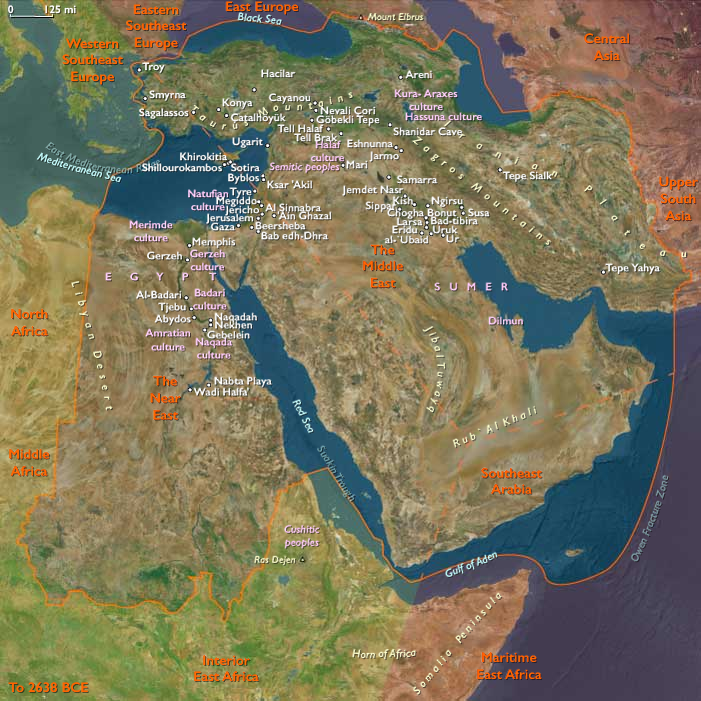
The characteristic material culture of the Egyptian south has gradually spread in Naqada III times to replaces the once different one of northern Egypt.
Undecorated stone vases from Egypt's Gerzean period supersede vessels of the Amratian culture.
Cylinder seals appear in Egypt, as well as recessed paneling architecture, the Egyptian reliefs on cosmetic palettes are clearly made in the same style as the contemporary Mesopotamian Uruk culture, and the ceremonial maceheads that appear in the late Gerzean and early Semainean are crafted in the Mesopotamian "pear-shaped" style, instead of the Egyptian native style.
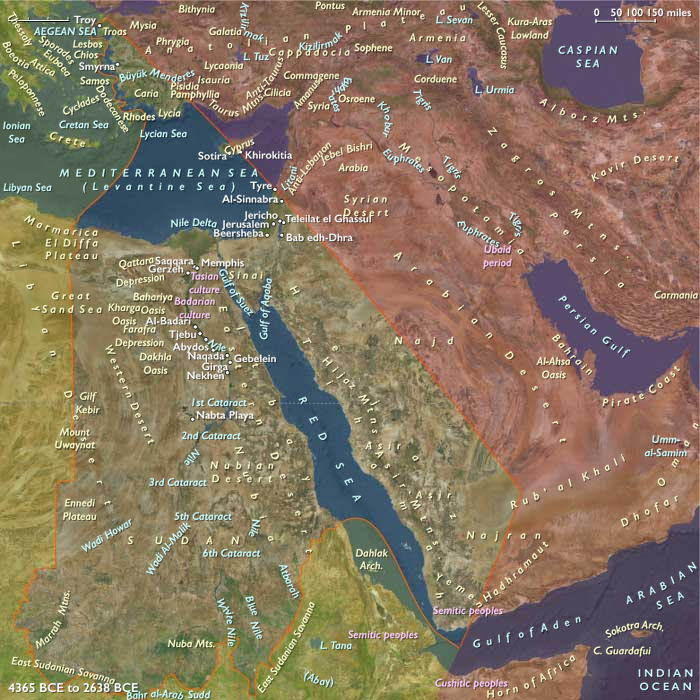
The route of this trade is difficult to determine, but contact with Canaan does not predate the early dynastic, so it is usually assumed to have been by water.
A Mediterranean route, probably used by intermediaries through Byblos, is evidenced by the presence of Byblian objects in Egypt.
The fact that so many Gerzean sites are at the mouths of wadis that lead to the Red Sea is indicative of some amount of trade via the Red Sea (though Byblian trade could potentially cross the Sinai and resume sea travel as well).
Locations
People
Groups
- Egypt (Ancient), Predynastic
- Uruk period
- Gerzeh culture (Naqada II)
- Egypt, Upper
- Egypt (Ancient), Protodynastic or Semainian (Naqada III)
Topics
- Subboreal Period during the Neolithic Subpluvial
- Early Bronze Age I (Near and Middle East)
- Piora Oscillation ending the Neolithic Subpluvial
- Subboreal Period
Commodoties
Subjects
Regions
Subregions
Related Events
Showing 10 events out of 68717 total
Years: 3213BCE - 3070BCE
Locations
People
Groups
- Egypt (Ancient), Predynastic
- Uruk period
- Gerzeh culture (Naqada II)
- Egypt, Upper
- Egypt (Ancient), Protodynastic or Semainian (Naqada III)
Topics
- Subboreal Period during the Neolithic Subpluvial
- Early Bronze Age I (Near and Middle East)
- Piora Oscillation ending the Neolithic Subpluvial
- Subboreal Period
Commodoties
Subjects
Regions
Subregions