
The War of the Cow (1275–1276): A …
Years: 1276 - 1276
The War of the Cow (1275–1276): A Feudal Conflict Sparked by Theft
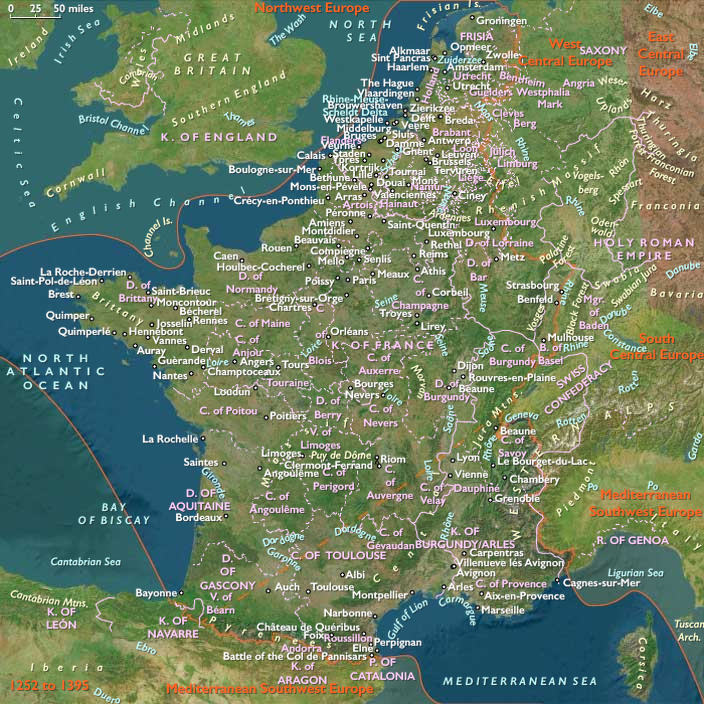
The so-called War of the Cow (Guerre de la Vache) erupted from a seemingly minor incident—the theft of a cow—which escalated into a bloody regional war in the Low Countries. The conflict, centered around Ciney, the regional capital of Condroz, became a broader feudal struggle involving the nobility of Namur, Brabant, and Luxembourg against the forces of the Prince-Bishopric of Liège.
Origins of the Conflict: A Cow and a Miscarriage of Justice
- During a jousting tournament in Ciney, a peasant named Engorant de Jalhay stole a cow.
- He was caught and sentenced to pay a fine in lieu of execution, as was common practice.
- However, through error or misjudgment, the bailiff’s men executed him anyway.
- The peasant’s lord, considering this a breach of feudal justice, demanded recompense, setting off a chain of retaliatory attacks.
Escalation and Invasion of Condroz and Hesbaye (1276)
- The Marquis of Namur, allied with Duke John I of Brabant and Lord Gerard of Durbuy, invaded Hesbaye(a rich agricultural region).
- At the same time, Count Henry V of Luxembourg led a devastating campaign into Condroz, sacking towns and villages.
- On April 17, 1276, Henry reached Ciney, where he was met by a local militia of 2,400 men (half cavalry, half infantry) led by Jean de Halloy, the mayor and bailiff of Condroz, who had ordered Engorant de Jalhay’s execution.
The Battle of Ciney (April 17, 1276)
- The battle lasted from early morning until the afternoon, with the Condrusien militia heavily outnumbered.
- Despite fierce resistance, they were defeated, leaving 500 dead on the battlefield, including Jean de Halloy.
- Luxembourg suffered heavy losses, with 1,400 of its men killed, prompting Count Henry V’s infamous remark:
- "Three gentlemen for a villein!"
- This statement reflected noble disdain for the peasantry, as he lamented losing knights and lords over a mere commoner’s crime.
The Sack of Ciney (April 18, 1276)
- The next day, April 18, the bishop’s marshal, Robert de Forvie, arrived with reinforcements but found Ciney under siege by Count Henry.
- Unable to engage Henry’s forces, he withdrew to Dinant to raise more troops.
- That same day, Ciney was stormed and razed.
- The inhabitants, seeking refuge in the Church of Notre-Dame, were burned alive as the church was set aflame.
- All chroniclers agree on the date of the massacre, describing it as:
- April 18,
- The "fourteenth kalends of May", or
- The Feast of Saint Ursmar.
The Sack of Meffe (April 19, 1276, Misericordia Sunday)
- The next day, April 19, known as Misericordia Sunday, Duke John I of Brabant sacked the city of Meffe, further escalating the destruction.
Aftermath and Legacy
- The War of the Cow, though seemingly trivial in origin, illustrated how feudal conflicts could escalate rapidly over issues of justice and honor.
- It also showcased the brutality of medieval warfare, particularly the deliberate targeting of civilians, as seen in the burning of Ciney’s inhabitants in the church.
- The war reinforced regional rivalries between the nobles of Brabant, Namur, and Luxembourg and the Prince-Bishopric of Liège, influencing future feudal struggles in the Low Countries.
Despite its absurd cause, the War of the Cow remains a symbol of the unpredictable and violent nature of feudal justice, where small disputes could spark devastating wars.
Locations
People
Groups
Topics
Commodoties
Subjects
Regions
Subregions
Related Events
Showing 10 events out of 45657 total
Years: 1276 - 1276
Locations
People
Groups
Topics
Commodoties
Subjects
Regions
Subregions