
Atlantic West Europe (189–46 BCE): From Indigenous …
Years: 189BCE - 46BCE
Atlantic West Europe (189–46 BCE): From Indigenous Consolidation to Roman Integration
From 189 to 46 BCE, Atlantic West Europe—comprising Aquitaine, the Atlantic coast, northern and central Gaul, Alsace, and the Low Countries—experienced profound political, economic, social, and cultural transformations. Initially characterized by indigenous tribal consolidation, sophisticated trade networks, and vibrant cultural traditions, this era culminated in Roman conquest and the region's subsequent integration into the Roman Empire.
Political and Military Evolution
Indigenous Tribal Consolidation (189–58 BCE)
-
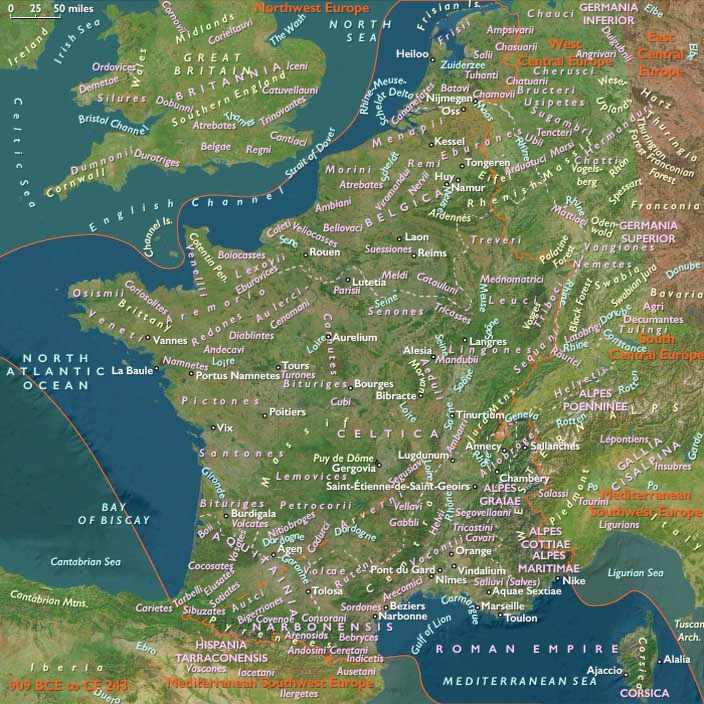
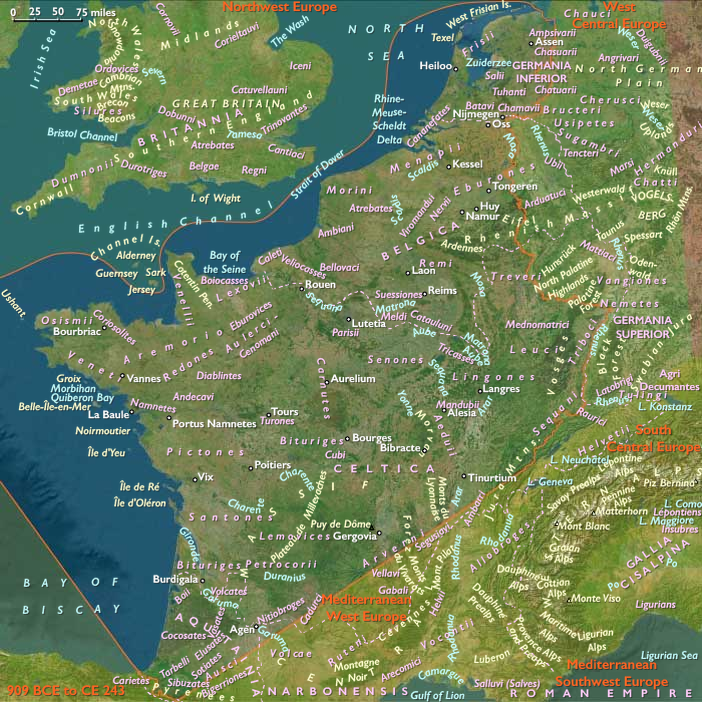
Prominent Celtic tribes, notably the Arverni, Aedui, and Veneti, expanded territorial control and influence through intertribal alliances and conflicts, significantly shaping regional power dynamics.
-
Northern tribes, including the Belgae confederations (Bellovaci, Nervii, Remi), strengthened their military capabilities, actively fortifying boundaries and alliances against rival tribes and external threats.
-
Early diplomatic contacts and indirect interactions with Rome and Mediterranean powers via Massalia (Marseille) gradually increased Roman influence, foreshadowing later conflicts.
Roman Conquest and Subjugation (58–46 BCE)
-
Julius Caesar’s Gallic Wars (58–50 BCE) decisively shifted regional power, dismantling indigenous political structures and resistance efforts.
-
Fierce tribal opposition under charismatic leaders, particularly Vercingetorix of the Arverni, culminated in critical confrontations, notably the Battle of Alesia (52 BCE), marking definitive Roman victory and domination.
-
Resistance among northern tribes (Nervii, Bellovaci, Eburones, Aduatuci) and Germanic allies (Usipetes, Sicambri, Ubii) was systematically defeated, leading to significant population displacement and political restructuring.
Economic and Social Developments
Expanding Mediterranean Commerce and Regional Prosperity (189–58 BCE)
-
Robust trade with Mediterranean merchants brought extensive wealth to tribal elites through the export of metals (tin, silver, gold), salt, grain, textiles, amber, timber, and notably, slaves.
-
Continued urbanization fostered the rise of significant proto-urban settlements (oppida), including Bibracte, Gergovia, Lutetia, and Cenabum, enhancing regional economic specialization and social complexity.
Roman Economic Integration and Urban Transformation (58–46 BCE)
-
Roman conquest deeply integrated the region into expansive Mediterranean and European trade networks, significantly intensifying commerce and infrastructure development.
-
Extensive slavery became an essential economic component, with large-scale forced relocation of defeated peoples across Roman territories.
-
Indigenous oppida rapidly evolved into Roman administrative centers, characterized by Roman architectural styles, enhanced infrastructure, and urban planning.
Cultural and Religious Transformations
Indigenous Flourishing and Druidic Influence (189–58 BCE)
-
The La Tène artistic tradition thrived, creating sophisticated metalwork, jewelry, pottery, and ceremonial weaponry, reflecting distinctive cultural identities and social stratification.
-
Druids exercised considerable authority as religious, judicial, and cultural leaders, reinforcing tribal unity and collective identity through widespread ritual practices and sacred sites.
Romanization and Cultural Assimilation (58–46 BCE)
-
Roman conquest brought significant cultural assimilation, integrating Roman religious practices, artistic styles, and administrative frameworks into local societies.
-
Suppression of Druidic institutions undermined traditional religious authority, substantially reshaping regional cultural and spiritual identities.
Long-Term Significance and Legacy
Between 189 and 46 BCE, Atlantic West Europe:
-
Transitioned from powerful tribal confederations to fully integrated Roman provinces, fundamentally altering regional political structures and governance.
-
Experienced profound economic transformation and increased dependency on Roman trade networks, significantly reshaping societal hierarchies through intensified slavery and urbanization.
-
Underwent deep cultural assimilation and Romanization, laying enduring foundations for future historical developments in Western European civilization.
This era marked the definitive transition of Atlantic West Europe from indigenous autonomy to an integral component of the expansive Roman world.
Locations
People
Groups
- Polytheism (“paganism”)
- Veneti (Gaul)
- Arverni (Gaulish tribe)
- Gauls
- Roman Republic
- Ubii (Germanic tribe)
- Aedui (Gaulish tribe)
- Sicambri (Germanic tribe)
- Nervii (Belgic tribe)
- La Tène culture
- Bellovaci (Belgic tribe)
- Aduatuci (Gallic Germanic tribe)
- Belgae (Gaul)
- Eburones (Gaulish tribe)
- Remi (Gaulish tribe)
- Gallia Narbonensis (Roman province)
- Tencteri and Usipetes (Germanic tribe or tribes)
Topics
- Classical antiquity
- Pre-Roman Iron Age of Northern Europe
- Roman Republic, Crisis of the
- Gallic Wars
- Alesia, Battle of
Commodoties
- Gem materials
- Domestic animals
- Grains and produce
- Textiles
- Fibers
- Ceramics
- Strategic metals
- Slaves
- Beer, wine, and spirits
- Manufactured goods
Subjects
Regions
Subregions
Years: 189BCE - 46BCE
Locations
People
Groups
- Polytheism (“paganism”)
- Veneti (Gaul)
- Arverni (Gaulish tribe)
- Gauls
- Roman Republic
- Ubii (Germanic tribe)
- Aedui (Gaulish tribe)
- Sicambri (Germanic tribe)
- Nervii (Belgic tribe)
- La Tène culture
- Bellovaci (Belgic tribe)
- Aduatuci (Gallic Germanic tribe)
- Belgae (Gaul)
- Eburones (Gaulish tribe)
- Remi (Gaulish tribe)
- Gallia Narbonensis (Roman province)
- Tencteri and Usipetes (Germanic tribe or tribes)
Topics
- Classical antiquity
- Pre-Roman Iron Age of Northern Europe
- Roman Republic, Crisis of the
- Gallic Wars
- Alesia, Battle of
Commodoties
- Gem materials
- Domestic animals
- Grains and produce
- Textiles
- Fibers
- Ceramics
- Strategic metals
- Slaves
- Beer, wine, and spirits
- Manufactured goods
Subjects
Regions
Subregions