
The Black Prince’s Taxation Crisis and the …
Years: 1368 - 1368
The Black Prince’s Taxation Crisis and the Renewal of the Hundred Years’ War (1367–1369)
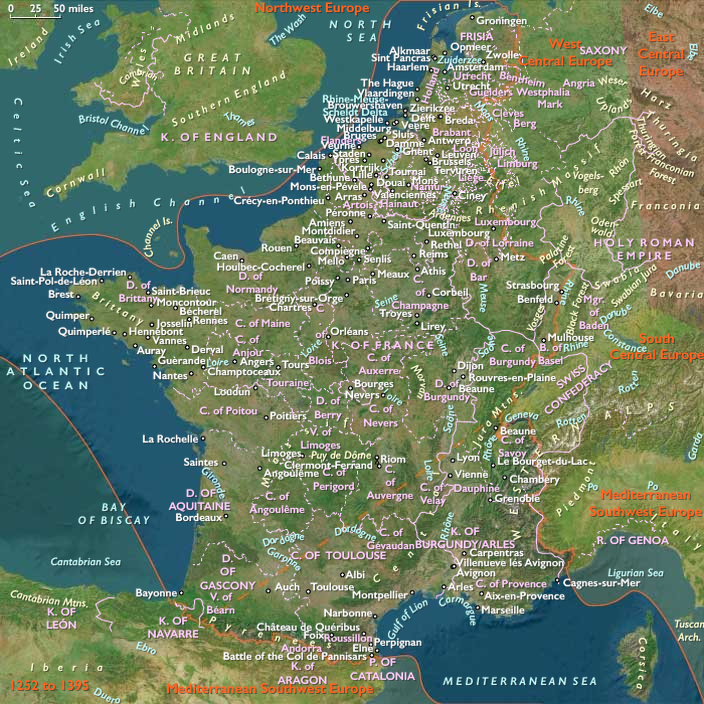
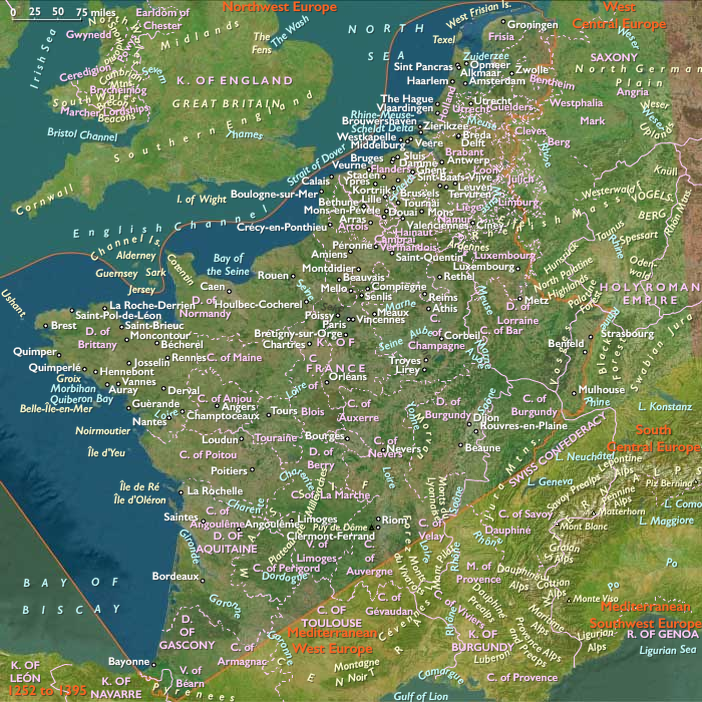
Following his victory at the Battle of Nájera (1367) during the Castilian Civil War, Edward, the Black Prince, found himself deeply in debt due to the failure of his Castilian ally, King Peter I ("the Cruel"), to provide the promised financial support. Suffering from ill health, Edward returned to Aquitaine, where he imposed a hearth tax to cover his expenses. This unpopular taxation policy alienated his Gascon vassals, leading them to appeal to King Charles V of France, ultimately sparking the renewal of the Hundred Years’ War in 1369.
The Black Prince’s Governance and Financial Troubles
- Since 1362, Edward had ruled Aquitaine in grand style, treating it as an English royal principality rather than a French fief.
- His lavish court and military campaigns placed a severe financial burden on the province.
- The Castilian expedition (1367), though militarily successful, had left him heavily in debt, as King Peter I of Castile had failed to provide the promised funds.
The Hearth Tax and Gascon Resistance
- To pay off his war debts, Edward instituted a hearth tax, requiring every household in Aquitaine to pay a fixed sum.
- This tax was highly unpopular, as it fell heavily on the lower nobility and peasantry, who had already suffered years of war-related hardship.
- Among those who resisted was Arnaud-Amanieu VIII, Lord of Albret, a former supporter of the Black Prince who had grown resentful of the influx of English administrators into Aquitaine.
The Gascon Lords Appeal to Charles V (1368–1369)
- Albret and other discontented Gascon lords refused to allow tax collection in their lands and sought relief from King Charles V of France.
- Charles, known for his legalistic approach to statecraft, declared that:
- The Treaty of Brétigny (1360) was invalid, as mutual renunciations of suzerainty had never been carried out.
- Therefore, Aquitaine was still legally a French fief, and Edward was still bound to obey the French Crown.
- Charles V summoned one of the Gascon lords and the Black Prince to Paris to appear before the Parlementand justify their actions.
The Black Prince’s Defiant Response
- In a famous reply, Edward rejected Charles V’s authority, stating that:
- He would go to Paris with 60,000 men behind him, implying war rather than submission.
- This response gave Charles the pretext he needed to declare Edward a rebellious vassal and to reignite the war.
The Renewal of the Hundred Years’ War (1369)
- Charles V declared war on England, leading to a new phase of the Hundred Years’ War.
- The Gascon lords who had once supported Edward now rebelled, forcing the English to defend their territories in France.
- This conflict would reverse many of England’s territorial gains, marking the beginning of a major French resurgence under Charles V and his military commander Bertrand du Guesclin.
The Black Prince’s harsh taxation policies and defiance of Charles V reignited the war in 1369, leading to the gradual collapse of English rule in Aquitaine and a major turning point in the Hundred Years’ War.
Locations
People
Groups
- Gascony, Duchy of
- Aquitaine, (Angevin) Duchy of
- England, (Plantagenet, Angevin) Kingdom of
- Castile, Crown of
- France, (Valois) Kingdom of
- Aquitaine, or Guyenne, (contested) Duchy of
Topics
Commodoties
Subjects
Regions
Subregions
Related Events
Showing 10 events out of 43897 total
Years: 1368 - 1368
Locations
People
Groups
- Gascony, Duchy of
- Aquitaine, (Angevin) Duchy of
- England, (Plantagenet, Angevin) Kingdom of
- Castile, Crown of
- France, (Valois) Kingdom of
- Aquitaine, or Guyenne, (contested) Duchy of
Topics
Commodoties
Subjects
Regions
Subregions