
Filters:
John of Gaunt’s Galician Campaign and the …
Years: 1387 - 1387
John of Gaunt’s Galician Campaign and the Treaty of Ponte do Mouro (1386–1387)
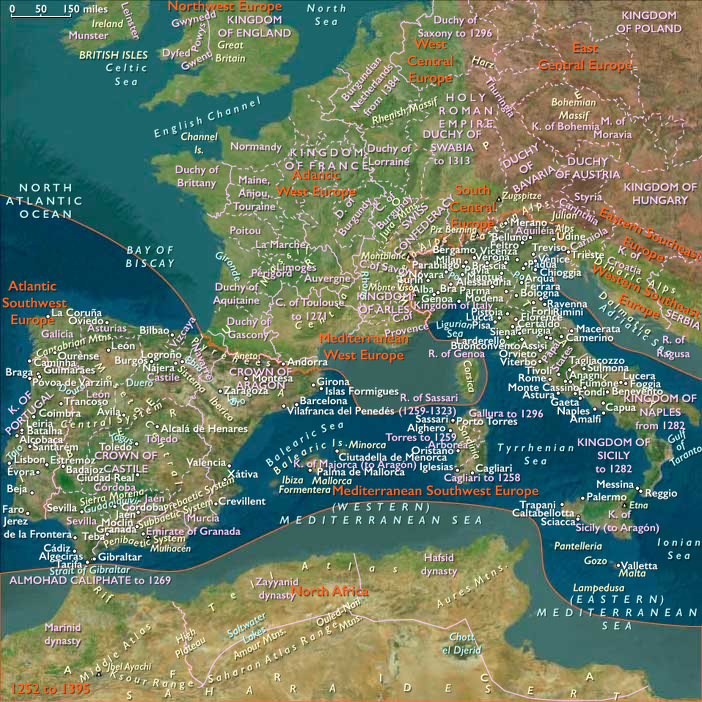
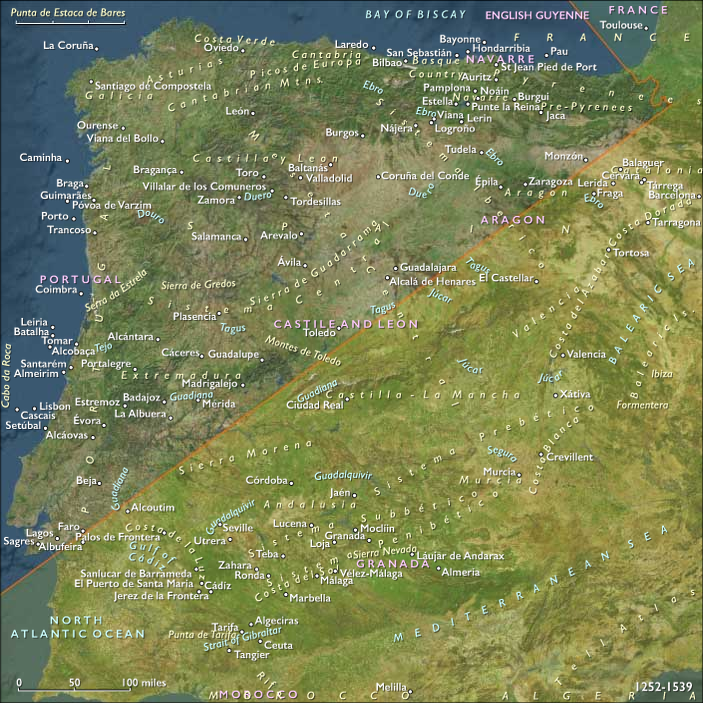
John of Gaunt’s long-planned invasion of Castile in 1386 caught King John I of Castile (John of Trastámara) off guard. Expecting Gaunt to land in Portugal, the Castilian king concentrated his forces along the Portuguese border, only to find that Gaunt had chosen to invade Galicia instead—a region that was both the most distant from Castilian control and disaffected with Trastámara rule.
The Occupation of Galicia (August–October 1386)
- From August to October 1386, John of Gaunt established a rudimentary court and chancery in Ourense, marking his attempt to govern Galicia as King of Castile and León.
- The Galician nobility and most of the region’s towns pledged their allegiance to him, though their support was conditional—they would only recognize his rule if the rest of Castile followed suit.
- Despite this initial success, Gaunt failed to provoke the decisive battle he had hoped for, as the Castilian forces avoided direct engagement.
Challenges and the Agreement with Portugal (November 1386)
- As the campaign dragged on, Gaunt’s army suffered from dwindling supplies, disease, and the inability to secure full Castilian support.
- Keeping his troops paid and together became increasingly difficult, forcing him to seek further assistance.
- In November 1386, he met with King John I of Portugal at Ponte do Mouro, on the southern bank of the Minho River, to negotiate a joint Anglo-Portuguese strategy against Castile.
The Treaty of Ponte do Mouro and the Marriage of Philippa of Lancaster
- Gaunt and John I of Portugal agreed to launch a joint Anglo-Portuguese invasion of central Castile in early 1387, hoping to force John of Castile into open battle.
- The alliance was sealed by the marriage of John of Gaunt’s eldest daughter, Philippa of Lancaster, to King John I of Portugal.
- This marriage cemented the Anglo-Portuguese alliance, which had been growing since the Treaty of Windsor (1386) and remains the longest-standing diplomatic alliance in history.
Aftermath and Legacy
- Despite this agreement, Gaunt’s campaign ultimately failed, as his troops continued to struggle with disease, desertions, and logistical challenges.
- By 1388, Gaunt negotiated the Treaty of Bayonne, renouncing his claim to Castile in exchange for financial compensation and the marriage of his daughter Catherine to Henry III of Castile.
- The marriage of Philippa of Lancaster and John I of Portugal in 1387 produced a lasting Anglo-Portuguese alliance, leading to closer military and economic ties between the two kingdoms.
- Philippa became Queen of Portugal and the mother of the "Illustrious Generation", including Henry the Navigator, who played a key role in Portugal’s Age of Exploration.
Thus, while John of Gaunt’s Castilian ambitions ended in failure, his diplomatic efforts strengthened Portugal’s independence and ensured that England and Portugal remained allies for centuries to come.
Locations
People
Groups
- Galicia, Kingdom of
- England, (Plantagenet, Angevin) Kingdom of
- Castile, Crown of
- France, (Valois) Kingdom of
- Portugal, Avizan (Joannine) Kingdom of
Topics
Commodoties
Subjects
Regions
Subregions
Years: 1387 - 1387
Locations
People
Groups
- Galicia, Kingdom of
- England, (Plantagenet, Angevin) Kingdom of
- Castile, Crown of
- France, (Valois) Kingdom of
- Portugal, Avizan (Joannine) Kingdom of
Topics
Commodoties
Subjects
Regions
Subregions