
The Arctic Small Tool tradition (ASTt) was …
Years: 1197BCE - 1054BCE
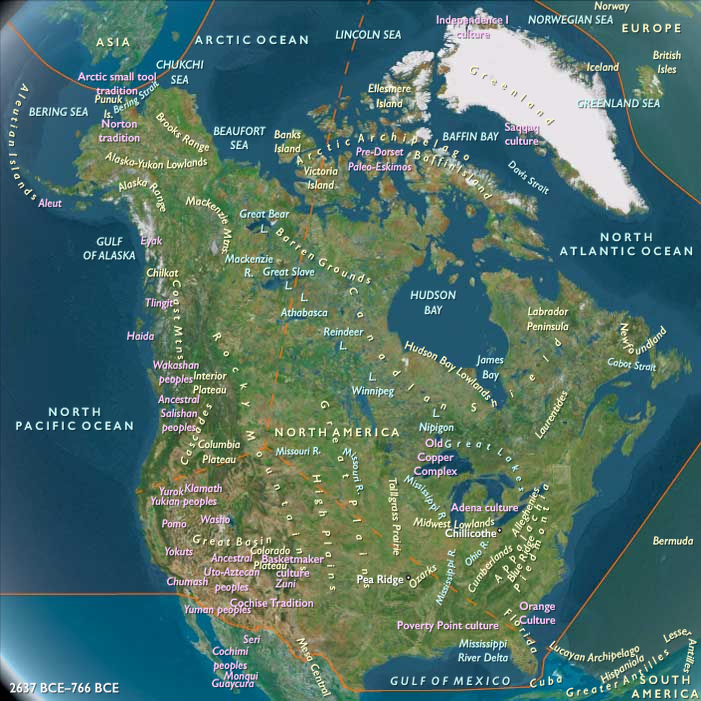
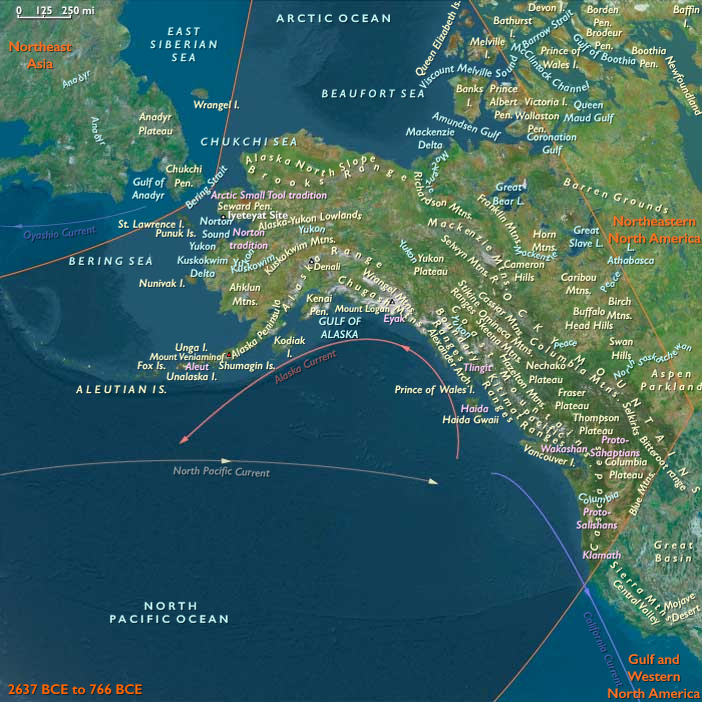
The Arctic Small Tool tradition (ASTt) was a broad cultural entity that developed along the Alaska Peninsula, around Bristol Bay, and on the eastern shores of the Bering Strait around 2500 BC, with ASTt groups being the first human occupants of Arctic Canada and Greenland. The Denbigh Flint complex were the first members of the wide material assemblage known as the Arctic Small Tool tradition.
The Cape Denbigh Flint Complex, recognized by its excavator J.L. Giddings as ancestral to later expressions of Eskimo culture in Alaska, faded around 3000-3300 years ago (roughly 1000-1300 BCE).
Giddings found tiny, intricately chipped stone tools at the Iyatayet Site, and this particular stone tool style is known as the Denbigh Flint Complex. The multicomponent site of Iyatayet, at Cape Denbigh, Alaska, was originally excavated by J. L. Giddings in the early 1950s.
Giddings published "The Denbigh Flint Complex" in American Antiquity in 1951, describing a thin layer of pebbles and flinty artifacts that furnished concrete evidence in support of theories of a Bering Strait gateway to America in remote times.
This particular stone tool style is known as the Denbigh Flint Complex and recognized as ancestral to later expressions of Inupiat culture in Alaska. Distant ancestors of modern Inupiat and Inuit, Denbigh people pioneered new lands and innovated new technologies that set the stage for the next four millennia of high latitude living across the American Arctic.
Locations
Groups
Topics
Subjects
Regions
Subregions
Years: 1197BCE - 1054BCE
Locations
Groups
Topics
Subjects
Regions
Subregions